

Winemaker Notes
Professional Ratings
-
Wine & Spirits
Manuel and Pepe Raventós focus this sparkler on the red- and pink-skinned xarel-lo vermell, bastard negre and sumoll—all grown in stony soils at Més Alta, their vineyard rising to 820 feet in altitude. That elevation lends the wine a lively lemon freshness to brighten rich undertones of mango and papaya. After 42 months of aging on lees, the texture has developed enough silky roundness to fill out the dry Brut Nature style.
-
Wine Spectator
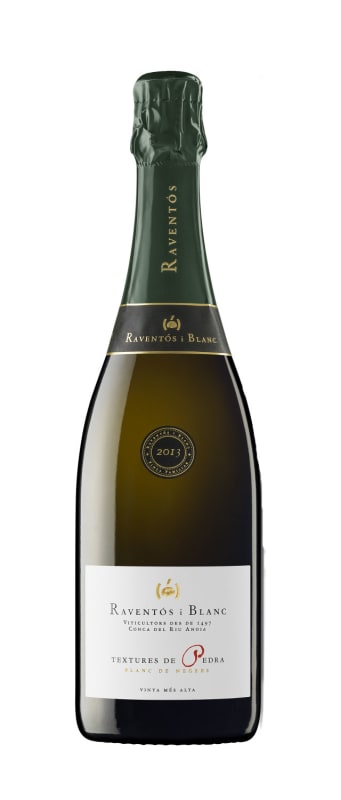
The 2013 Textures de Pedra is an unusual blend of white and red grapes vinified in the style of a white. The blend of 30% Xarello, 25% Xarello Vermell, 25% Sumoll, 15% Bastard Negre and 5% Parellada from a cool and rainy vintage resulted in lively wines with high acidity and potential for bottle aging. The musts fermented with indigenous yeasts in stainless steel, and the wines were kept for at least six months with lees in tank. It matured in bottle in contact with the lees from Champagne yeasts for no less than 42 months. It has a deep golden color and a very intense, characterful nose, but it's in the palate where you get the intensity, the pungent flavors, the salty tastiness, the depth, the liveliness and the electricity.
-
Wine Enthusiast
There's a light pink color to this airy sparkler along with fresh aromas of celery and rose water. A clean, tangy palate is well balanced and fresh, offering flavors of pink grapefruit, nectarine and citrus peel. A steady, long finish closes out this high-quality vintage bubbly.


Representing the topmost expression of a Champagne house, a vintage Champagne is one made from the produce of a single, superior harvest year. Vintage Champagnes account for a mere 5% of total Champagne production and are produced about three times in a decade. Champagne is typically made as a blend of multiple years in order to preserve the house style; these will have non-vintage, or simply, NV on the label. The term, "vintage," as it applies to all wine, simply means a single harvest year.

A superior source of white grapes for the production of Spain’s prized sparkling wine, Cava, the Penedes region is part of Catalunya and sits just south of Barcelona. Medio Penedès is the most productive source of the Cava grapes, Macabeo, Xarel-lo, and Parellada. Penedes also grows Garnacha and Tempranillo (here called Ull de Llebre in Catalan), for high quality reds and rosès.