

Winemaker Notes
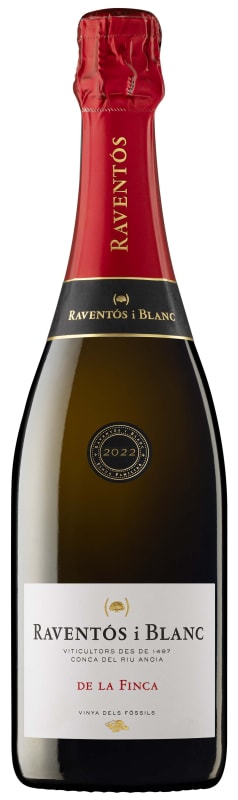
De la Finca sparkling wine is made with grapes from our oldest vines, planted using the gobelet system in 1964 in the Vinya dels Fòssils.
Blend: 60% Xarel·lo, 30% Macabeu, 10% Parellada
Professional Ratings
-
Vinous
The 2022 Brut Nature De La Finca combines 60% Xarel·lo, 30% Macabeu and 10% Parellada from Conca del Riu Anoia, grown on the estate’s calcareous soils. It was aged 30 months on the lees and opens with moderate aromas of lime and lemon pie. Dry, chalky and agile with delicate bubbles, it finishes linear and refreshing, underscored by its calcareous character.
-
Robert Parker's Wine Advocate
The 2022 De La Finca comes exclusively from their own vineyards, 60% Xarel.lo, 30% Macabeu and 10% Parellada, and has the added complexity and nuance from a longer élevage, no less than 30 months in bottle with lees and closed with a cork after refermenting. It's bone dry, not adjusted, and sold as a brut nature. It has a bright, almost fluorescent yellow color and a very expressive nose with notes of yeasts and Mediterranean herbs, subtler, more complex and with smaller, more integrated bubbles and a vibrant, clean and precise palate, super tasty. It comes from the plots on slopes already classified by Pepe Raventós's grandfather. Here, they have lower yields, accentuated by the vintage, which is more marked in the wine, as it's always from the same plots. The whole clusters are pressed, looking for longer aging potential, and fermentation is in concrete, always thinking about a longer-lived wine. It's a generous wine from a generous year.
-
James Suckling
The nose shows subtle cream, minerals and touches of white almonds, dried herbs and chalk. Almost bone-dry on the palate, with an ample mousse and very good weight and volume. Medium- to full-bodied with a subtle, medium-long finish. Nicely phenolic at the end. From organically grown grapes. Xarel-lo, macabeu and parellada. Nothing earthy here. Drink now or hold.
-
Wine Spectator
An elegant sparkler in an aperitif style, with its crisp acidity and lacy texture providing a fine frame for delicate notes of white raspberry, Honeycrisp apple, hazelnut and white blossoms. Lightly salty on the clean-cut finish. Xarel-lo, Macabeo and Parellada. Disgorged January 2025. Drink now. 3,500 cases made, 800 cases imported.


Representing the topmost expression of a Champagne house, a vintage Champagne is one made from the produce of a single, superior harvest year. Vintage Champagnes account for a mere 5% of total Champagne production and are produced about three times in a decade. Champagne is typically made as a blend of multiple years in order to preserve the house style; these will have non-vintage, or simply, NV on the label. The term, "vintage," as it applies to all wine, simply means a single harvest year.

Known for bold reds, crisp whites, easy-drinking rosés, distinctive sparkling, and fortified wines, Spain has embraced international varieties and wine styles while continuing to place primary emphasis on its own native grapes. Though the country’s climate is diverse, it is generally hot and dry. In the center of the country lies a vast, arid plateau known as the Meseta Central, characterized by extremely hot summers and frequent drought.
Rioja is Spain’s best-known region, where earthy, age-worthy Spanish reds are made from Tempranillo and Garnacha (Grenache). Rioja also produces rich, nutty whites from the local Viura grape.
Ribera del Duero is gaining ground for Spanish wines with its single varietal Tempranillo wines, recognized for their concentration of fruit and opulence. Priorat, a sub-region of Catalonia, specializes in bold, full-bodied Spanish red wine blends of Garnacha (Grenache), Cariñena (Carignan), and often Syrah and Cabernet Sauvignon. Catalonia is also home to Cava, a Spanish sparkling wine made in the traditional method but from indigenous varieties. In the cool, damp northwest Spanish wine region of Galicia, refreshing Spanish white Albariño and Verdejo dominate.
Sherry, Spain’s famous fortified wine, is produced in a wide range of styles from dry to lusciously sweet at the country’s southern tip in Jerez.