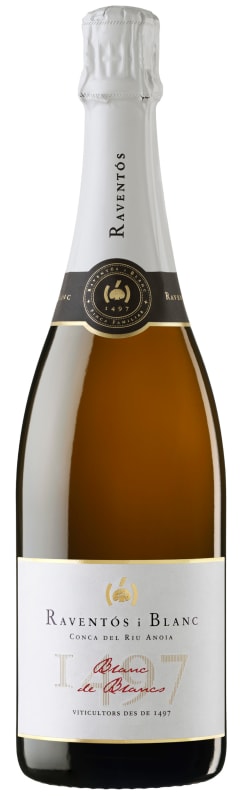


Winemaker Notes
#29 Wine Spectator Top 100 of 2022
Blanc de Blancs is a sparkling wine marked by the typicity of its place of origin, the Vinya del Llac, a vineyard over 40 years’ old, which allows us to obtain a structured, fresh and complex sparkling wine.
Professional Ratings
-
Robert Parker's Wine Advocate
The impressive 2020 Blanc de Blancs comes from a catastrophic vintage when they lost a huge amount of grapes due to mildew, which forced them to purchase more grape from growers. This is very expressive, their youngest wine, from a vintage of concentration and power, a blend of 45% Xarel.lo, 40% Macabeo, 12% Parellada and 3% Malvasía de Sitges, a grape they are using to give the wine more freshness, as the variety keeps the acidity. This ages for a minimum of 18 months sur lie, but it might be more; all bottles carry the disgorgement date on the back label. This is tasty, saline and profound beyond the price point.
-
Wine Spectator
A firm backbone of Meyer lemon peel acidity frames this vivid sparkler, enmeshed with rich notes of lightly charred toast and smoked almond, backed by flavors of ripe white cherry and peach fruit. Hints of thyme and anise play on the finish. Xarel-lo, Macabeo, Parellada and Malvasia de Sitges.
-
Wine Enthusiast
Light apricot in color, this wine offers a bouquet of strawberry and lemon zest. Strawberry and lemon zest transition to the palate alongside notes of vanilla and rose petal. This sparkling wine is bright in the mouth from first sip to the post palate.


Representing the topmost expression of a Champagne house, a vintage Champagne is one made from the produce of a single, superior harvest year. Vintage Champagnes account for a mere 5% of total Champagne production and are produced about three times in a decade. Champagne is typically made as a blend of multiple years in order to preserve the house style; these will have non-vintage, or simply, NV on the label. The term, "vintage," as it applies to all wine, simply means a single harvest year.

A superior source of white grapes for the production of Spain’s prized sparkling wine, Cava, the Penedes region is part of Catalunya and sits just south of Barcelona. Medio Penedès is the most productive source of the Cava grapes, Macabeo, Xarel-lo, and Parellada. Penedes also grows Garnacha and Tempranillo (here called Ull de Llebre in Catalan), for high quality reds and rosès.