
Winemaker Notes
Professional Ratings
-
Connoisseurs' Guide
If not dramatically transformed by its decade of age, there is no question but that this breathtakingly deep wine has benefitted from time, and it now rivals its mate from the Teldeschi Vineyard when it comes to sheer richness and depth. Rife with blackberries but a stunningly complex wine with its own unique brand of spice, it is starting to show a sense of polish only implied in its youth but is still tightly structured without giving up a whit of its prodigious fruit. Not only certain to be very long-lived, more so perhaps than its aforementioned sibling, it has years to go before reaching its peak, and we would not be surprised in the least if it continues to improve for another decade or more. We have enjoyed more than a few thirty- and even forty-year-old Zinfandels from winemaker Joel Peterson’s mentor, the late Joseph Swan, and we suspect that Mr. Swan would proudly approve.
-
Wine Enthusiast
The trick to a successful Zinfandel is to capture the grape’s briary, brambly rusticity and lend it elegance and balance. This wine succeeds at that task. It’s kind of a field blend with 25% of the wine made from what the winemaker calls “mixed blacks.” Whatever the varieties are, the wine is smooth, rich and delicious, showing complex wild berry, mocha, licorice, baking spice and sandalwood flavors. Should easily hold its own over the next 10 years.


Unapologetically bold, spice-driven and jammy, Zinfandel has secured its title as the darling of California vintners by adapting well to the state's diverse microclimates and landscapes. Born in Croatia, it later made its way to southern Italy where it was named Primitivo. Fortunately, the imperial nursery of Vienna catalogued specimens of the vine, and it later made its way to New England in 1829. Parading the true American spirit, Zinfandel found a new home in California during the Gold Rush of 1849. Somm Secret—California's ancient vines of Zinfandel are those that survived the neglect of Prohibition; today these vines produce the most concentrated, ethereal and complex examples.
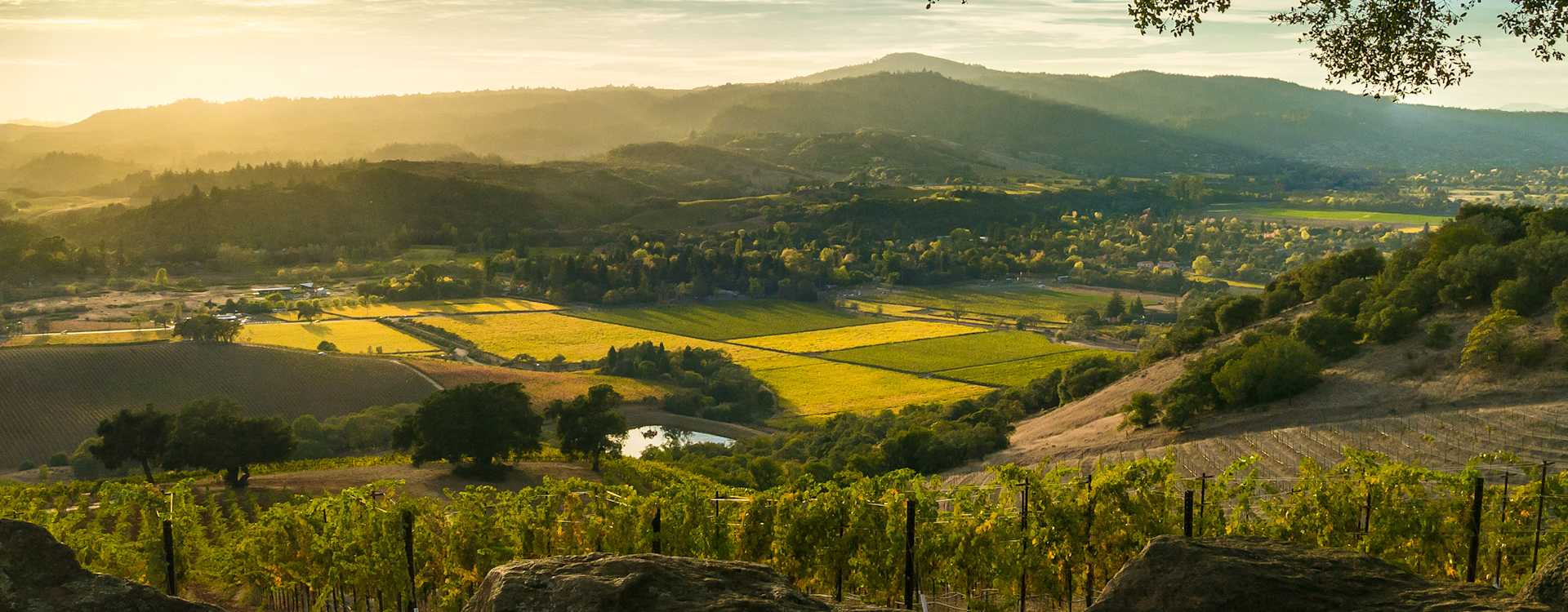
Home to a diverse array of smaller AVAs with varied microclimates and soil types, Sonoma County has something for every wine lover. Physically twice as large as Napa Valley, the region only produces about half the amount of wine but boasts both tremendous quality and variety. With its laid-back atmosphere and down-to-earth attitude, the wineries of Sonoma are appreciated by wine tourists for their friendliness and approachability. The entire county intends to become a 100% sustainable winegrowing region by 2019.
Sonoma County wines are produced with carefully selected grape varieties to reflect the best attributes of their sites—Dry Creek Valley’s consistent sunshine is ideal for Zinfandel, while the warm Alexander Valley is responsible for rich, voluptuous red wines like Cabernet Sauvignon. Chardonnay and Pinot Noir are important throughout the county, most notably in the cooler AVAs of Russian River, Sonoma Coast and Carneros. Sauvignon Blanc, Merlot and Syrah have also found a firm footing here.