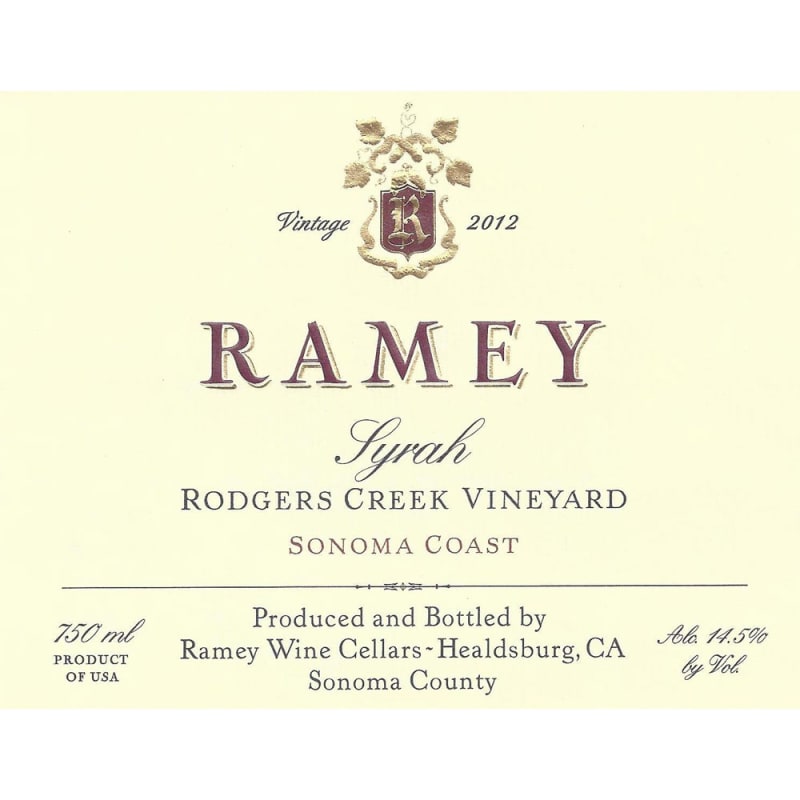

Winemaker Notes
Our Syrahs are grown in the cool climate of Sonoma Coast which offers a style reminiscent of the Northern Rhone regions of Hermitage and Cornas: aromas and flavors of smoked meat, white pepper, green olive and grapefruit
Professional Ratings
-
Wine Enthusiast
A bouquet of spicy black pepper intoxicates on the opening of this wine, followed by captivating waves of savory blackberry, leather and dust. The grapes are sourced from one of the producer’s coolest sites, With well-integrated, unobtrusive oak, the wine is soft and delicious now, offering plenty of meaty undertones, but will intrigue further over time, through 2022.
-
Connoisseurs' Guide
12% Viognier. Very much cast in the rich Ramey style and a bit more explicit than it mates in terms of its ready ripeness, this brash, big-bodied offering manages to keep Syrah in its sights even as it runs up against tannin and heat. It is more concerned with raw power than grace and is likely to displease those who embrace a leaner, cool-climate model as the right way to go, but its sheer richness and depth cannot be ignored, and its latter-palate turn to tightness bodes well for aging. Pour it in four or five years if you will, but know that it looks sure to grow for a good many more.




David Ramey is among a distinguished group of pioneering American vintners who revolutionized modern-day winemaking and elevated California to the forefront of the international wine community. Hailed as “Professor Chardonnay” by Wine Spectator, David’s groundbreaking work with indigenous yeasts, sur lies aging and malolactic and barrel fermentation yielded a new California Chardonnay style that was richer, more lush and silky smooth. Ramey Wine Cellars crafts exceptional expressions of Chardonnay, Cabernet Sauvignon, Syrah, and Pinot Noir from top vineyards in Sonoma and Napa.
After earning a graduate degree at UC Davis, with his thesis on how aromas evolve in wine, David Ramey pursued a hands-on education in Old World winemaking traditions. He worked at Chateau Pétrus and would later apply these time-honored methods to California’s premier vineyards. In California, David led winemaking for Matanzas Creek, Chalk Hill, Dominus Estate and Rudd Estate. In 1996, David and his wife Carla founded Ramey Wine Cellars with the vision of crafting classically styled, elegant and balanced wines that age beautifully.
Still exclusively owned by the Rameys, the next generation, Claire and Alan Ramey, work at the winery as well. They have been training under their father and working in various roles across the winery, from vineyards to production to winemaking and more. Over the years, a team of highly talented colleagues have joined the winery where they continually push to make the best wines possible. Ramey Wine Cellars crafts exceptional expressions of Chardonnay, Cabernet Sauvignon, Syrah, and Pinot Noir from top vineyards in Sonoma and Napa. Tastings are offered by appointment in Healdsburg, California.

Marked by an unmistakable deep purple hue and savory aromatics, Syrah makes an intense, powerful and often age-worthy red. Native to the Northern Rhône, Syrah achieves its maximum potential in the steep village of Hermitage and plays an important component in the Red Rhône Blends of the south, adding color and structure to Grenache and Mourvèdre. Syrah is the most widely planted grape of Australia and is important in California and Washington. Sommelier Secret—Such a synergy these three create together, the Grenache, Syrah, Mourvedre trio often takes on the shorthand term, “GSM.”

A vast appellation covering Sonoma County’s Pacific coastline, the Sonoma Coast AVA runs all the way from the Mendocino County border, south to the San Pablo Bay. The region can actually be divided into two sections—the actual coastal vineyards, marked by marine soils, cool temperatures and saline ocean breezes—and the warmer, drier vineyards further inland, which are still heavily influenced by the Pacific but not quite with same intensity.
Contained within the appellation are the much smaller Fort Ross-Seaview and Petaluma Gap AVAs.
The Sonoma Coast is highly regarded for elegant Pinot Noir, Chardonnay, and, increasingly, cool-climate Syrah. The wines have high acidity, moderate alcohol, firm tannin, and balanced ripeness.