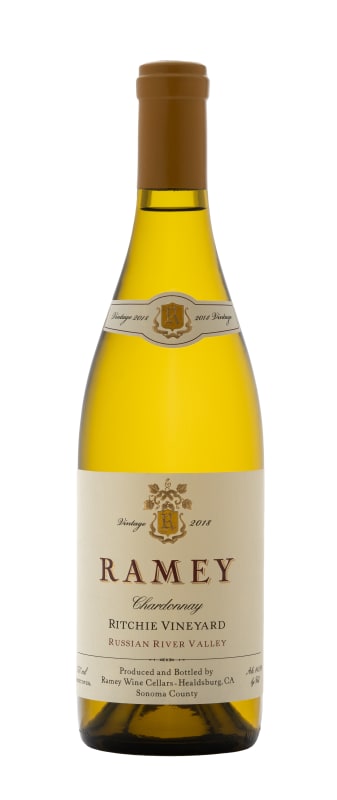


Winemaker Notes
The Ritchie Vineyard Chardonnay walks the fine line between richness and delicacy. It has a complex and harmonious mouthfeel that balances power with elegance.
Professional Ratings
-
Wine Enthusiast
From older plantings on a wide-spaced site—one the producer has worked with for some time—this wine is complicated and wild, combining rich, elegant flavors of salty sea breeze with ginger and lemon puree. Seamless and supple, it has a backbone of structure and lively acidity that pair effortlessly with the apple and pear.
-
Jeb Dunnuck
Always one of the standouts from Ramey, the 2018 Chardonnay Ritchie Vineyard is no exception and has a Grand Cru Burgundy nose of chalky minerality, exotic flowers, brioche, and assorted stone and orchard fruits. These all carry to a medium to full-bodied Chardonnay that's concentrated, has a structured mouthfeel, integrated yet bright acidity, and a great finish. It will be best with 2-4 years of bottle age (it's delicious even today) and will drink well over the following decade if stored properly.
-
Wine Spectator
This complex white is layered with a lively mix of fresh-cut Gala apple, Asian pear and tangerine flavors that are well-knit. A minerally freshness lingers with buttery hints on the richly spiced finish. Drink now through 2027.
-
Robert Parker's Wine Advocate
The 2018 Chardonnay Ritchie Vineyard is wound up at this early stage and will require at least 2-3 years to blossom in bottle. The nose offers pure lilac, beeswax and apricot perfume with honeyed undertones, while the silky, fresh, mineral-driven palate gains amplitude on the long finish. Rating: 94+


One of the most popular and versatile white wine grapes, Chardonnay offers a wide range of flavors and styles depending on where it is grown and how it is made. While it tends to flourish in most environments, Chardonnay from its Burgundian homeland produces some of the most remarkable and longest lived examples. California produces both oaky, buttery styles and leaner, European-inspired wines. Somm Secret—The Burgundian subregion of Chablis, while typically using older oak barrels, produces a bright style similar to the unoaked style. Anyone who doesn't like oaky Chardonnay would likely enjoy Chablis.

A standout region for its decidedly Californian take on Burgundian varieties, the Russian River Valley is named for the eponymous river that flows through it. While there are warm pockets of the AVA, it is mostly a cool-climate growing region thanks to breezes and fog from the nearby Pacific Ocean.
Chardonnay and Pinot Noir reign supreme in Russian River, with the best examples demonstrating a unique combination of richness and restraint. The cool weather makes Russian River an ideal AVA for sparkling wine production, utilizing the aforementioned varieties. Zinfandel also performs exceptionally well here. Within the Russian River Valley lie the smaller appellations of Chalk Hill and Green Valley. The former, farther from the ocean, is relatively warm, with a focus on red and white Bordeaux varieties. The latter is the coolest, foggiest parcel of the Russian River Valley and is responsible for outstanding Pinot Noir and Chardonnay.