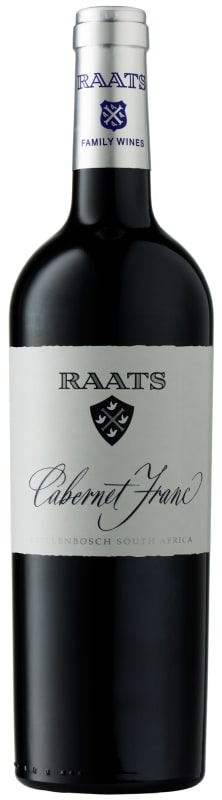


Winemaker Notes
Professional Ratings
-
Robert Parker's Wine Advocate
The 2010 Cabernet Franc has an intense bouquet of blackberry, scorched earth, clove a touch of “Marmite” and soy that is very well defined and focused. The palate is has an understated entry with supple tannins: plenty of peppery fruit and a sense of linearity and poise on the finish. There is just a hint of green bell pepper on the finish that lends it so much character. I agree, less structured than the 2009 but still very well crafted. Drink 2013-2020.
-
Wine Enthusiast
Pure and focused, Bruwer Raats’s love of and attention to Cabernet Franc results in a wine that always impresses, and is a bit of an anomaly in the South African wine world. Bright notes of red cherry and currant unfold on the nose and mouth, with accents of ashy tobacco, foliage, pepper and just the faintest suggestion of vanilla bean. Medium weight, with dry, dusty tannins that lend grip to the finish.
-
Wine & Spirits
Bruwer Raats specializes in franc, and hit his mark with an elegant 2010. The wine’s finesse shows in delicate leather scents, in juicy dark fruit that opens up on the palate, then shuts off again as earthy tannins tighten around it. Give this a few years in the cellar for the fruit and tannins to harmonize, when it will match the pink of roast lamb.
-
Wine Spectator
Purely rendered, with sleek black cherry and red currant fruit deftly inlaid with smoldering tobacco leaf and roasted earth notes. The polished finish lingers. Displays textbook varietal character.


Cabernet Franc, a proud parent of Cabernet Sauvignon, is the subtler and more delicate of the Cabernets. Today Cabernet Franc produces outstanding single varietal wines across the wine-producing world. Somm Secret—One of California's best-kept secrets is the Happy Canyon appellation of Santa Barbara. Here Cabernet Franc shines as a single varietal wine or in blends, expressing sumptuous fruit, savory aromas and polished tannins.

With an important wine renaissance in full swing, impressive red and white bargains abound in South Africa. The country has a particularly long and rich history with winemaking, especially considering its status as part of the “New World.” In the mid-17th century, the lusciously sweet dessert wines of Constantia were highly prized by the European aristocracy. Since then, the South African wine industry has experienced some setbacks due to the phylloxera infestation of the late 1800s and political difficulties throughout the following century.
Today, however, South Africa is increasingly responsible for high-demand, high-quality wines—a blessing to put the country back on the international wine map. Wine production is mainly situated around Cape Town, where the climate is generally warm to hot. But the Benguela Current from Antarctica provides brisk ocean breezes necessary for steady ripening of grapes. Similarly, cooler, high-elevation vineyard sites throughout South Africa offer similar, favorable growing conditions.
South Africa’s wine zones are divided into region, then smaller districts and finally wards, but the country’s wine styles are differentiated more by grape variety than by region. Pinotage, a cross between Pinot Noir and Cinsault, is the country’s “signature” grape, responsible for red-fruit-driven, spicy, earthy reds. When Pinotage is blended with other red varieties, like Cabernet Sauvignon, Merlot, Syrah or Pinot Noir (all commonly vinified alone as well), it is often labeled as a “Cape Blend.” Chenin Blanc (locally known as “Steen”) dominates white wine production, with Chardonnay and Sauvignon Blanc following close behind.