

Winemaker Notes
Blend: 75% Tempranillo, 15% Garnacho, 10% Graciano and Mazuelo
Professional Ratings
-
Wine Spectator
Silky and racy, this traditional-style red delivers dried cherry, tobacco, orange peel, vanilla and spice flavors that mingle over light, firm tannins, fueled by crisp acidity. Not a big wine, but has energy and length. Drink now through 2022.
-
Robert Parker's Wine Advocate
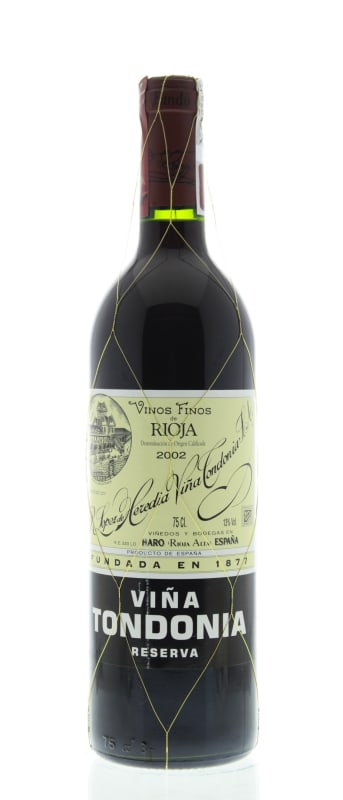
The 2002 Vina Tondonia Reserva is a blend of 75% Tempranillo, 15% Garnacho and 10% between Mazuelo and Graciano sourced from their Tondonia vineyard located in a large meander of the Ebro River on the outskirts of Haro. It is aged for six years in used barrels, racked twice per year during its upbringing and fined with egg whites before being bottled unfiltered. It has a slightly reduced nose that benefits from air contact, with shy aromas of cherries in liqueur, tea leaves, fine leather, game, blood, spice box and cigar ash, showing some evolution. The light to medium-bodied palate is balanced, with high acidity, but perhaps a little fragile, showing the difficulties of the vintage, as 2002 was a very difficult year in Rioja. 250,000 bottles were produced. Drink 2014-2019.
-
Wine & Spirits
This was not an easy vintage in Rioja, but the Lopez de Heredia family proved it was possible to grow a light and pretty wine. It may be a little dilute, but it’s also classical, with vibrant fruit that gains presence as it takes on air. It will add complexity and a cracked pepper edge to roast leg of lamb.


Hailed as the star red variety in Spain’s most celebrated wine region, Tempranillo from Rioja, or simply labeled, “Rioja,” produces elegant wines with complex notes of red and black fruit, crushed rock, leather, toast and tobacco, whose best examples are fully capable of decades of improvement in the cellar.
Rioja wines are typically a blend of fruit from its three sub-regions: Rioja Alta, Rioja Alavesa and Rioja Oriental, although specific sub-region (zonas), village (municipios) and vineyard (viñedo singular) wines can now be labeled. Rioja Alta and Alavesa, at the highest elevations, are considered to be the source of the brightest, most elegant fruit, while grapes from the warmer and drier, Rioja Oriental, produce wines with deep color, great body and richness.