
Winemaker Notes
Professional Ratings
-
Robert Parker's Wine Advocate
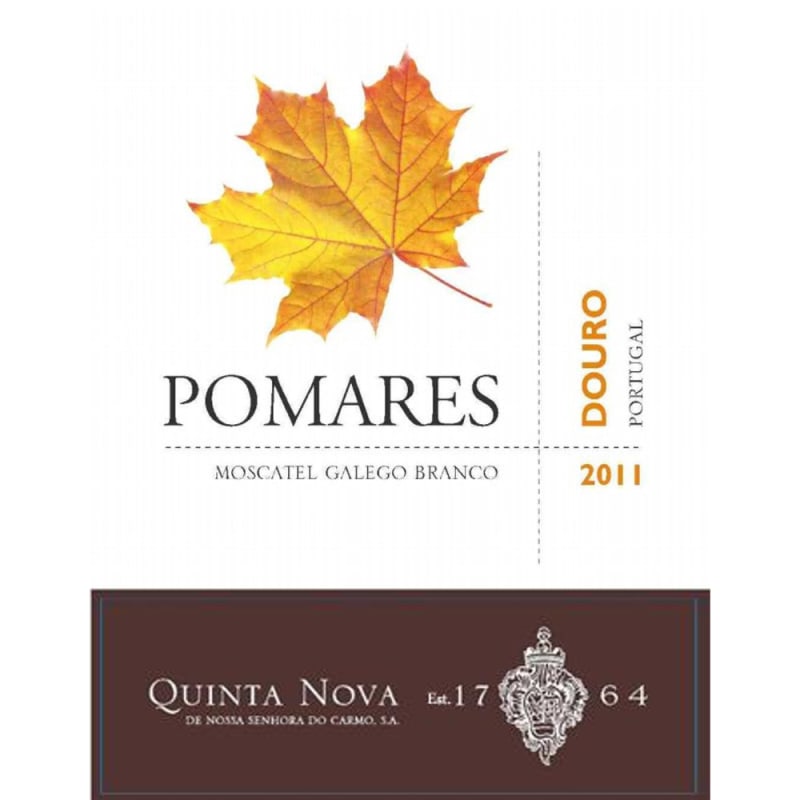
The 2011 Branco Pomares Orange Label is all Moscatel Galego (meaning the familiar Muscat a Petits Grains). Since I’d never seen this bottling previously, it’s worth revisiting it with an extra six months or so of time in the bottle to settle down. It probably didn’t need a lot of time, if any, but it is certainly showing its classiness now. It is, perhaps, a touch more open and juicier. Mostly, though, it retains perfectly its original, elegant, well-balanced demeanor, still fresh, crisp and aromatic. It is solid enough to hold up to food, but easy to drink. It held well for about three days in the fridge, although it became more herbaceous towards the end. It remained completely delicious and charming. It should continue to hold for a couple of years at or near peak, but as noted previously, there is no particular need to hold it..It lingers beautifully on the finish.


While Muscat comes in a wide range of styles from dry to sweet, still to sparkling and even fortified, it's safe to say it is always alluringly aromatic and delightful. The two most important versions are the noble, Muscat Blanc à Petits Grains, making wines of considerable quality and Muscat of Alexandria, thought to be a progeny of the former. Somm Secret—Pliny the Elder wrote in the 13th century of a sweet, perfumed grape variety so attractive to bees that he referred to it as uva apiana, or “grape of the bees.” Most likely, he was describing Muscat.

The home of Port—perhaps the most internationally acclaimed beverage—the Douro region of Portugal is one of the world’s oldest delimited wine regions, established in 1756. The vineyards of the Douro, set on the slopes surrounding the Douro River (known as the Duero in Spain), are incredibly steep, necessitating the use of terracing and thus, manual vineyard management as well as harvesting. The Douro's best sites, rare outcroppings of Cambrian schist, are reserved for vineyards that yield high quality Port.
While more than 100 indigenous varieties are approved for wine production in the Douro, there are five primary grapes that make up most Port and the region's excellent, though less known, red table wines. Touriga Nacional is the finest of these, prized for its deep color, tannins and floral aromatics. Tinta Roriz (Spain's Tempranillo) adds bright acidity and red fruit flavors. Touriga Franca shows great persistence of fruit and Tinta Barroca helps round out the blend with its supple texture. Tinta Cão, a fine but low-yielding variety, is now rarely planted but still highly valued for its ability to produce excellent, complex wines.
White wines, generally crisp, mineral-driven blends of Arinto, Viosinho, Gouveio, Malvasia Fina and an assortment of other rare but local varieties, are produced in small quantities but worth noting.
With hot summers and cool, wet winters, the Duoro has a maritime climate.