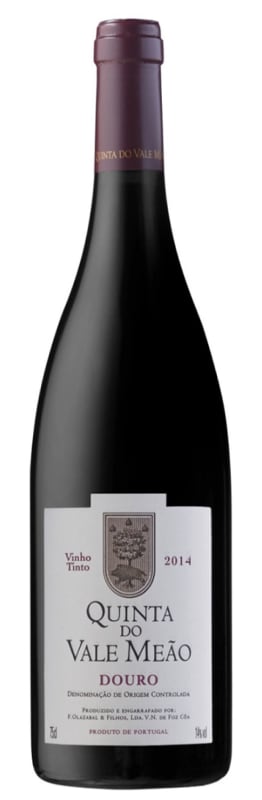


Winemaker Notes
Blend: 55% Touriga Nacional, 35% Touriga Franca, 5% Tinta Barroca, 5% Tinta Roriz
Professional Ratings
-
Wine Enthusiast
The estate is owned by the Olazabal family, descendants of Antonia Ferreira who created this and many other estates in the 19th century. This is a major wine, ripe and full of rich tannins and concentrated fruit. It is always one of the longest-lived wines from the Douro and this vintage has the structure and the fruit weight to develop well. An attractive spicy, smoky character adds extra interest. Drink from 2022.
Cellar Selection -
Robert Parker's Wine Advocate
The 2014 Tinto, the Estate flagship red, is a blend of 55% Touriga Nacional, 35% Touriga Franca, and 5% each of Tinta Roriz and Tinta Barroca, aged for 16 months in French barriques. It comes in at 14.7% alcohol. Winemaker Xito Olazabal said: "We are reducing the quantity of the wine aging in new oak. Some of the first editions of Vale Meão had almost 100% new oak, but I found it was too much, so in the last two vintages (2013 and 2014) the wines aged 65% in new barriques, 35% second year..." Bottled a month or so later than normal (because they were awaiting a new Amorim cork guaranteed to be TCA-free), this is rather gorgeous. In many ways, it seems rounder and softer than the Meandro, its second label sibling this issue, but the finish is longer, the flavors are more lifted and it has that old-school mid-palate finesse. It adds caressing texture, too, and then tightens a bit on the finish. The price of this iconic wine has spiked--now five times the price of the second label (Meandro), which is quite a spread. That said, this is fabled terroir and certainly one of the better 2014s. If this develops well, it may be entitled to an uptick.
-
Wine & Spirits
Dona Antónia de Ferreira purchased this property in 1877, exploring the far-eastern reaches of the Douro Superior, where the river hits a fault line and suddenly arcs north, exposing a vein of granite in the midst of the schist. The vineyard has remained in the family, now owned by Vito Olazabal, whose son, Xito, makes the wine. While the Olazabals have planted some vines high above the river on steep slopes, most of the vineyard is on a gentle rise fanning out along the banks of the Douro, facing east. As such, it’s a warm site exposed to the relatively cool morning sun; that, combined with a relatively cool season without a lot of drought stress, created an exceptional vintage of Vale Meão. This wine balances the density and sheer fatness the vineyard can offer with delicacy and elegance, its gravelly, broken-schist tannins letting in light and air. It’s smoothed by time in new oak, but the energy of the fruit shines through, with candied notes that only add to its charm.


With hundreds of red grape varieties to choose from, winemakers have the freedom to create a virtually endless assortment of blended red wines. In many European regions, strict laws are in place determining the set of varieties that may be used, but in the New World, experimentation is permitted and encouraged resulting in a wide variety of red wine styles. Blending can be utilized to enhance balance or create complexity, lending different layers of flavors and aromas. For example, a red wine blend variety that creates a fruity and full-bodied wine would do well combined with one that is naturally high in acidity and tannins. Sometimes small amounts of a particular variety are added to boost color or aromatics. Blending can take place before or after fermentation, with the latter, more popular option giving more control to the winemaker over the final qualities of the wine.
How to Serve Red Wine
A common piece of advice is to serve red wine at “room temperature,” but this suggestion is imprecise. After all, room temperature in January is likely to be quite different than in August, even considering the possible effect of central heating and air conditioning systems. The proper temperature to aim for is 55° F to 60° F for lighter-bodied reds and 60° F to 65° F for fuller-bodied wines.
How Long Does Red Wine Last?
Once opened and re-corked, a bottle stored in a cool, dark environment (like your fridge) will stay fresh and nicely drinkable for a day or two. There are products available that can extend that period by a couple of days. As for unopened bottles, optimal storage means keeping them on their sides in a moderately humid environment at about 57° F. Red wines stored in this manner will stay good – and possibly improve – for anywhere from one year to multiple decades. Assessing how long to hold on to a bottle is a complicated science. If you are planning long-term storage of your reds, seek the advice of a wine professional.

The home of Port—perhaps the most internationally acclaimed beverage—the Douro region of Portugal is one of the world’s oldest delimited wine regions, established in 1756. The vineyards of the Douro, set on the slopes surrounding the Douro River (known as the Duero in Spain), are incredibly steep, necessitating the use of terracing and thus, manual vineyard management as well as harvesting. The Douro's best sites, rare outcroppings of Cambrian schist, are reserved for vineyards that yield high quality Port.
While more than 100 indigenous varieties are approved for wine production in the Douro, there are five primary grapes that make up most Port and the region's excellent, though less known, red table wines. Touriga Nacional is the finest of these, prized for its deep color, tannins and floral aromatics. Tinta Roriz (Spain's Tempranillo) adds bright acidity and red fruit flavors. Touriga Franca shows great persistence of fruit and Tinta Barroca helps round out the blend with its supple texture. Tinta Cão, a fine but low-yielding variety, is now rarely planted but still highly valued for its ability to produce excellent, complex wines.
White wines, generally crisp, mineral-driven blends of Arinto, Viosinho, Gouveio, Malvasia Fina and an assortment of other rare but local varieties, are produced in small quantities but worth noting.
With hot summers and cool, wet winters, the Duoro has a maritime climate.