

Winemaker Notes
Professional Ratings
-
Robert Parker's Wine Advocate
The 2011 Late Bottled Vintage Port is an unfiltered field blend with a long cork. If you've been following my LBV comments, including last year's long article, you know that I mostly always think that traditional LBVs are a super value, perhaps the very best in Port. Add a terrific vintage to a traditional producer and there is not much to question here. Opening soft, lush and seductive, this expands in the glass and follows through with some tannic pop. It has a firm, tight finish. The expressive fruit is delicious now. As the vertical I did some time ago proved, though, these will age, acquire complexity and keep getting better. A few days later, it was showing fine definition of fruit and wonderful freshness that lifted and delivered the fruit to the palate. It seemed elegant all the while. This will have to evolve nicely to match the brilliant 1994 and 1997 in Crasto's oeuvre, but it seems right on track. In particular, it has that old school finesse that reminds me of some high-end Port. There's nothing clumsy here. It is well worth leaning up at the moment. Put it away for a few years and let it come together and show more complexity. It really needs a year or three to calm down in terms of tannic pop, but even after that it will gain complexity. There is no rush and it will offer a lot more if you wait until around 2022. Of course, if you buy enough, there is no reason to choose just one option.
-
Wine & Spirits
Vibrant from the color straight through the blueberry-skin tannins, this is brisk and almost blunt in its youthful power, hitting hard on schist flavors, with tannins that are slow to relent. Packed with dark berry fruit, this has the substance and muscular power of many full-on declared vintages. It’s bottled with a driven cork and designed to age.
-
Wine Spectator
This has a floral aroma, with flavors of raspberry, dark cherry and chocolate, layered with rich, spicy notes. Hints of pepper show on the finish, which offers moderate grip. Drink now through 2020.

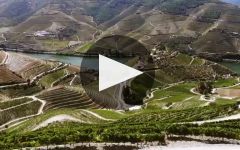


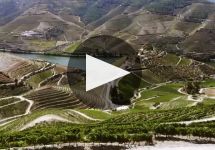
Nestled on a privileged location in the Douro, Quinta do Crasto is one of the oldest winemaking estates in the region – the name ‘Crasto’ is derived from the Latin word ‘castrum’, which means ‘Roman fort’. The first known references to Quinta do Crasto can be traced back to 1615, long before the Douro became the world’s first Demarcated Wine Region in 1756. In the early 1900s, Quinta do Crasto was purchased by Constantino de Almeida, the founder of the famous Constantino Port house. Today, his granddaughter, Leonor Roquette, and her husband Jorge Roquette own and manage the estate, together with their sons, Miguel and Tomás. The Roquette family has invested tremendous time, attention, and resources to rebuild and expand the vineyards and facilities to produce top quality Port and Douro table wines. Vineyard mapping, DNA-matched replanting, a new state-of-the-art wine cellar and centuries of tradition mean that no detail in the winemaking and vineyard management is overlooked.
Quinta do Crasto produces different styles of port and table wines each year. Together with their winemakers and their entire team, they seek to produce year after year wines that display the unique and beautiful characteristics of the Douro, through a tireless devotion to tradition, integrity and excellence.

Port is a sweet, fortified wine with numerous styles: Ruby, Tawny, Vintage, Late Bottled Vintage (LBV), White, Colheita, and a few unusual others. It is blended from from the most important red grapes of the Douro Valley, based primarily on Touriga Nacional with over 80 other varieties approved for use. Most Ports are best served slightly chilled at around 55-65°F. To learn more, see our full Port Wine Guide

The home of Port—perhaps the most internationally acclaimed beverage—the Douro region of Portugal is one of the world’s oldest delimited wine regions, established in 1756. The vineyards of the Douro, set on the slopes surrounding the Douro River (known as the Duero in Spain), are incredibly steep, necessitating the use of terracing and thus, manual vineyard management as well as harvesting. The Douro's best sites, rare outcroppings of Cambrian schist, are reserved for vineyards that yield high quality Port.
While more than 100 indigenous varieties are approved for wine production in the Douro, there are five primary grapes that make up most Port and the region's excellent, though less known, red table wines. Touriga Nacional is the finest of these, prized for its deep color, tannins and floral aromatics. Tinta Roriz (Spain's Tempranillo) adds bright acidity and red fruit flavors. Touriga Franca shows great persistence of fruit and Tinta Barroca helps round out the blend with its supple texture. Tinta Cão, a fine but low-yielding variety, is now rarely planted but still highly valued for its ability to produce excellent, complex wines.
White wines, generally crisp, mineral-driven blends of Arinto, Viosinho, Gouveio, Malvasia Fina and an assortment of other rare but local varieties, are produced in small quantities but worth noting.
With hot summers and cool, wet winters, the Duoro has a maritime climate.