

Winemaker Notes
Professional Ratings
-
Robert Parker's Wine Advocate
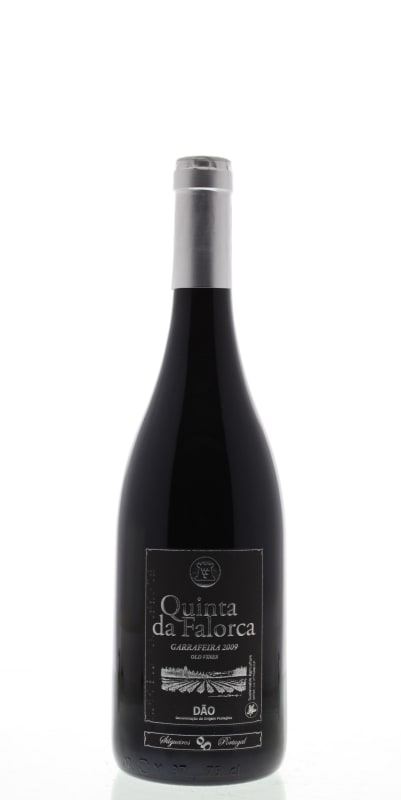
The 2009 Garrafeira Quinta da Falorca Old Vines is revisited this issue. It was previously seen only in Portugal. It is principally a blend of Touriga Nacional (70%) and Tinta Roriz (15%) with Rufete and several others for the remainder. After 24 months in French oak, this was transferred to stainless steel for another 24 months. This is the current release. It is not cheap, but there is a lot of investment of winery time and money here. Given their time and effort, plus the successful result, I can't complain. This old vines blend (80 years old, from Esmoitada vineyard) is remarkable. It seems like a very fine Burgundy, something with finesse, focus and gorgeous craftsmanship. The oak is still too prominent, but at no level suggested by the statistics. With several months more since I first saw it, it has been pulled in a bit already. The elegance of the mid-palate belies the persistence, intensity and focus here. As it airs out, it develops a certain, earthy note underneath that gives it complexity, too. It is far more expressive and approachable now than it was when I saw it last summer. It is a superlative effort in every respect, brilliantly balanced and rather tasty, too, if you can ever get around to paying to attention to its fruit rather than its structure. Serve this blind, tell them it is French Grand Cru from an unstated region and watch the accolades pour forth. Then, you can explain why they should be paying more attention to Portugal. This should age beautifully, by the way. Twenty to twenty-five years here seems pretty easy given the structure of this wine. The only question is whether it will do even better – I like to be conservative. For what it is worth, it was brilliant the next day, but, if anything, it had actually increased in intensity rather than smoothed out. It was more powerful and silkier, showing more and more like a big Burgundy, with its crisp finish and intensity of flavor, too. There was a somewhat harder edge, though, perhaps to a fault, but with more hours of aeration, it was better still. If you're looking for modern, soft and sweet, this isn't going to be it. You need a cellar and some patience. There were just 4,400 bottles produced – not surprising, since the entire production of this superb boutique is typically only about 50,000 bottles.


With hundreds of red grape varieties to choose from, winemakers have the freedom to create a virtually endless assortment of blended red wines. In many European regions, strict laws are in place determining the set of varieties that may be used, but in the New World, experimentation is permitted and encouraged resulting in a wide variety of red wine styles. Blending can be utilized to enhance balance or create complexity, lending different layers of flavors and aromas. For example, a red wine blend variety that creates a fruity and full-bodied wine would do well combined with one that is naturally high in acidity and tannins. Sometimes small amounts of a particular variety are added to boost color or aromatics. Blending can take place before or after fermentation, with the latter, more popular option giving more control to the winemaker over the final qualities of the wine.
How to Serve Red Wine
A common piece of advice is to serve red wine at “room temperature,” but this suggestion is imprecise. After all, room temperature in January is likely to be quite different than in August, even considering the possible effect of central heating and air conditioning systems. The proper temperature to aim for is 55° F to 60° F for lighter-bodied reds and 60° F to 65° F for fuller-bodied wines.
How Long Does Red Wine Last?
Once opened and re-corked, a bottle stored in a cool, dark environment (like your fridge) will stay fresh and nicely drinkable for a day or two. There are products available that can extend that period by a couple of days. As for unopened bottles, optimal storage means keeping them on their sides in a moderately humid environment at about 57° F. Red wines stored in this manner will stay good – and possibly improve – for anywhere from one year to multiple decades. Assessing how long to hold on to a bottle is a complicated science. If you are planning long-term storage of your reds, seek the advice of a wine professional.

Best known for intense, impressive and age-worthy fortified wines, Portugal relies almost exclusively on its many indigenous grape varieties. Bordering Spain to its north and east, and the Atlantic Ocean on its west and south coasts, this is a land where tradition reigns supreme, due to its relative geographical and, for much of the 20th century, political isolation. A long and narrow but small country, Portugal claims considerable diversity in climate and wine styles, with milder weather in the north and significantly more rainfall near the coast.
While Port (named after its city of Oporto on the Atlantic Coast at the end of the Douro Valley), made Portugal famous, Portugal is also an excellent source of dry red and white Portuguese wines of various styles.
The Douro Valley produces full-bodied and concentrated dry red Portuguese wines made from the same set of grape varieties used for Port, which include Touriga Nacional, Tinta Roriz (Spain’s Tempranillo), Touriga Franca, Tinta Barroca and Tinto Cão, among a long list of others in minor proportions.
Other dry Portuguese wines include the tart, slightly effervescent Vinho Verde white wine, made in the north, and the bright, elegant reds and whites of the Dão as well as the bold, and fruit-driven reds and whites of the southern, Alentejo.
The nation’s other important fortified wine, Madeira, is produced on the eponymous island off the North African coast.