


Winemaker Notes
Dark berries and blue fruit aromas seasoned with creamy oak spices. It is very concentrated with a very firm yet polished tannic structure, showing an attractive finesse. It is lively, bright and youthful.
Vegan-Friendly
Professional Ratings
-
James Suckling
Dried rose petals and other flowers with cherry blossom and wild strawberry aromas. Full-bodied yet agile and energetic. So polished and beautiful. A benchmark for the vintage in Chianti Classico. From biodynamically grown grapes.
-
Vinous
The 2018 Chianti Classico Gran Selezione is a powerful, dense wine. Frost in 2017 affected the next vintage's potential yield, which likely explains the sheer intensity here. Dark cherry, plum, mocha, leather and sage all saturate the palate. There's tremendous creaminess and depth here. I can't wait to see how the 2018 ages, as it is a pretty big wine by Querciabella standards.
-
Wine & Spirits
This is the second release of Querciabella’s Gran Selezione, the sangiovese harvested from high-elevation plots near Ruffoli in the Greve UGA. Winemaker Manfred Ing macerates his wine with a submerged cap, promoting gentle extraction of tannins while maintaining intense aromas of soft rose petal and fresh red cherry. This is a refreshingly high-toned Gran Selezione, the buoyant red fruit infused with notes of fennel bulb and tarragon that persist through the poised and precise finish.
-
Decanter
Querciabella’s second Gran Selezione release is the realisation of a decade-long vineyard study to create a single vineyard Chianti Classico. It hails from a 500-metre site in the hamlet of Ruffoli, within the UGA of Greve. Intense aromas of coffee, grilled fennel and eucalyptus are followed by a refreshing blood orange flavour which invigorates the dense dark cherry core, finishing with lingering incense. There's a charming accessibility here as skillfully extracted tannins are chewy yet supple. While I don’t suspect this will be the longest-lived offering from Querciabella, this delicious wine interprets the vintage well and deserves a place in the cellar.
-
Wine Enthusiast
The nose is like a summer evening breeze carrying aromas of wild strawberry, raspberry and rose petals, while undertones of rhubarb, mint and earth waft up from the garden. The fruit and flowers blossom on the round, full palate, which is opulent but welcoming, with an elegant warm salty finish.
-
Jeb Dunnuck
The candied aromas of the 2018 Chianti Classico Gran Selezione include violet candy, black cherry liqueur, and a bit of some blue and purple fruit as well. The palate is full of more ripe mixed berries and is dry, with a muscular structure, but not heavy. Its fresh acidity on the finish lifts it off the palate with ease. Drink 2024-2036.
-
Robert Parker's Wine Advocate
This is my first sample of a Gran Selezione by Querciabella. Made with certified organic fruit (and sporting a hefty price tag), the 2018 Chianti Classico Gran Selezione Querciabella draws its fruit from the Ruffoli Vineyard in Greve in Chianti with vines planted in schistous galestro and sandstone soils at a cool 500 meters in elevation. This vintage comes off as open and accessible with warm-vintage fruit, tobacco, crushed stone and dried rose. There is a hint of soft cherry ripeness. The wine comes in a heavy glass bottle with 4,000 of them made.
-
Wine Spectator
Cherry, raspberry, rose, mineral and menthol aromas and flavors mark this supple, complex red, which is balanced, with a line of acidity and tannins keeping everything long and well-defined. Best from 2025 through 2040.



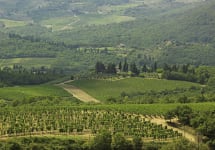
Founded in 1974, Querciabella enjoys the acclaim of the world’s most discriminating critics and consumers for wines such as Camartina, Batàr, Palafreno and Querciabella Chianti Classico. In its uncompromising pursuit of quality, sustainability and authenticity, Querciabella has continually honed its approach to biodynamic viticulture for over a decade. With vineyards located throughout Tuscany’s Chianti Classico and Maremma areas, Querciabella exemplifies the mindful preservation of tradition through forward-thinking, albeit completely natural, winemaking.
With 183 acres of prime Chianti Classico vineyards – located in the municipalities of Greve, Panzano, Radda and Gaiole – in addition to 79 acres in Maremma on Tuscany’s unspoiled Etruscan coast, Querciabella’s holdings represent the largest extensions of biodynamically farmed (certified organic) vineyards in Italy, contributing extraordinary biodiversity to local and surrounding ecosystems and serving as a sanctuary for thriving numbers of honeybee colonies.

Among Italy's elite red grape varieties, Sangiovese has the perfect intersection of bright red fruit and savory earthiness and is responsible for the best red wines of Tuscany. While it is best known as the chief component of Chianti, it is also the main grape in Vino Nobile di Montepulciano and reaches the height of its power and intensity in the complex, long-lived Brunello di Montalcino. Somm Secret—Sangiovese doubles under the alias, Nielluccio, on the French island of Corsica where it produces distinctly floral and refreshing reds and rosés.

One of the first wine regions anywhere to be officially recognized and delimited, Chianti Classico is today what was originally defined simply as Chianti. Already identified by the early 18th century as a superior zone, the official name of Chianti was proclaimed upon the area surrounding the townships of Castellina, Radda and Gaiole, just north of Siena, by Cosimo III, Grand Duke of Tuscany in an official decree in 1716.
However, by the 1930s the Italian government had appended this historic zone with additonal land in order to capitalize on the Chianti name. It wasn’t until 1996 that Chianti Classico became autonomous once again when the government granted a separate DOCG (Denominazione di Origine Controllata e Garantita) to its borders. Ever since, Chianti Classico considers itself no longer a subzone of Chianti.
Many Classicos are today made of 100% Sangiovese but can include up to 20% of other approved varieties grown within the Classico borders. The best Classicos will have a bright acidity, supple tannins and be full-bodied with plenty of ripe fruit (plums, black cherry, blackberry). Also common among the best Classicos are expressive notes of cedar, dried herbs, fennel, balsamic or tobacco.