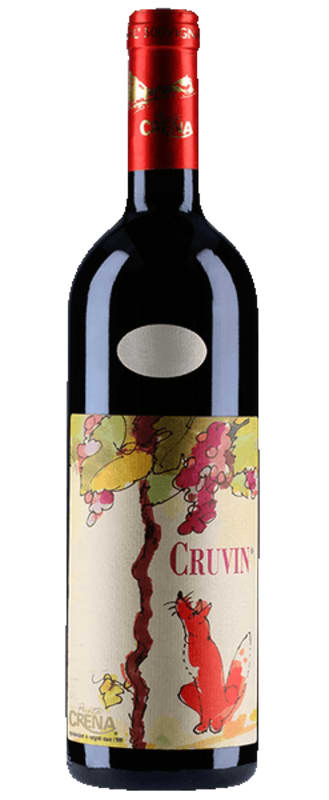


Winemaker Notes
Delightfully fresh, spicy, medium-bodied red scented of tart blackberries, wild mint, and other aromatic herbs you would find on a hike through Liguria's coastal mountains.


Disenchanted with Italian winemaking laws in the 1970s, a few rebellious Tuscan winemakers decided to get creative. Instead of following tradition, to bottle Sangiovese by itself, they started blending it with international varieties, namely Cabernet Sauvignon, Merlot and Syrah in differing proportions and with amazing success. However, some Tuscan Blends don’t even include Sangiovese. Somm Secret—The suffix –aia in Italian modifies a word in much the same way –y acts in English. For example, a place with many stones (sassi) becomes Sassicaia. While not all Super Tuscan producer names end in –aia, they all share a certain coy nomenclature.

Forming a crescent along Italy’s northwestern Mediterranean coast, Liguria is one of the country’s smallest regions. Though its ports, Genoa and Savona have welcomed foreign influence for centuries, the region today is experiencing a fresh interest in its own indigenous varieties. Liguria commits large efforts to the white Vermentino (also called Pigato) and the red varieties Rossese, Sangiovese and Dolcetto (also called Ormeasco in Liguria).
Liguria has no shortage of dizzyingly steep, coastal vineyards. On its eastern end in Cinqueterre, Vermentino grows along cliffs overlooking the Mediterranean. On its west, bordering France, terraced, seaside vineyards are home to Rossese di Dolceacqua, Liguria’s powerful yet highly aromatic red.