


Winemaker Notes
Rich black fruit, cinnamon and clove. Flavors of compote fruit, sweet pastry and baking spices. Long finish of fruit compote and toffee.
Pair with beef roasts and cheese boards with nuts and dried fruits.
Professional Ratings
-
Wine Enthusiast
This black cherry-colored wine has aromas of fruits of the wood, espresso bean and olive tapenade. It is luscious on the palate, with layers of lavish tannins encasing flavors of blackberry preserves, vanilla bean, bittersweet chocolate and a tiny hint of earthiness that adds interest to the palate. The slightly grippy finish features a parting note of violet. Drink through 2039.
Cellar Selection -
James Suckling
Tarry nose with fresh blackberries, blueberries, blue plums, graphite, pine cones and sandalwood. A hint of coca-cola, too. A concentrated yet juicy expression of Ribera del Duero with a full body and chewy structure that melts into the fruit. Solid and bold. Coming from a single vineyard.
-
Vinous
Sourced from Ribera del Duero and was aged 200% in new French oak, the 2019 Portia Triennia reveals aromas of cassis and menthol alongside black fruit and aging notes of plum, cedar, licorice, anise and field herbs. The palate is dry and slightly indulgent, offering broad, chalky tannins and a gentle grip that leads to a long, layered finish. This is a Ribera straddling modernity and classicism, with a deep dry extract sensation.
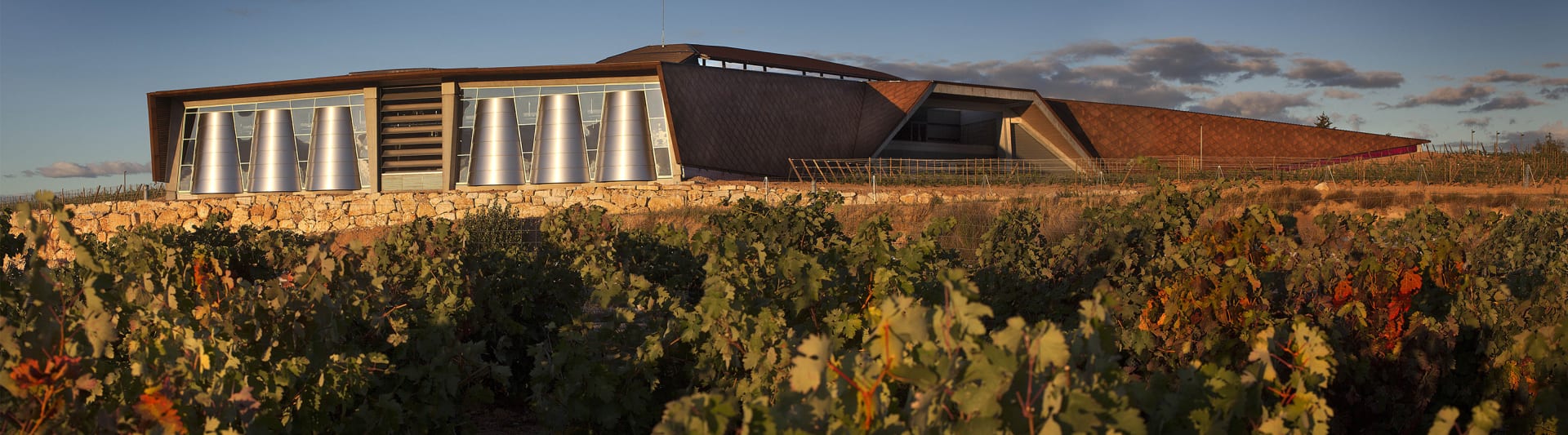


Construction of the spectacular $25.6-million Portia winemaking facility is currently in progress. Commissioned by the Martinez family, the project represents the first ever winery designed by internationally famed architect Norman Foster, head of the London-based design team, Foster + Partners.
The property embraces 400 acres of terrain enjoying an eastern and southern orientation in Ribera del Duero. Vineyards are planted chiefly with Tempranillo (known locally as Tinta Fina) at an average density of 1,200 vines per acre.

Notoriously food-friendly, long-lasting and Spain’s most widely planted grape, Tempranillo is the star variety of red wines from Rioja and Ribera del Duero. The Rioja terms Joven, Crianza, Reserva and Gran Reserva indicate both barrel and bottle time before release. Traditionally blended in Rioja with Garnacha, plus a bit of Mazuelo (Carignan) and Graciano, the Tempranillo in Ribera del Duero typically stands alone. Somm Secret—Tempranillo claims many different names depending on location. In Penedès, it is called Ull de Llebre and in Valdepeñas, goes by Cencibel. Known as Tinta Roriz in Portugal, Tempranillo plays an important role in Port wine.

Ribera del Duero, Spanish wine region, is located in northen Spain’s Castilla y León region, just a 2-hour drive from Madrid. While winemaking in this area goes back more than 2000 years, it was in the 1980s that 9 wineries applied for and were granted Denominación de Origen (D.O.) status. Today, more than 300 wineries call Ribera del Duero home, including some of Spain’s most iconic names.
Notable Facts Ribera’s main grape variety, Tempranillo, locally know as Tinto Fino, is perfectly suited to the extreme climate of the region, where it must survive scorching summers and frigid winters. Low yields resulting from conscientious tending to old vines planted in Ribera’s diverse soils types, give Ribera wines a distinctive depth and complexity not found in other Tempranillos. Rich and full-bodied, the spice, dark fruit and smoky flavors in a bold Ribera del Duero will pair well with roasted and grilled meats, Mexican food and tomato-based sauces.