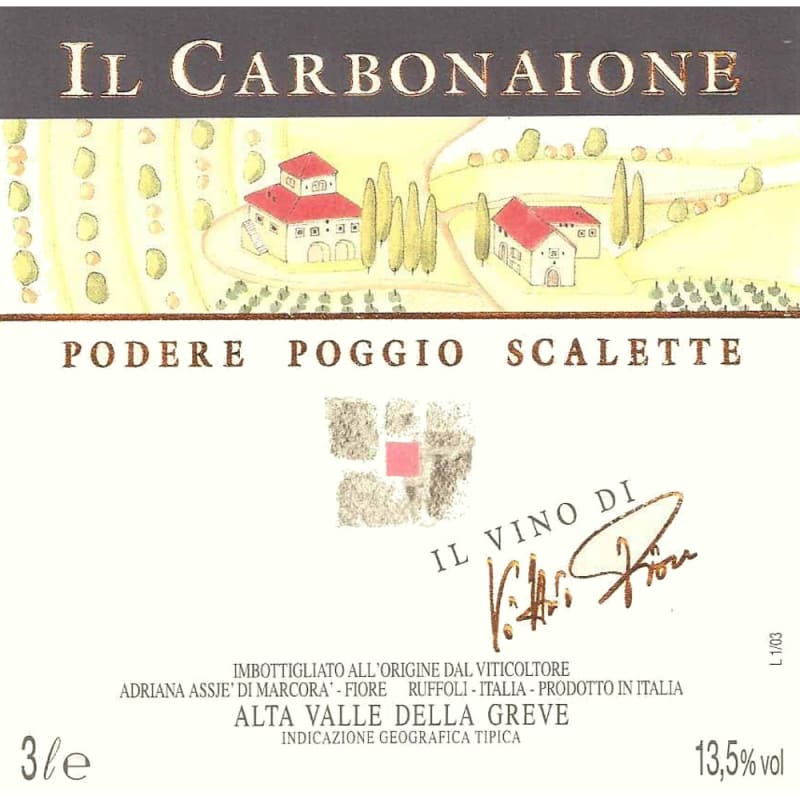

Winemaker Notes
Professional Ratings
-
Robert Parker's Wine Advocate
The 2005 is a lithe, silky-textured Carbonaione, with perfumed aromatics and an attractive core of ripe red fruits. In 2005 the harvest season saw a full week of rain, which can be felt in the wine's smaller scale. Today it comes across as lacking the stuffing of the finest vintages, but this is a wine that ages well, especially in cooler years, and I am confident that will be the case here as well. For now, the wine requires at least another year or two in bottle to absorb the toasted oak that is prominent at this stage. Interestingly, the 2005 shows more overt oak aromas and flavors than the 2006, which was taken directly from barrel, no doubt owing to the quality of the fruit. Anticipated maturity: 2010-2020
-
Wine Spectator
Shows very pretty sliced plum, with hints of toasty oak and flowers. Full-bodied, with a fruity aftertaste of vanilla and light chocolate. I love the perfumes in this wine. Sangiovese. Best after 2010. 2,300 cases made.


Legendary in Italy for its Renaissance art and striking landscape, Tuscany is also home to many of the country’s best red wines. Sangiovese reigns supreme here, as either the single varietal, or a dominant player, in almost all of Tuscany’s best.
A remarkable Chianti, named for its region of origin, will have a bright acidity, supple tannins and plenty of cherry fruit character. From the hills and valleys surrounding the medieval village of Montalcino, come the distinguished and age-worthy wines based on Brunello (Sangiovese). Earning global acclaim since the 1970s, the Tuscan Blends are composed solely of international grape varieties or a mix of international and Sangiovese. The wine called Vine Nobile di Montepulciano, composed of Prognolo Gentile (Sangiovese) and is recognized both for finesse and power.