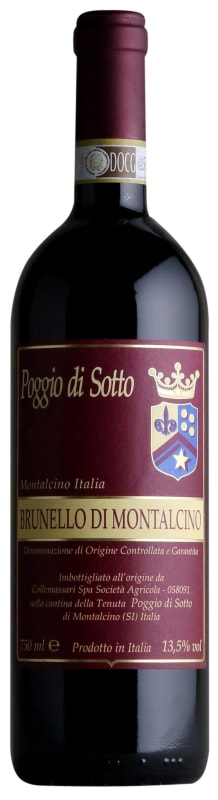


Winemaker Notes
Parallels to the red wines of Burgundy abound in discussions of Poggio di Sotto. The Sangiovese wines released from this special property do always favor elegance and restraint over opulence and power, yet they never lack depth. Normally a paler hue of ruby than other Brunello wines, Poggio di Sotto’s tameness of color belies concentrated aromas and flavors. A profile anchored in bright cherry fruit is framed by highlights of balsamic, baking spice, and candied orange peel. The tannin structure is firm yet ripe and will carry the wine well through decades of cellaring. A classic wine from one of the world’s great wine regions.
Equally at home with flavorful meats from the grill as with refined and layered dishes. Considered a "Vino da Meditazione," Poggio di Sotto Brunello is also enjoyable on its own.
Professional Ratings
-
James Suckling
Very leafy and spicy in a positive way, with notes of kiwi peel, stone fruit, leather, straw and licorice. Supple palate with a full body, almost silky tannins and refreshing acidity. Fresh fruit flavors of orange peel and peaches. Tight, youthful finish that’s precise and long.
-
Jeb Dunnuck
Tasting as part of a short vertical at the estate, the 2018 Brunello Di Montalcino sports a bright ruby color and is aromatic with notes of cranberries, orange oils, fresh spice, anise, and crushed stones. The palate is beautifully pure, with raspberry notes, a linear feel, and wonderful elegance as well as fine tannins and a long, graceful finish.
-
Robert Parker's Wine Advocate
The Poggio di Sotto 2018 Brunello di Montalcino has a core of bright cherry fruit and baking spice that is surrounded by a ferrous note of iron ore or rust that is almost salty in taste. That metallic or saline quality plays out beautifully across abundant dark berry fruit.
-
Wine & Spirits
This wine feels soft and succulent at first, its red cherry flavors layered with notes of loamy soil and subtle spice. The wine gains energy and precision over time as the cool, ferrous tannins firm up the fruit tones and bring a suggestion of minerality. Its depth and ripeness are impressive for the vintage.
-
Decanter
In southern Montalcino, near the town of Castelnuovo dell’Abate, Poggio di Sotto captures the lightness of the vintage with aplomb, and long maturation in 30hl Slavonian oak casks has not compromised its vitality. With pretty and precise aromas of cherry and raspberry it's redolent of summer, yet fragrant wet leaves and woodsy rosehip speak of autumn. The palate is finessed and fluid, moving with grace. Chalky tannins cling discreetly yet persistently. An underlying luscious ripeness is positively moreish.
-
Wine Enthusiast
The nose is metallic, earthy and stony, with cherry undertones providing levity. Cherries take a star turn on the palate, with strawberries and raspberries playing crucial supporting roles, while a tension between astringent orange and creamy mocha emerges on the lengthy finish. Robust tannins and fiery acidity prove ageworthiness.
-
Wine Spectator
This red is marked by cherry, plum, thyme, sage and loam aromas and flavors. Lively and firmly structured, featuring a saline undercurrent. An open-knit version, with nice equilibrium, fine energy and a long, resonant finish


Among Italy's elite red grape varieties, Sangiovese has the perfect intersection of bright red fruit and savory earthiness and is responsible for the best red wines of Tuscany. While it is best known as the chief component of Chianti, it is also the main grape in Vino Nobile di Montepulciano and reaches the height of its power and intensity in the complex, long-lived Brunello di Montalcino. Somm Secret—Sangiovese doubles under the alias, Nielluccio, on the French island of Corsica where it produces distinctly floral and refreshing reds and rosés.

Famous for its bold, layered and long-lived red, Brunello di Montalcino, the town of Montalcino is about 70 miles south of Florence, and has a warmer and drier climate than that of its neighbor, Chianti. The Sangiovese grape is king here, as it is in Chianti, but Montalcino has its own clone called Brunello.
The Brunello vineyards of Montalcino blanket the rolling hills surrounding the village and fan out at various elevations, creating the potential for Brunello wines expressing different styles. From the valleys, where deeper deposits of clay are found, come wines typically bolder, more concentrated and rich in opulent black fruit. The hillside vineyards produce wines more concentrated in red fruits and floral aromas; these sites reach up to over 1,600 feet and have shallow soils of rocks and shale.
Brunello di Montalcino by law must be aged a minimum of four years, including two years in barrel before realease and once released, typically needs more time in bottle for its drinking potential to be fully reached. The good news is that Montalcino makes a “baby brother” version. The wines called Rosso di Montalcino are often made from younger vines, aged for about a year before release, offer extraordinary values and are ready to drink young.