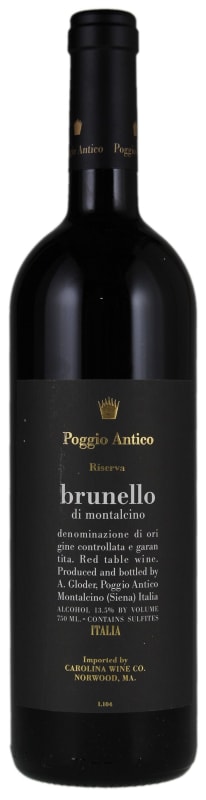


Winemaker Notes
Professional Ratings
-
Robert Parker's Wine Advocate
A beautifully layered, expressive wine, Poggio Antico's 2007 Brunello di Montalcino Riserva caresses the palate with exceptional elegance, finesse and total class. Sage, rosemary, licorice and tobacco all flesh out as this radiant Brunello shows off its considerable personality. Hints of dried rose petals add intrigue on the finish. This is without question one of the very best 2007 Riservas readers will come across.
-
Wine Enthusiast
Here’s a home run from one of the best producers in Montalcino. With sun drenched, sea-facing vineyards (this is one of the only spots where you can see the shimmering Mediterranean from Montalcino), this dense riserva doles out lingering flavors of spice, cherry, leather and tobacco. The acidity is perfectly balanced against the wine’s soft fruit.
-
Wine Spectator
The oak and fruit elements are well-balanced in this contemporary red, with sweet cherry and plum flavors enhanced by spice, tea and tobacco accents. The tannins are fleshed out by plenty of fruit, and the finish is fresh and long. Best from 2015 through 2030.





Nestled on the highest vineyard hill south of Montalcino, Poggio Antico spans 91 acres at an average altitude of 1,804 feet. The estate predominantly cultivates Sangiovese, with smaller plots of Cabernet Sauvignon and Chardonnay. The unique calcareous and Galestro soils enhance the Sangiovese grapes, producing the complex and elegant Brunello.
Founded in 1976, Poggio is divided into four main areas, is fully certified organic, focusing on sustainable practices like green manure and permanent grassing to nurture soil health and biodiversity. Poggio Antico's vineyards, managed with meticulous care, have been divided into 15 Units of soil. These precise agricultural practices ensure each vine's optimal expression, with plot-by-plot winemaking and aging to preserve the unique characteristics of each soil unit and express the real identity.
The diversity of soils, different but always high altitudes (1,640–2,034 feet asl), different exposures, Sangiovese biotypes, separated cultivation, harvest, vinification, and aging, create a symphony that is carefully directed by a specific winemaking style where elegance, freshness, and identity of the terroir are the principles of the winery. Poggio Antico’s commitment to quality is evident in their selective harvesting and organic cultivation, aiming to create wines that truly embody the essence of the terroir.

Among Italy's elite red grape varieties, Sangiovese has the perfect intersection of bright red fruit and savory earthiness and is responsible for the best red wines of Tuscany. While it is best known as the chief component of Chianti, it is also the main grape in Vino Nobile di Montepulciano and reaches the height of its power and intensity in the complex, long-lived Brunello di Montalcino. Somm Secret—Sangiovese doubles under the alias, Nielluccio, on the French island of Corsica where it produces distinctly floral and refreshing reds and rosés.

Famous for its bold, layered and long-lived red, Brunello di Montalcino, the town of Montalcino is about 70 miles south of Florence, and has a warmer and drier climate than that of its neighbor, Chianti. The Sangiovese grape is king here, as it is in Chianti, but Montalcino has its own clone called Brunello.
The Brunello vineyards of Montalcino blanket the rolling hills surrounding the village and fan out at various elevations, creating the potential for Brunello wines expressing different styles. From the valleys, where deeper deposits of clay are found, come wines typically bolder, more concentrated and rich in opulent black fruit. The hillside vineyards produce wines more concentrated in red fruits and floral aromas; these sites reach up to over 1,600 feet and have shallow soils of rocks and shale.
Brunello di Montalcino by law must be aged a minimum of four years, including two years in barrel before realease and once released, typically needs more time in bottle for its drinking potential to be fully reached. The good news is that Montalcino makes a “baby brother” version. The wines called Rosso di Montalcino are often made from younger vines, aged for about a year before release, offer extraordinary values and are ready to drink young.