
Winemaker Notes
Professional Ratings
-
Jeb Dunnuck
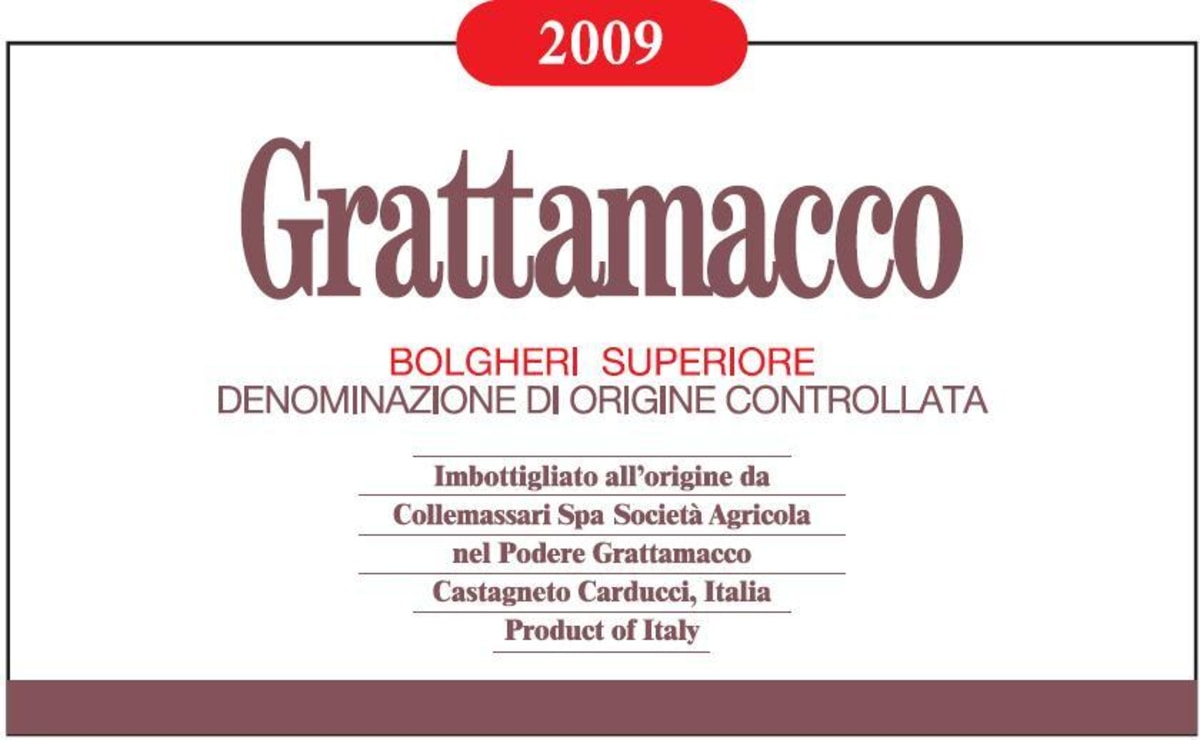
The 2009 Grattamacco is a deep red/brick hue and was made from 65% Cabernet Sauvignon, 20% Merlot, and the rest Sangiovese. (It’s always the same blend.) It opens to notes of tobacco, fresh earth, pine, cherries, kirsch, and leather, and the palate is full-bodied and balanced, with velvety tannins, mouthwatering acidity, balsamic herbs lasting on the long, salty finish.
-
James Suckling
An evolved wine with aromas of meat, mature dried fruit and chocolate. It’s less complex than usual. Full-bodied, it shows density, velvety tannins and slightly lifted acidity in the finish. Polished yet chewy and savory.
-
Robert Parker's Wine Advocate
This bottle gives us a stunning view back in time. The 2009 Bolgheri Superiore Grattamacco needs a little extra time to open, but it eventually reveals a beautifully lifted bouquet with dark fruit, tar and licorice. This wine does not show the green balsamic tones that we saw in the 2008 vintage that I also tasted at the same time. This wine taste much younger than its real age and still has time to age. Interestingly, the alcohol content is 14% (similar to the 2008), and these are the first vintages in which we start to see higher alcohol due to climate change, I am told by the winery team.


Disenchanted with Italian winemaking laws in the 1970s, a few rebellious Tuscan winemakers decided to get creative. Instead of following tradition, to bottle Sangiovese by itself, they started blending it with international varieties, namely Cabernet Sauvignon, Merlot and Syrah in differing proportions and with amazing success. However, some Tuscan Blends don’t even include Sangiovese. Somm Secret—The suffix –aia in Italian modifies a word in much the same way –y acts in English. For example, a place with many stones (sassi) becomes Sassicaia. While not all Super Tuscan producer names end in –aia, they all share a certain coy nomenclature.

An outstanding wine region made famous by Marchese Mario Incisa della Rocchetta, who planted Cabernet Sauvignon vines for his own consumption in 1940s on his San Guido estate, and called the resulting wine, Sassicaia. Today the region’s Tuscan reds are based on Cabernet Sauvignon and Merlot, which can be made as single varietal wines or blends. The local Sangiovese can make up no more than 50% of the blends. Today Sassicaia has its own DOC designation within the Bogheri DOC appellation.