


Winemaker Notes
Ripe, honeyed stone fruit with hints of grilled nuts, broad-textured with typical minerality rounding out this classy white.
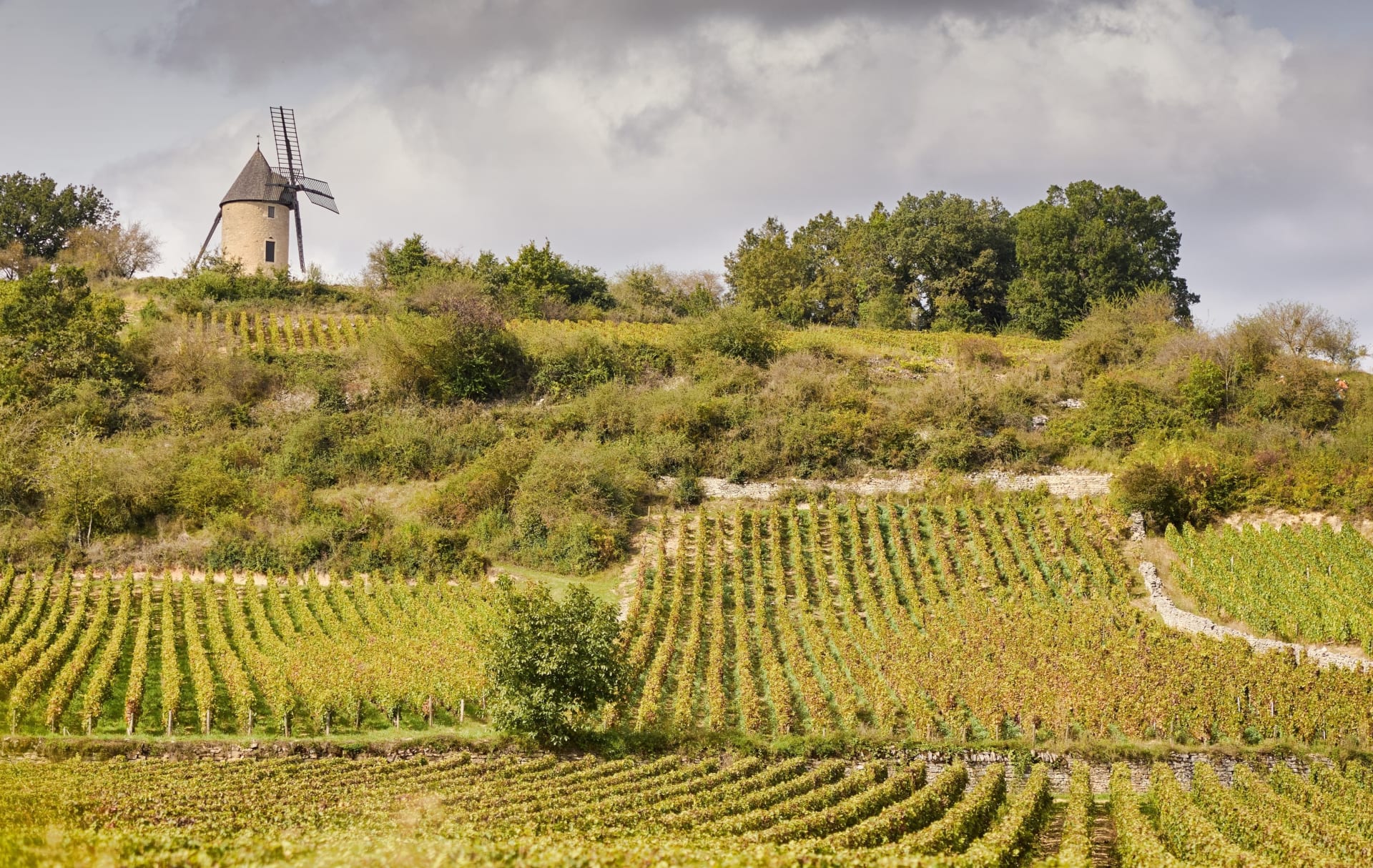



Domaine du Château Philippe le Hardi (formerly Château de Santenay) was once the majestic stately home of the first Duke of Burgundy. This historic estate is one of Burgundy’s most prestigious producers with its colorful glazed roof tiles. Working in a very natural way, they farm their 200+ acres of vineyards throughout the Côte d’Or and Côte Chalonnaise. Their wines are distinctive and reflect the delicate complexities of each unique vineyard site. For the last 20 years, the domaine has been taking an environmentally-friendly approach to growing, proving itself to be a true pioneer in this respect. It has been TERRA VITIS certified since 2004 and was certified by the Ministry of Agriculture in 2009 for its use of sustainable growing methods. In 2015, it was one of the first wine domaines to receive ‘High Environmental Value’ (HEV 3) certification respecting a new set of specifications issued by the French Ministry of Agriculture. In 2016, the domaine set up an apiary close to the vineyards in order to verify that the techniques used were harmless to bees, which are very sensitive to the environment. Plans are already in place to introduce more hives.

One of the most popular and versatile white wine grapes, Chardonnay offers a wide range of flavors and styles depending on where it is grown and how it is made. While it tends to flourish in most environments, Chardonnay from its Burgundian homeland produces some of the most remarkable and longest lived examples. California produces both oaky, buttery styles and leaner, European-inspired wines. Somm Secret—The Burgundian subregion of Chablis, while typically using older oak barrels, produces a bright style similar to the unoaked style. Anyone who doesn't like oaky Chardonnay would likely enjoy Chablis.

A Côte de Beaune village of Burgundy most famous for its beautifully textured and powerful whites, Chassagne-Montrachet reaches farthest south in the Côte d’Or, save for the village of Santenay. It has three Grands Crus vineyards: Le Montrachet, Bâtard-Montrachet and Criots-Bâtard-Montrachet. Le Montrachet and Bâtard-Montrachet overlap with and are (confusingly) shared with the village of Puligny-Montrachet. But Chassagne-Montrachet bears sole ownership of the Criots-Bâtard-Montrachet Grand Cru.
The beauty doesn’t stop there as the village has a great many outstanding Premiers Crus wines and village level wines. Most famous Premiers Crus vineyards include Les Chenevottes, Clos de la Maltroie, En Cailleret and Les Ruchottes. Also, village level wines offer many lovely examples of what Chassagne-Montrachet has to offer, but at more approachable price points and perhaps less demand of waiting.
The best sites in Chassagne-Montrachet have complex soils of sedimentary rock and limestone (with less marl). Whites, which are by law composed of 100% Chardonnay (as in all classified white Burgundy from Côte d’Or), have steely power, bright and concentrated citrus, stone or tropical fruit characteristics and attractive textures ranging from plush to tactile, grippy and mineral-driven.
There is some fine Pinot Noir produced from the village. These wines tend to be high-toned and earthy, with wild herb aromas and suave tannins.