
Winemaker Notes
Professional Ratings
-
Vinous
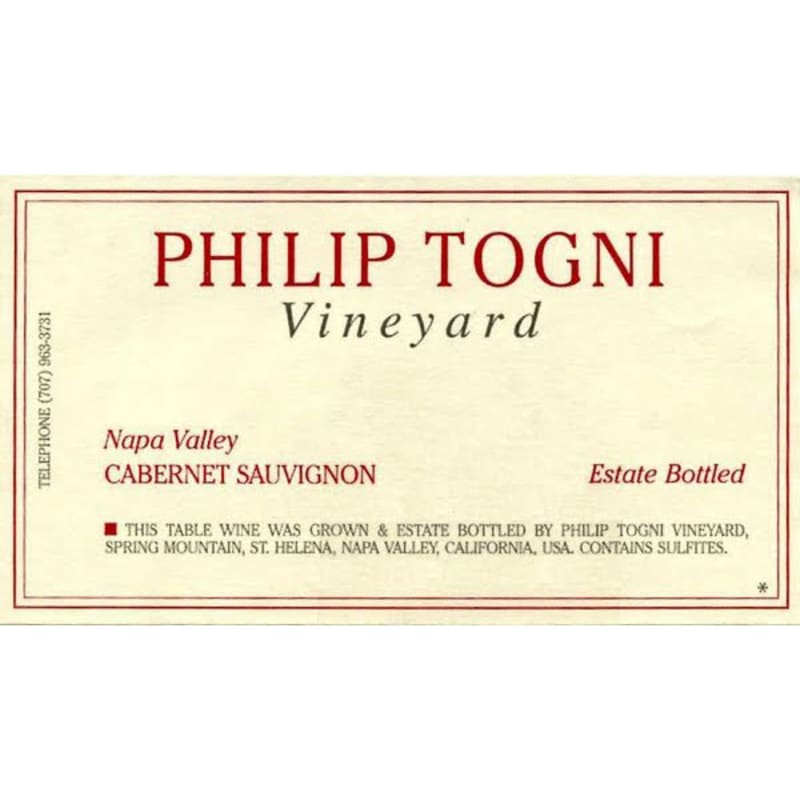
The 1991 Cabernet Sauvignon Estate is a heady, flamboyant wine. Rich, dense and shockingly unctuous in the glass, the 1991 is a timeless beauty. Blackberry, plum, chocolate, dried herbs and incense race across the palate. A healthy crop took time to ripen, so the 1991 was picked on the later side, yielding an unusually exotic Cabernet Sauvignon with stunning inner perfume and layers that continue to open in the glass. The only reason I am not surprised by how well the 1991 is showing today is because I have tasted many of the estate’s Cabernets at maturity.
-
Robert Parker's Wine Advocate
The 1991 Cabernet Sauvignon is another upcoming re-release from the winery’s library. It is one of the most unique wines I have ever tasted from Togni. The warm year yielded an abundant crop. At the time, Togni also made a white wine. Because of the size of the crop, the harvest took longer than normal, which meant the red grapes spent a little longer on the vine than they would have otherwise. The 1991 presents an intriguing combination of raciness from the super-ripe fruit, but within the classic Togni framework. Sweet tobacco, camphor, savory herbs, licorice and worn-in leather are some of the nuances that add complexity to the fruit. Layers of liqueur-like sweetness frame the beguiling finish. The 1991 is currently peaking, and it won’t last forever, but readers lucky enough to taste this wine are in for a real treat. I have been fortunate to taste the 1991 twice over the last few months, and it has been hypnotic both times. Anticipated maturity: 2011-2016.


A noble variety bestowed with both power and concentration, Cabernet Sauvignon enjoys success all over the globe, its best examples showing potential to age beautifully for decades. Cabernet Sauvignon flourishes in Bordeaux's Medoc where it is often blended with Merlot and smaller amounts of some combination of Cabernet Franc, Malbecand Petit Verdot. In the Napa Valley, ‘Cab’ is responsible for some of the world’s most prestigious, age-worthy and sought-after “cult” wines. Somm Secret—DNA profiling in 1997 revealed that Cabernet Sauvignon was born from a spontaneous crossing of Cabernet Franc and Sauvignon Blanc in 17th century southwest France.

Above the town of St. Helena on the eastern slopes of the Mayacamas Mountains sits the Spring Mountain District.
A dynamic region, its vineyards, cut by numerous springs and streams, vary in elevation, slope and aspect. Soils differ throughout with over 20 distinct types inside of the 8,600 acres that define the appellation. Within that area, only about 1,000 are planted to vineyards. Predominantly farmed by small, independent producers, the region currently has just over 30 wineries.
During the growing season, late afternoon Pacific Ocean breezes reach the Spring Mountain vineyards, which sit at between 400 and 1,200 feet. Daytime temperatures during mid summer and early fall remain slightly cooler than those of the valley floor.
Spring Mountain soils—volcanic matter and sedimentary rock—create intense but balanced reds with lush and delicate tannins. The area excels with Bordeaux varieties such as Cabernet Sauvignon, Cabernet Franc and Merlot and in some cooler spots, Chardonnay.