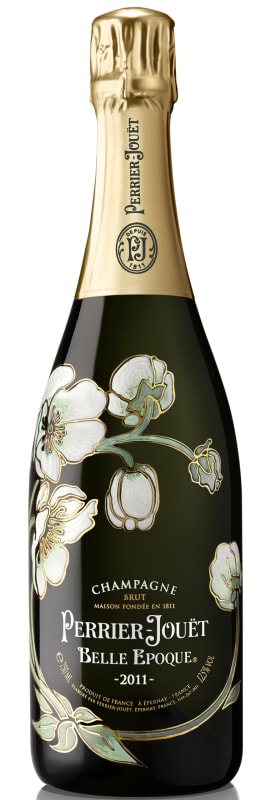


Winemaker Notes
Pairs wonderfully with fresh seafood, tender poultry, and lightly sugared fruit desserts.
Blend: 50% Chardonnay, 45% Pinot Noir, 5% Pinot Meunier
Professional Ratings
-
Wine Enthusiast
Always a light, ethereal style of wine, this is also very fresh and still young. It will age with its taut minerality from the Chardonnay in the blend. A softer background will become toasty over the next few years. The vintage date on this bottle is 200 years after the foundation of this producer. Drink from 2021.
-
Decanter
Aromas of lemon, grilled nuts with lemon curd. A ripe, full style with integrated fizz. Long and round finish.
-
James Suckling
A fresh edition with grapefruit, peaches and a wealth of bright-fruit aromas. The palate is finer and more chiseled in 2011. The flavors are quite elegant and there’s a neat, succulent feel at the finish.
-
Wine & Spirits
A classic style of Champagne, intricately blended, this presents elegant flavors in a way that’s easier to drink than to describe. Is the depth coming from the cherry fruit, both savory and ripe? From the mineral structure that restricts that fruit, or the Cognac-like note of spice that may originate from the dosage? There was a time when no one would ask, and this wine is a happy outcome of the days when the big houses ruled.
-
Wilfred Wong of Wine.com
COMMENTARY: Tasting grand marque Champagnes early in their life can be challenging, and early reports at the beginning of the harvest indicated that the 2011 vintage was challenging. James Lawrence's Article, 'Champagne copes with 'difficult vintage' (Decanter, September 8, 2011) provides an excellent reading. In my early tasting of the 2011 Perrier-Jouët Brut Belle Epoque, I found a pretty impressive wine—stylish and elegant. TASTING NOTES: This wine is youthfully charming with an excellent upside over the half-a-dozen-years. Its aromas and flavors of tart apple, citrus, and light autolysis should pair beautifully with a plate of raw oysters. (Tasted: June 27, 2019, San Francisco, CA)


Representing the topmost expression of a Champagne house, a vintage Champagne is one made from the produce of a single, superior harvest year. Vintage Champagnes account for a mere 5% of total Champagne production and are produced about three times in a decade. Champagne is typically made as a blend of multiple years in order to preserve the house style; these will have non-vintage, or simply, NV on the label. The term, "vintage," as it applies to all wine, simply means a single harvest year.

Associated with luxury, celebration, and romance, the region, Champagne, is home to the world’s most prized sparkling wine. In order to bear the label, ‘Champagne’, a sparkling wine must originate from this northeastern region of France—called Champagne—and adhere to strict quality standards. Made up of the three towns Reims, Épernay, and Aÿ, it was here that the traditional method of sparkling wine production was both invented and perfected, birthing a winemaking technique as well as a flavor profile that is now emulated worldwide.
Well-drained, limestone and chalky soil defines much of the region, which lend a mineral component to its wines. Champagne’s cold, continental climate promotes ample acidity in its grapes but weather differences from year to year can create significant variation between vintages. While vintage Champagnes are produced in exceptional years, non-vintage cuvées are produced annually from a blend of several years in order to produce Champagnes that maintain a consistent house style.
With nearly negligible exceptions, . These can be blended together or bottled as individual varietal Champagnes, depending on the final style of wine desired. Chardonnay, the only white variety, contributes freshness, elegance, lively acidity and notes of citrus, orchard fruit and white flowers. Pinot Noir and its relative Pinot Meunier, provide the backbone to many blends, adding structure, body and supple red fruit flavors. Wines with a large proportion of Pinot Meunier will be ready to drink earlier, while Pinot Noir contributes to longevity. Whether it is white or rosé, most Champagne is made from a blend of red and white grapes—and uniquely, rosé is often produce by blending together red and white wine. A Champagne made exclusively from Chardonnay will be labeled as ‘blanc de blancs,’ while ones comprised of only red grapes are called ‘blanc de noirs.’