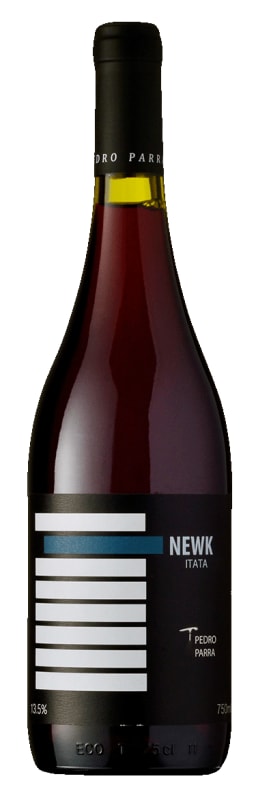


Winemaker Notes
Newk is a tribute to the great saxophonist Sonny Rollins and is what Pedro Parra terms the "wildest" of his Cinsaults. Fermented with whole bunches, it's fresh, saline and intense, with raspberry, plum and red cherry flavors, fine-grained tannins and racy, mouth-watering acidity.
Professional Ratings
-
Robert Parker's Wine Advocate
Sourced from extremely shallow granite soils with quartz, sand and silt content, the 2022 Newk is the most vivid expression of pure mineral intensity in the Parra cellar. It brings to mind the Northern Rhône or Barolo rather than the various themes of Burgundy that emerge in other bottlings. It is the most focused, coiled and aromatically linear, with an iron-tinged, herbal core gaining energy with each swirl. The palate is spry and lively yet dense and compacted, hinting at the grip to come with a tensile, taut frame that explodes into a stunning, searing and tenacious finish that remains weightless. The length here is similar to the Miles bottling, although the energy sits higher in the mouth compared to the Miles, which is all-encompassing. With a featherweight frame with a heavyweight punch, this could prove to merit an even higher score with time and could likely be the longest-lived wine of the lineup. Rating: 97+
-
James Suckling
Probably the most incisive and minerally "cru" from Pedro Parra, with a lot of character. Almost steely, with crushed stone, subtle touches of white pepper, grilled grapefruit, fresh blossoms and seashells to the racy red berries. Delicate and a little decadent. Nervy, effusive and very chalky and structured. Tight on the mid-palate but so cohesive with the mineral verve. Decomposed chalky tannins in the finish.


A charmer in the Southern Rhône Valley, Cinsault thrives in any hot and windy climate, and finds success in many other countries. It is a parent grape alongside Pinot Noir, of South Africa’s acclaimed red grape, Pinotage. Somm Secret—Given its relatively long history in California, Cinsualt is often “hidden” in the Zinfandel blends of Sonoma and Contra Costa Counties. Historically planted alongside Zinfandel (with Petite Sirah and Mourvedre) in the same vineyard, Cinsault is now an essential part of many “field blends.”

Dramatic geographic and climatic changes from west to east make Chile an exciting frontier for wines of all styles. Chile’s entire western border is Pacific coastline, its center is composed of warm valleys and on its eastern border, are the soaring Andes Mountains.
Chile’s central valleys, sheltered by the costal ranges, and in some parts climbing the eastern slopes of the Andes, remain relatively warm and dry. The conditions are ideal for producing concentrated, full-bodied, aromatic reds rich in black and red fruits. The eponymous Aconcagua Valley—hot and dry—is home to intense red wines made from Cabernet Sauvignon, Syrah and Merlot.
The Maipo, Rapel, Curicó and Maule Valleys specialize in Cabernet and Bordeaux Blends as well as Carmenère, Chile’s unofficial signature grape.
Chilly breezes from the Antarctic Humboldt Current allow the coastal regions of Casablanca Valley and San Antonio Valley to focus on the cool climate loving varieties, Pinot Noir, Chardonnay and Sauvignon Blanc.
Chile’s Coquimbo region in the far north, containing the Elqui and Limari Valleys, historically focused solely on Pisco production. But here the minimal rainfall, intense sunlight and chilly ocean breezes allow success with Chardonnay and Pinot Noir. The up-and-coming southern regions of Bio Bio and Itata in the south make excellent Riesling, Chardonnay and Pinot Noir.
Spanish settlers, Juan Jufre and Diego Garcia de Cáceres, most likely brought Vitis vinifera (Europe’s wine producing vine species) to the Central Valley of Chile sometime in the 1550s. One fun fact about Chile is that its natural geographical borders have allowed it to avoid phylloxera and as a result, vines are often planted on their own rootstock rather than grafted.