


Winemaker Notes
Named after Paul’s great-grandfather, this wine presents rich flavors of brioche, honeysuckle, and Bosc pear riding a pure backbone of focused, crunchy acidity.
Professional Ratings
-
Jeb Dunnuck
The 2017 Chardonnay Edward James Estate is another Russian River release that has a vivid medium gold color as well as exotic notes of honeyed citrus, pineapple, white flowers, and some salty minerality. It's pure, medium to full-bodied, has a seamless texture, and a great finish. The oak is nicely integrated, and given the overall balance here, it's going to evolve nicely for 7-8 years at a minimum.
-
Connoisseurs' Guide
While fully evocative of the undisguised oaky richness and fruity depth that we expect from Chardonnays of its maker, this enveloping, downright luxurious rendition is admittedly long on hard-to-resist present appeal, yet, while hardly retiring, it comes with a sense of reserve and not-yet-fully-realized potential that makes a persuasive case for setting it aside for at least a couple of years. It proves that succulence and structure are far from mutually exclusive, and, as good as it is in its youth, it will only get better with time.
-
James Suckling
A dense and oily white with sliced apples, pears and cooked pineapple. Tight, linear and fresh. Beautiful. Polished and sassy. Drink now.
-
Wine Spectator
Offers a silky mouthfeel, with crunchy acidity behind the vibrant dried pineapple, baked apple and lemon curd flavors. The fine-textured finish lingers, revealing juicy richness and crisp spiciness. Drink now through 2022.
-
Robert Parker's Wine Advocate
The 2017 Chardonnay Edward James Estate comes from old Wente heritage selections from Hyde and Hudson, grown entirely in Goldridge soils. Youthfully reluctant, with coaxing it reveals notions of allspice, pie crust, quince paste and baked apples with brioche, warm peaches, bark, mushroom and a lemon peel spark. Medium to full-bodied, it's rounded and giving much more in the mouth at this stage, with intensely concentrated, spiced stone fruits and honeyed accents, finishing long and lifted with vibrant acidity. 622 cases were made.






One of the most popular and versatile white wine grapes, Chardonnay offers a wide range of flavors and styles depending on where it is grown and how it is made. While it tends to flourish in most environments, Chardonnay from its Burgundian homeland produces some of the most remarkable and longest lived examples. California produces both oaky, buttery styles and leaner, European-inspired wines. Somm Secret—The Burgundian subregion of Chablis, while typically using older oak barrels, produces a bright style similar to the unoaked style. Anyone who doesn't like oaky Chardonnay would likely enjoy Chablis.

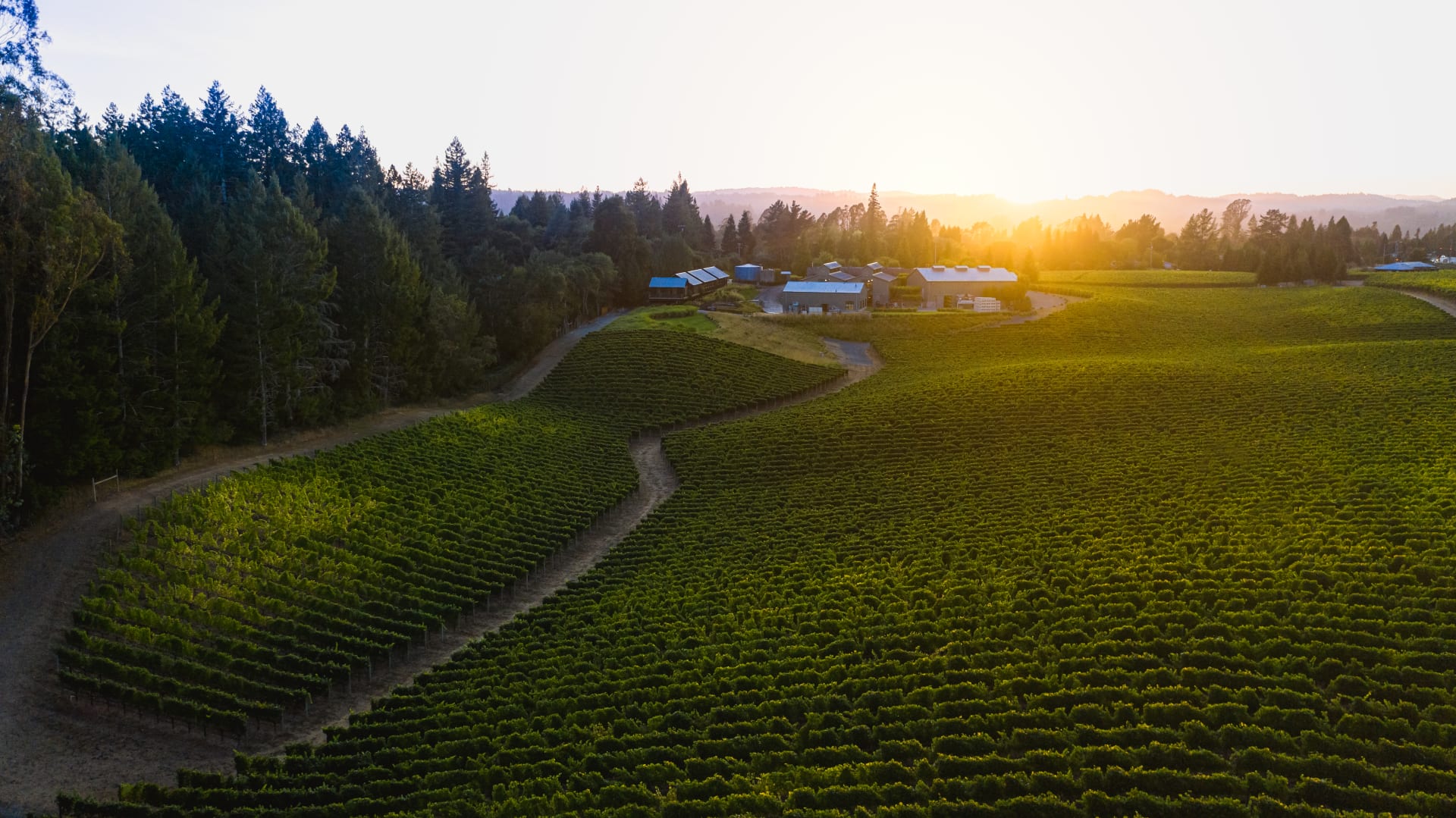
A standout region for its decidedly Californian take on Burgundian varieties, the Russian River Valley is named for the eponymous river that flows through it. While there are warm pockets of the AVA, it is mostly a cool-climate growing region thanks to breezes and fog from the nearby Pacific Ocean.
Chardonnay and Pinot Noir reign supreme in Russian River, with the best examples demonstrating a unique combination of richness and restraint. The cool weather makes Russian River an ideal AVA for sparkling wine production, utilizing the aforementioned varieties. Zinfandel also performs exceptionally well here. Within the Russian River Valley lie the smaller appellations of Chalk Hill and Green Valley. The former, farther from the ocean, is relatively warm, with a focus on red and white Bordeaux varieties. The latter is the coolest, foggiest parcel of the Russian River Valley and is responsible for outstanding Pinot Noir and Chardonnay.