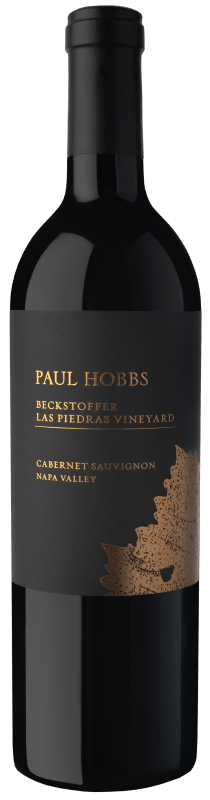


Winemaker Notes
Deep garnet with a brilliant red rim. Intriguing aromas of huckleberry, Bing cherry, and a blend of red and black currant are accented by mint and graphite. On the palate, violets and zesty orange brighten the dark fruit core, while mineral undertones and a dusting of cocoa add depth. Grippy tannins provide tension, leaving a lasting impression of both plushness and precision.
Professional Ratings
-
James Suckling
A lively, complex red that's full-bodied but well balanced, bringing bright red fruit and deep blackberry flavors with herbal accents to a texture of fine-grained tannins. With time in the glass, savory tobacco, sage and bay leaf flavors emerge. It is warm on the palate, quite ripe, broad and a bit grippy from tannins. Drinkable now, but best from 2030.
-
Robert Parker's Wine Advocate
The 2022 Cabernet Sauvignon Beckstoffer Las Piedras Vineyard offers up compelling scents of black cherries and vanilla, accented by hints of crushed stone, licorice and mocha. This full-bodied effort is a bit rougher-textured and more obviously tannic than Hobbs's Beckstoffer To Kalon bottling this vintage, but I'm not sure it will be longer lived. Still, the dark fruit profile and hints of graphite hold a ton of appeal.
-
Jeb Dunnuck
Red and black fruits, savory herbs, and chocolate notes emerge from the 2022 Cabernet Sauvignon Beckstoffer Las Piedras Vineyard, with incense adding complexity. Sweetly fruited and sexy, it's full-bodied and round on the palate, showing a mouth-filling texture in the sweeter style of the vintage. Drink this beauty over the coming 12-15 years.
-
Decanter
A full-bodied, generous and sweetly fruited red with impressive mid-palate concentration. A bright, herbal bay laurel note adds aromatic lift, framing a citrusy-crisp acidity that provides grip and tension. Cherry fruit and graphite meld seamlessly with sweet cedarwood, carrying through to an extended, refined finish. Aged for 20 months in 87% new french oak barrels.
-
Vinous
The 2022 Cabernet Sauvignon Beckstoffer Las Piedras Vineyard is a potent, driving wine. It offers up an exotic mix of dark fruit, savory herbs, licorice, mint, lavender and graphite. Vineyard signatures are present, but they're also somewhat obscured by the severe heat and drought of the year.
-
Wine Spectator
This red’s modestly juicy boysenberry and loganberry fruit is engaging, while light notes of fruitcake, anise and violet peek in through the finish. Offers a caressing edge, giving this up-front appeal, as well as some sneaky, legitimate structure for honest length. Drink now through 2032.





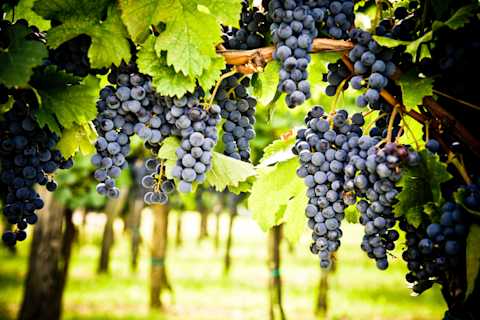
A noble variety bestowed with both power and concentration, Cabernet Sauvignon enjoys success all over the globe, its best examples showing potential to age beautifully for decades. Cabernet Sauvignon flourishes in Bordeaux's Medoc where it is often blended with Merlot and smaller amounts of some combination of Cabernet Franc, Malbecand Petit Verdot. In the Napa Valley, ‘Cab’ is responsible for some of the world’s most prestigious, age-worthy and sought-after “cult” wines. Somm Secret—DNA profiling in 1997 revealed that Cabernet Sauvignon was born from a spontaneous crossing of Cabernet Franc and Sauvignon Blanc in 17th century southwest France.
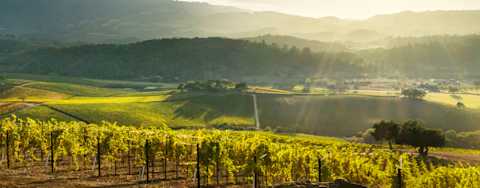
St. Helena is in the heart of the Napa Valley, nestled between Calistoga to the north and Rutherford on its southern border. On its western side, the Mayacamas Mountains guard it from the cooling effects of the Pacific Ocean; to its east stand the Vaca Mountains. In conjunction, these mountain ranges serve to lock in summer daytime heat. But in the evening, cool air from the San Pablo Bay funnels up through the valley, creating very chilly nights. It isn’t uncommon for temperatures to drop 50 degrees, a shift that promotes a balance of sugar ripeness and acidity in wine grapes.
St. Helena contains a plethora of different soil types in a small area, which have been enhanced over centuries by rain runoff from both mountain ranges. Its vineyards cover a variety of terrain, spreading across the bucolic valley floor and its benchlands.
These ideal topographic and climatic growing conditions easily caught the attention of early winemaking pioneers. In fact, St. Helena is the birthplace of Napa Valley’s commercial wine industry. Dr. Crane founded his cellar in 1859, David Fulton in 1860 and Charles Krug in 1861.
Today there are no less than 400 separate vineyards planted within the 12,000 acres that make up the St. Helena appellation.
Revered most for its red wines based on Bordeaux varieties, namely Cabernet Sauvignon, the St. Helena appellation is also a source of superior Syrah, Zinfandel and Sauvignon blanc.