
Winemaker Notes
Professional Ratings
-
Wine & Spirits
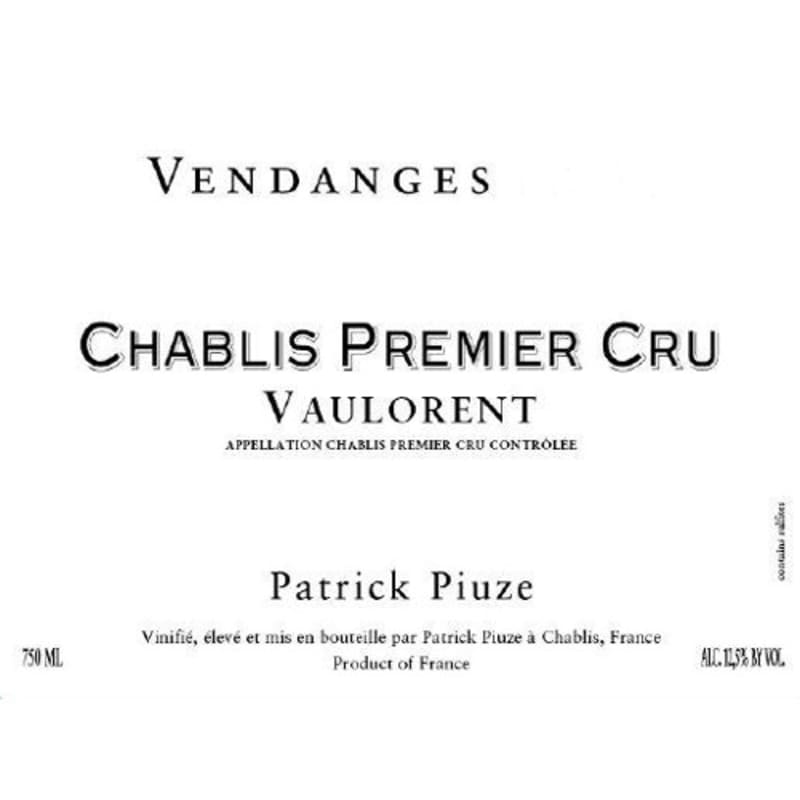
A native of Montreal, Quebec, where he opened a wine bar in the 1990s, Patrick Piuze moved to Burgundy in 2000, working in cellars and serving as cellar master at Jean-Marc Brocard before founding his own label in Chablis in 2008. He owns no land, instead selecting parcels of old vines, including the 55-year-old block that contributes to this Vaulorent. I have more notes on this wine than any other Chablis we tasted for this issue, noting it as reaching a completely different level, achieving the subtlety and grandeur of a grand cru (in fact, Vaulorent is on the same hill as Chablis’s grand cru Preuses). The fruit tastes of white peach, fresh apple and chamomile, those luscious flavors layered within tense oak, spice and pale limestone minerality. It’s dynamic, glorious chardonnay, with the energy to live long in the cellar.
-
Robert Parker's Wine Advocate
The 2014 Chablis 1er Cru Vaulorent comes from two lieux-dits within the vineyard picked around three or four days apart. It has a refined, linden and citrus-scented bouquet that unfolds in the glass. It's not as immediate as Patrick's other 2014s but it repays patience. The palate is fresh and vibrant, full of tension and with fine density, a touch of spice enlivening the finish that feels long in the mouth. What a superb contribution to the vintage.
-
Wine Spectator
This shows a fleshy, creamy profile, backed by lively structure, creating a backdrop for the green apple, greengage, lemon and lanolin notes. Balanced, but needs a short time to integrate more fully. Fine length. Best from 2017 through 2025.


One of the most popular and versatile white wine grapes, Chardonnay offers a wide range of flavors and styles depending on where it is grown and how it is made. While it tends to flourish in most environments, Chardonnay from its Burgundian homeland produces some of the most remarkable and longest lived examples. California produces both oaky, buttery styles and leaner, European-inspired wines. Somm Secret—The Burgundian subregion of Chablis, while typically using older oak barrels, produces a bright style similar to the unoaked style. Anyone who doesn't like oaky Chardonnay would likely enjoy Chablis.

The source of the most racy, light and tactile, yet uniquely complex Chardonnay, Chablis, while considered part of Burgundy, actually reaches far past the most northern stretch of the Côte d’Or proper. Its vineyards cover hillsides surrounding the small village of Chablis about 100 miles north of Dijon, making it actually closer to Champagne than to Burgundy. Champagne and Chablis have a unique soil type in common called Kimmeridgian, which isn’t found anywhere else in the world except southern England. A 180 million year-old geologic formation of decomposed clay and limestone, containing tiny fossilized oyster shells, spans from the Dorset village of Kimmeridge in southern England all the way down through Champagne, and to the soils of Chablis. This soil type produces wines full of structure, austerity, minerality, salinity and finesse.
Chablis Grands Crus vineyards are all located at ideal elevations and exposition on the acclaimed Kimmeridgian soil, an ancient clay-limestone soil that lends intensity and finesse to its wines. The vineyards outside of Grands Crus are Premiers Crus, and outlying from those is Petit Chablis. Chablis Grand Cru, as well as most Premier Cru Chablis, can age for many years.