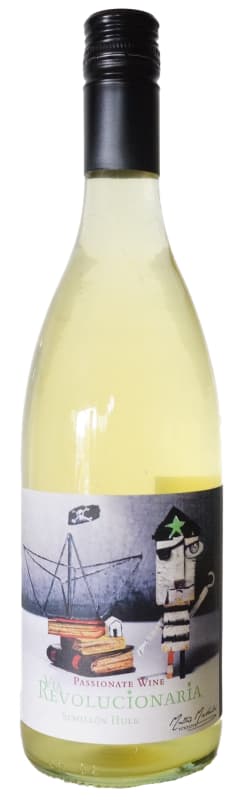


Winemaker Notes
This 100% hand harvested Semillon is from a single vineyard in the Tupungato region of the Uco Valley. The lower alcohol wine has a fresh light green hue with notes of lemon, key lime, jasmine, and white flowers with an underlying and persistent layer of crushed wet limestone. The wine is vibrant and bright yet smooth on the palate showing fruit flavors as well as earth tones of dry leaves. Clean, crisp, engaging, and refreshing.
Professional Ratings
-
Robert Parker's Wine Advocate
The 2019 Via Revolucionaria Semillon Hulk was first produced in 2011 and was so "green" they nicknamed it Hulk. It's a Semillon from Tupungato from vines planted in 1955, and it fermented in concrete egg, where it's kept for four months. It's unfiltered and cloudy and has a strong medicinal nose. It's pressed directly, as if it were a base wine for a sparkling wine, and even though the nose has notes reminiscent of stems, it doesn't have any stems; the juice ferments on its own. After a short time in the glass, the white flowers appear and the wine starts gaining complexity. The palate is light and has pungent flavors, with a characteristic salty twist in the finish.


Sémillon has the power to create wines with considerable structure, depth and length that will improve for several decades. It is the perfect partner to the vivdly aromatic Sauvignon Blanc. Sémillon especially shines in the Bordeaux region of Sauternes, which produces some of the world’s greatest sweet wines. Somm Secret—Sémillon was so common in South Africa in the 1820s, covering 93% of the country’s vineyard area, it was simply referred to as Wyndruif, or “wine grape.”

By far the largest and best-known winemaking province in Argentina, Mendoza is responsible for over 70% of the country’s enological output. Set in the eastern foothills of the Andes Mountains, the climate is dry and continental, presenting relatively few challenges for viticulturists during the growing season. Mendoza, divided into several distinctive sub-regions, including Luján de Cuyo and the Uco Valley, is the source of some of the country’s finest wines.
For many wine lovers, Mendoza is practically synonymous with Malbec. Originally a Bordelaise variety brought to Argentina by the French in the mid-1800s, here it found success and renown that it never knew in its homeland where a finicky climate gives mixed results. Cabernet Sauvignon, Syrah, Merlot and Pinot Noir are all widely planted here as well (and sometimes even blended with each other or Malbec). Mendoza's main white varieties include Chardonnay, Torrontés, Sauvignon Blanc and Sémillon.