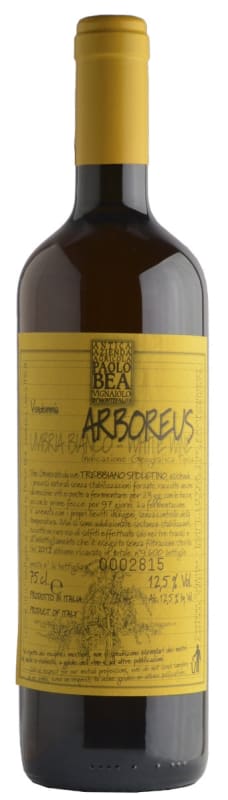


Winemaker Notes
Arboreus is made from a Trebbiano clone known as Trebbiano Spoletino which is trained so that the fruit hangs high above the ground. The vineyards are planted in the low hills between Trevi and Montefalco at an elevation of 650 to 700 feet with a range of parcels facing both to the east and to the southwest. The soil is essentially clay and gravel. Harvest generally occurs during the first two weeks of October. The wine is left in contact with the skins for up to three weeks or more and is then aged in stainless steel tanks for at least two years prior to bottling. Sulfur is never added.
Professional Ratings
-
Robert Parker's Wine Advocate
Made with Trebbiano Spoletino, the Paolo Bea 2015 Arboreus sees 22 days of skin maceration and 95 days on the fine lees. Structure is underlined in this vintage that saw very sunny and warm conditions throughout the growing season. There is tannic bite to the wine, but the tannins feel firmly polished instead of feeling dusty, like you sometimes get with skin-macerated whites. To the palate, this full-bodied white is generously textured and creamy with honey, saffron and apricot. The Arboreus vineyard is located eight kilometers from the winery. Best After 2023


There are hundreds of white grape varieties grown throughout the world. Some are indigenous specialties capable of producing excellent single varietal wines. Each has its own distinct viticultural characteristics, as well as aroma and flavor profiles.

Centered upon the lush Apennine Range in the center if the Italian peninsula, Umbria is one of the few completely landlocked regions in Italy. It’s star red grape variety, Sagrantino, finds its mecca around the striking, hilltop village of Montefalco. The resulting wine, Sagrantino di Montefalco, is an age-worthy, brawny, brambly red, bursting with jammy, blackberry fruit and earthy, pine forest aromas. By law this classified wine has to be aged over three years before it can be released from the winery and Sagrantino often needs a good 5-10 more years in bottle before it reaches its peak. Incidentally these wines often fall under the radar in the scene of high-end, age-begging, Italian reds, giving them an almost cult-classic appeal. They are undoubtedly worth the wait!
Rosso di Montefalco, on the other had, is composed mainly of Sangiovese and is a more fruit-driven, quaffable wine to enjoy while waiting for the Sagrantinos to mellow out.
Among its green mountains, perched upon a high cliff in the province of Terni, sits the town of Orvieto. Orvieto, the wine, is a blend of at least 60% Trebbiano in combination with Grechetto, with the possible addition of other local white varieties. Orvieto is the center of Umbria’s white wine production—and anchor of the region’s entire wine scene—producing over two thirds of Umbria’s wine. A great Orvieto will have clean aromas and flavors of green apple, melon and citrus, and have a crisp, mineral-dominant finish.