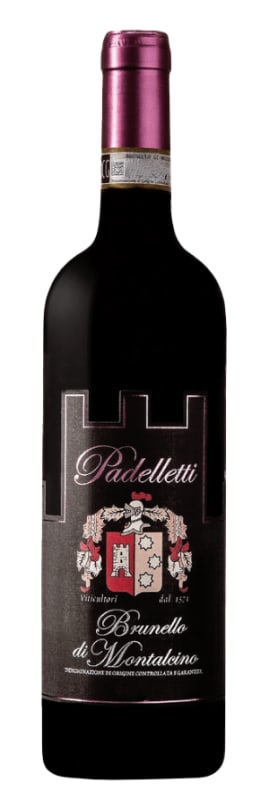


Winemaker Notes
The Padelletti’s have four hectares from which they produce Brunello, exclusively. The maceration is a minimum of 20 days but can be up to 30, depending on the vintage. It is then aged for two to three years in large oak barrels. The wine is left in bottle for 6 to 12 months before being released. The result is typically one of the most classic, steadfast examples of northern Montalcino, where quality is always favored over quantity.
Professional Ratings
-
Decanter
With dry conditions continuing into September, the Padelletti estate says that ripeness proceeded rapidly. Brunello grapes were harvested on 15 September – a full two weeks earlier than average – in order to preserve freshness and fragrance. This certainly manifests in the glass. Beautifully scented tea leaf, tobacco and wet earth surge on the nose. The palate displays ample substance, with proper density of sweet, ripe raspberry and layers of fruit laminated between powdery tannins, underscored by scintillating acidity. Rose perfume builds with intensity, persisting on the finish. Requires patience.
-
Wine Spectator
Notable for its richness and ample fruit, this red exhibits cherry, plum, tar, iron and eucalyptus flavors. The juicy texture and lively feel offset the broad, dusty tannins. Shows fine balance and elegance, with a lingering finish of fruit and savory accents. Best from 2026 through 2042.
-
James Suckling
Medium-bodied Brunello with a fresh, citrus undertone to the plum and red-cherry fruit character. Tangy and lightly chewy with a lively finish. Best after 2027.
-
Robert Parker's Wine Advocate
The Padelletti 2020 Brunello di Montalcino (with 7,500 bottles made) shows a nice sense of firmness with tart fruit, Rainier cherry and rhubarb. I would add licorice, smoky road paving or asphalt. There is a dry side to the wine that comes with the prolonged oak aging that is required of this premier red-wine appellation in southern Tuscany. Those desiccated notes are more prominent in a warm vintage such as 2020.
-
Vinous
The 2020 Brunello di Montalcino is remarkably pretty, blending dusty rose and lavender with dried strawberries and fresh cedar shavings. This is a more lifted and ethereal effort from Padelletti, with brisk acidity and a cascade of mineral-infused red berry fruits as violet inner florals amass toward the close. The 2020 tapers off gently tannic with medium length, leaving blue and purple flowery perfumes to resonate.


Among Italy's elite red grape varieties, Sangiovese has the perfect intersection of bright red fruit and savory earthiness and is responsible for the best red wines of Tuscany. While it is best known as the chief component of Chianti, it is also the main grape in Vino Nobile di Montepulciano and reaches the height of its power and intensity in the complex, long-lived Brunello di Montalcino. Somm Secret—Sangiovese doubles under the alias, Nielluccio, on the French island of Corsica where it produces distinctly floral and refreshing reds and rosés.

Famous for its bold, layered and long-lived red, Brunello di Montalcino, the town of Montalcino is about 70 miles south of Florence, and has a warmer and drier climate than that of its neighbor, Chianti. The Sangiovese grape is king here, as it is in Chianti, but Montalcino has its own clone called Brunello.
The Brunello vineyards of Montalcino blanket the rolling hills surrounding the village and fan out at various elevations, creating the potential for Brunello wines expressing different styles. From the valleys, where deeper deposits of clay are found, come wines typically bolder, more concentrated and rich in opulent black fruit. The hillside vineyards produce wines more concentrated in red fruits and floral aromas; these sites reach up to over 1,600 feet and have shallow soils of rocks and shale.
Brunello di Montalcino by law must be aged a minimum of four years, including two years in barrel before realease and once released, typically needs more time in bottle for its drinking potential to be fully reached. The good news is that Montalcino makes a “baby brother” version. The wines called Rosso di Montalcino are often made from younger vines, aged for about a year before release, offer extraordinary values and are ready to drink young.