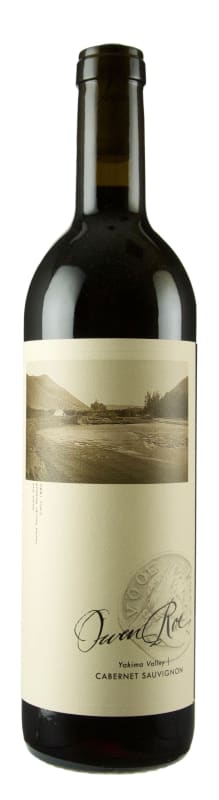


Winemaker Notes
The nose leads with a bright pop of red fruit, including cherry and raspberry, followed by hints of cola and baking spices and a light herbal note. The palate shows darker fruit including blueberry and plum, and has a round mouth feel with firm, mouthwatering tannins. The finish brings a dark chocolate note and a long, lingering finish.
Professional Ratings
-
James Suckling
Meaty and dark-fruited nose. Full-bodied with slightly chewy tannins. I like the bright acidity and definition of fruit on the palate here. Lifted and juicy. Delicious.
-
Jeb Dunnuck
All Cabernet Sauvignon brought up mostly in neutral oak, the 2018 Cabernet Sauvignon Yakima Valley reveals a medium ruby color as well as lots of spiced darker currants, tobacco, and loamy earth notes to go with a medium-bodied, elegant, nicely textured style on the palate. With ripe tannins, good overall balance, and outstanding length on the finish, it's another well-made, outstanding, wine from this estate. Drink it over the coming decade.


A noble variety bestowed with both power and concentration, Cabernet Sauvignon enjoys success all over the globe, its best examples showing potential to age beautifully for decades. Cabernet Sauvignon flourishes in Bordeaux's Medoc where it is often blended with Merlot and smaller amounts of some combination of Cabernet Franc, Malbecand Petit Verdot. In the Napa Valley, ‘Cab’ is responsible for some of the world’s most prestigious, age-worthy and sought-after “cult” wines. Somm Secret—DNA profiling in 1997 revealed that Cabernet Sauvignon was born from a spontaneous crossing of Cabernet Franc and Sauvignon Blanc in 17th century southwest France.

As the first recognized wine-growing region in the Pacific Northwest, Yakima Valley is centrally located within Washington’s vast Columbia Valley. The region also includes Washington’s oldest Cabernet Sauvignon vines, Otis Vineyard, planted in 1957, and Harrison Hill Vineyard, planted in 1963. Yakima Valley contains three smaller sub-regions: Rattlesnake Hills, Red Mountain, and Snipes Mountain and is ideal for both red and white wine production. In fact, Yakima Valley is Washington’s most diverse region, boasting more than 40 different grape varieties over about one hundred miles.
The cooler parts of the valley are home to almost half of the Chardonnay and Riesling produced in the state! Both are made in a wide range of styles depending on the conditions of the vineyard site.
But its warmer locations yield a large proportion of Washington’s best Merlot, Syrah and Cabernet Sauvignon. The finest Yakima Valley reds are jam-packed full of red cherry, currant, raspberry or blackberry fruit, as well as cocoa, herb, spice and savory notes, and exhibit a supple texture, great body, focus and length.