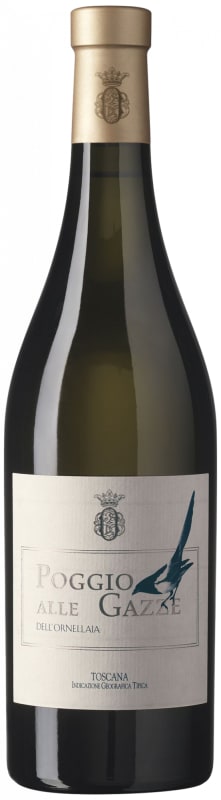


Winemaker Notes
The 2017 Poggio alle Gazze dell’Ornellaia has a bright straw yellow color, the nose carries outstanding citrus notes accompanied by hints of white flowers and boxwood. On the palate, it shows an excellent balance between freshness and persistence, closing in a long, lively and mineral finish.
Blend: 81% Sauvignon Blanc, 10% Vermentino, 6% Viogner, 3% Verdicch
Professional Ratings
-
James Suckling
I love the nose here of honeysuckle, dried jasmine, daffodils, apricot pie and peach flan with some butterscotch undertones. Full-bodied and intense, but very precise in its delivery of sleek stone fruit and steely acidity.
-
Jeb Dunnuck
Based on 80% Sauvignon Blanc and 10% each of Viognier and Vermentino, the 2017 Poggio alle Gazze dell'Ornellaia comes from a scorcher of a vintage and was aged in 25% new French oak, 25% in used barrels, and the balance in concrete. It offers a subtle tropical slant as well as classic Bordeaux Blanc-like citrus and pineapple notes. Medium to full-bodied, rich yet also elegant, it's a powerful white that has good concentration, plenty of acidity, and should age nicely for 4-5 years.
-
Wine Spectator
This expressive white exudes peach, gooseberry, sage and white pepper flavors, backed by lively acidity and finishing with a saline accent. Sauvignon Blanc, Vermentino, Viognier and Verdicchio. Drink now through 2024. 300 cases imported.


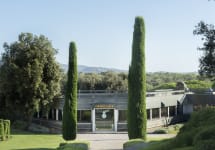
In 1981, Marchese Lodovico Antinori breathed new life into Tenuta dell' Ornellaia, an estate whose potential had been ignored for decades. With the help of Andre Tchelistcheff, the famous agronomist, Antinori planted the first French vines in Bolgheri, which lies in the heart of Tuscany's coastal region, Maremma. The estate yields some of the finest Sangiovese, Cabernet Sauvignon, Merlot, and Cabernet Franc in Tuscany. In 2002, Marchesi de' Frescobaldi and Robert Mondavi became owners of Tenuta dell'Ornellaia, which is now owned exclusively by Marchesi de' Frescobaldi.
Ornellaia has established itself among the iconic wine estates in Italy (and beyond). The estate is dedicated to producing charming and opulent wines, full of Mediterranean character and finesse, reflecting the estate’s unique terroir in Bolgheri on the Tuscan coast. The combination of Bolgheri’s unique soils and growing conditions, and what can only be characterized as a total obsession with excellence, result in the world-class wines from Cabernet Sauvignon, Merlot, and Sauvignon Blanc that so many wine lovers across the world have come to cherish.
Ornellaia employs a full time team of 80 people whose passion and motivation make Ornellaia what it is today. No shortcuts in the part of the production are allowed and the details literally come down to a grape by grape basis. Wines are intently crafted to capture the character of each vintage, in all its complexity and facets. In fact, the character and intricacies of each individual vintage are so important to the estate that since vintage 2006, Winemaker and Estate Director Axel Heinz has identified a single word that captures the character of each vintage, and that word is interpreted by a contemporary artist who produces special labels and a site-specific work of art that remains part of the estate’s permanent collection.
In addition to its place among Italy’s iconic wines, Ornellaia is also an ambassador for the Bolgheri region, leading it to be recognized as one of Italy’s greatest winegrowing regions. It is their belief, and it is hard to argue, that Bogheri’s mild maritime climate and diversity of soils create wines as distinct, complex and pleasurable as any in the world.
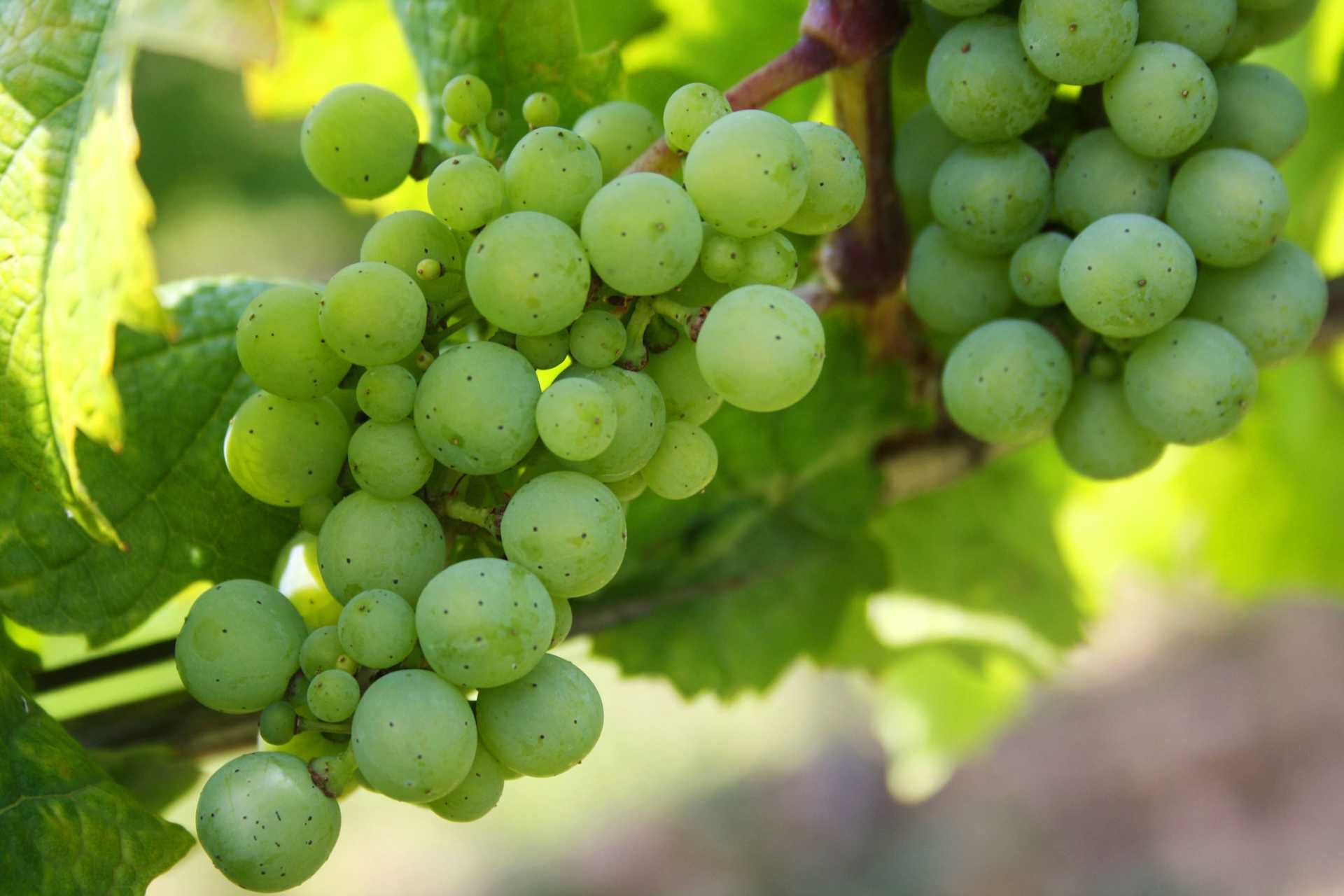
With hundreds of white grape varieties to choose from, winemakers have the freedom to create a virtually endless assortment of blended white wines. In many European regions, strict laws are in place determining the set of varieties that may be used in white wine blends, but in the New World, experimentation is permitted and encouraged. Blending can be utilized to enhance balance or create complexity, lending different layers of flavors and aromas. For example, a variety that creates a soft and full-bodied white wine blend, like Chardonnay, would do well combined with one that is more fragrant and naturally high in acidity. Sometimes small amounts of a particular variety are added to boost color or aromatics. Blending can take place before or after fermentation, with the latter, more popular option giving more control to the winemaker over the final qualities of the wine.

One of the most iconic Italian regions for wine, scenery and history, Tuscany is the world’s most important outpost for the Sangiovese grape. Tuscan wine ranges in style from fruity and simple to complex and age-worthy, Sangiovese makes up a significant percentage of plantings here, with the white Trebbiano Toscano coming in second.
Within Tuscany, many esteemed wines have their own respective sub-zones, including Chianti, Brunello di Montalcino and Vino Nobile di Montepulciano. The climate is Mediterranean and the topography consists mostly of picturesque rolling hills, scattered with vineyards.
Sangiovese at its simplest produces straightforward pizza-friendly Tuscan wines with bright and juicy red fruit, but at its best it shows remarkable complexity and ageability. Top-quality Sangiovese-based wines can be expressive of a range of characteristics such as sour cherry, balsamic, dried herbs, leather, fresh earth, dried flowers, anise and tobacco. Brunello, an exceptionally bold Tuscan wine, expresses well the particularities of vintage variations and is thus popular among collectors. Chianti is associated with tangy and food-friendly dry wines at various price points. A more recent phenomenon as of the 1970s is the “Super Tuscan”—a red wine made from international grape varieties like Cabernet Sauvignon, Merlot, Cabernet Franc and Syrah, with or without Sangiovese. These are common in Tuscany’s coastal regions like Bolgheri, Val di Cornia, Carmignano and the island of Elba.