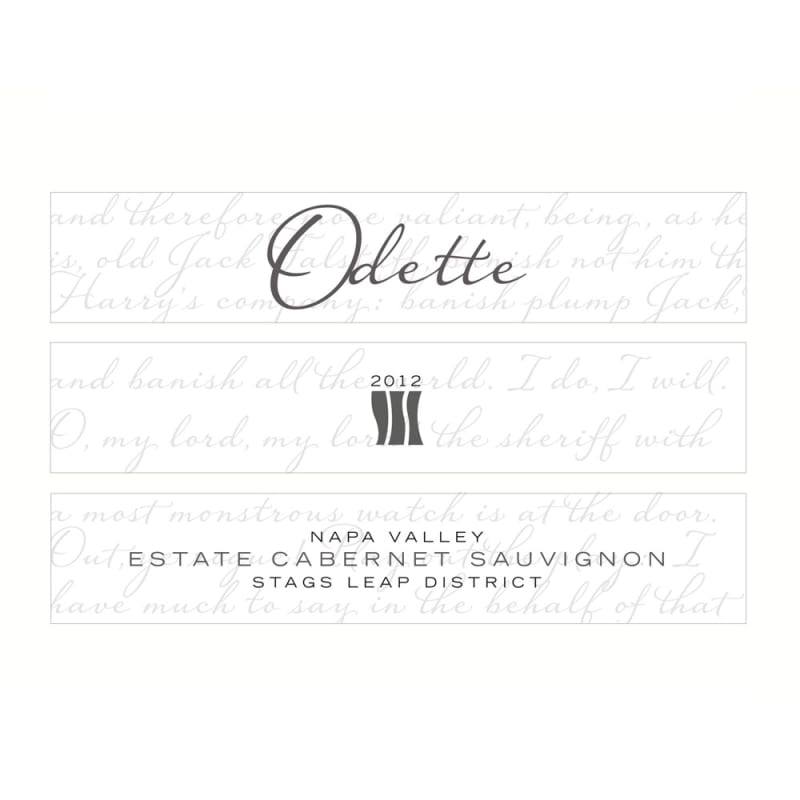

Winemaker Notes
Professional Ratings
-
Robert Parker's Wine Advocate
The 2012 Cabernet Sauvignon Estate (75% Cabernet Sauvignon, 14% Merlot and 11% Cabernet Franc) is a near perfect, glorious example of Napa Cabernet Sauvignon from an absolutely magnificent vintage. The scary thing is that 2013 might be not only as good, but better. The color is dense ruby/purple and the wine shows classic crème de cassis notes along with some floral underpinnings, deep raspberry and a touch on minerality. Good crisp acidity provides focus and uplift through this wine’s other exuberant and concentrated component parts. This is a stunner, and a classic Stag’s Leap Cabernet Sauvignon. Drink over the next 15 or so years.
-
Jeb Dunnuck
I loved the base 2012 Cabernet Sauvignon from this team, and this beauty is drinking brilliantly today. Based on 75% Cabernet Sauvignon, 14% Merlot, and the rest Cabernet Franc, it has a gorgeous perfume of smoked tobacco, spice, loamy earth, and both red and black fruits. Incredibly complex aromatically, it hits the palate with full-bodied richness, a seamless, elegant mouthfeel, and a great, great finish.
-
Wine Spectator
Aims high, delivering a potent, tightly focused core of mocha-laced dark berry, cedar, vanilla, licorice and dried, savory herb. Gains weight, depth and length as the momentum builds. Drink now through 2028. 4,450 cases made.


One of the most prestigious wines of the world capable of great power and grace, Napa Valley Cabernet is a leading force in the world of fine, famous, collectible red wine. Today the Napa Valley and Cabernet Sauvignon are so intrinsically linked that it is difficult to discuss one without the other. But it wasn’t until the 1970s that this marriage came to light; sudden international recognition rained upon Napa with the victory of the Stag’s Leap Wine Cellars 1973 Cabernet Sauvignon in the 1976 Judgement of Paris.
Cabernet Sauvignon undoubtedly dominates Napa Valley today, covering half of the land under vine, commanding the highest prices per ton and earning the most critical acclaim. Cabernet Sauvignon’s structure, acidity, capacity to thrive in multiple environs and ability to express nuances of vintage make it perfect for Napa Valley where incredible soil and geographical diversity are found and the climate is perfect for grape growing. Within the Napa Valley lie many smaller sub-AVAs that express specific characteristics based on situation, slope and soil—as a perfect example, Rutherford’s famous dust or Stags Leap District's tart cherry flavors.