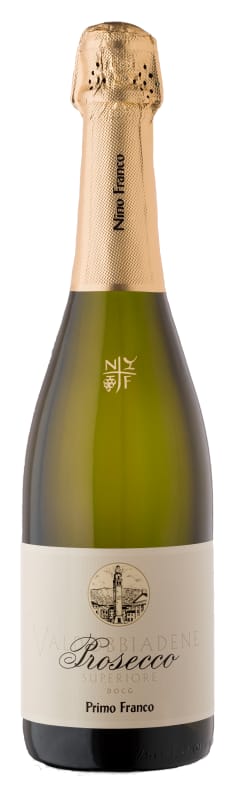


Winemaker Notes
Pale straw-colored, bright. Intense bouquet of exotic fruit and ripe apples with notes of almond and candied lemon peel. The palate is typically sweet and fruity, balanced by an amiable acidity, finishing with pleasant freshness.
Professional Ratings
-
Wine Enthusiast
One of the denomination's benchmark bottlings, this fresh yet creamy off-dry sparkler opens with alluring scents of apple, exotic fruit and white peach that carry over to the silky palate along with candied citrus zest. Crisp acidity brightens the rich flavors and creates a refreshing finish.
Editors' Choice
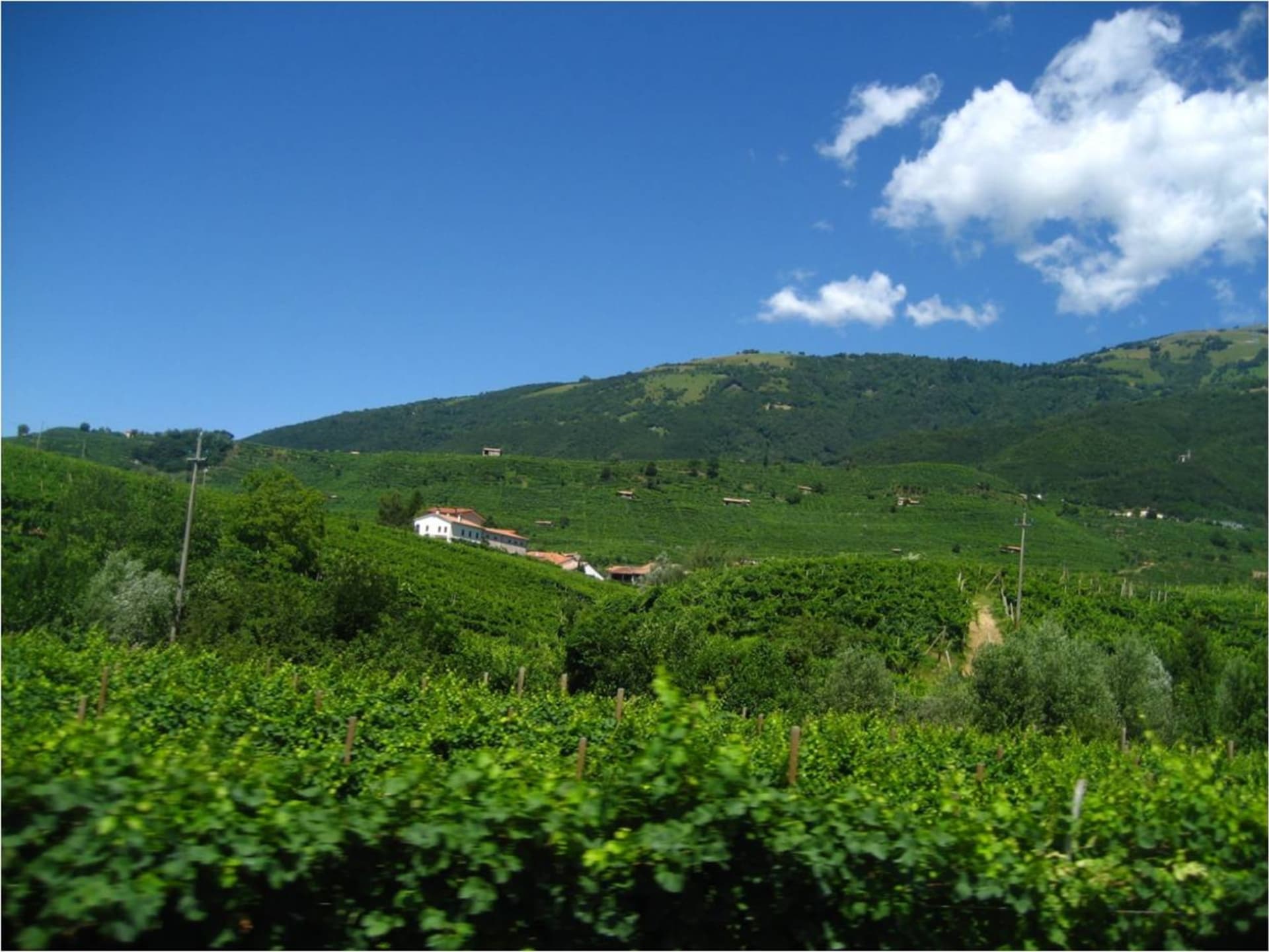





“Cantine Franco” was founded in Valdobbiadene in 1919 by Antonio Franco, who set out right from the start to make a quality product. One of the oldest wineries in Valdobbiadene, Nino Franco is located in the center of town and close to the countryside. It is surrounded by vineyards of extraordinary beauty, with a special terroir ripe for producing high-quality wines.
The area lies in Veneto, in the hilly strip of the Province of Treviso, that lies between the small towns of Valdobbiadene and Conegliano. Throughout its extraordinary history, the Conegliano and Valdobbiadene areas have made Prosecco into an extraordinary success story, creating over the course of time a modern, informal and vivacious Italian-Style sparkling wine that is appreciated and enjoyed all over the world; it gained DOCG recognition in 2009, and represents the top of the quality pyramid for Prosecco.
Valdobbiadene is located in the heart of the Prosecco DOCG production zone at the foot of the Prealps, a mountain range in the south-eastern part of the Alps. This region in the north-eastern part of Italy is most famous for the prized Prosecco vine and wine production because it has the greater concentration of high hillside vineyards. Vines are grown only on the sunniest parts of the hills, at altitudes varying between 50 and 500 meters above sea level, while the north-facing slopes are covered mainly in woodland. The climate throughout the area is mild, with not excessively cold winters with warm summers. The Nino Franco Prosecco produced in the Valdobbiadene area represents a synthesis of history and “naturally” superior quality.
Thanks to a careful and wise management, the Nino Franco estate has been growing and evolving throughout four generations of producers. Antonio founded it, Nino expanded it and Primo improved the company performance. When Primo took over its management in 1982, it was a turning point for the estate. He became a pioneer of Prosecco, successfully introducing a different sparkling wine than Champagne to International markets. He has been successful thanks to his open-minded personality, his spontaneity, reliability and competence as well as his charm and ability to communicate his love for his work, and his passion to produce the highest quality sparkling wines. Today the winery is still family-owned by Primo and his wife Annalisa, and their daughter Silvia is the next generation responsible for future growth of the estate.

Representing the topmost expression of a Champagne house, a vintage Champagne is one made from the produce of a single, superior harvest year. Vintage Champagnes account for a mere 5% of total Champagne production and are produced about three times in a decade. Champagne is typically made as a blend of multiple years in order to preserve the house style; these will have non-vintage, or simply, NV on the label. The term, "vintage," as it applies to all wine, simply means a single harvest year.

One of the world’s most popular and playful sparkling wines, Prosecco is a specialty of northeastern Italy, spanning nine provinces of the Veneto and Fruili-Venezia Giulia regions. A higher-quality version of Prosecco wine that must meet more stringent production requirements is known as Prosecco Superiore and must come from the more rugged terrain between the towns of Valdobiaddene and Conegliano. Prosecco can be produced as a still wine, a semi-sparkling wine (“frizzante”), or a fully sparkling wine (“spumante”)—the latter being the most common. While Prosecco wine is typically produced in a “brut” (dry) style, its fresh and fruity character makes it seem a bit sweeter than it actually is. “Extra dry” styles, incorporating higher levels of residual sugar, are quite popular, however.
Prosecco wine is made from the Glera grape, which was formerly and confusingly called Prosecco, these wines are notable for pleasant flavors of peach, pear, melon, green apple, and honeysuckle. Lower pressure during the carbonation process (also called the tank method) means that the bubbles are lighter and frothier than in Champagne or other traditional method sparkling wine, and less persistent. Prosecco is also a great choice to blend with orange juice for mimosas for a classic brunch beverage.