

Winemaker Notes
Professional Ratings
-
James Suckling
A wonderfully refined apricot nose. Rich and succulent, but dry and elegant. A sensational riesling that in spite of the enormous mineral depth is fine and delicate.
-
Robert Parker's Wine Advocate
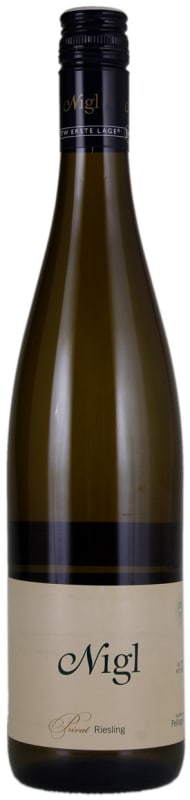
Made by Martin Nigl Junior and tasted as a sample in July 2017, the 2016 Ried Pellingen 1ÖTW Riesling Privat opens with a pure and crystalline nose with classic, bright Riesling and citrus fruit aromas. Full-bodied, dense and elegant on the palate, this is a round and intense dry Riesling from the Pellingen, a south to southwest-facing vineyard in Senftenberg with mica schist soils. The 2016 is powerful and promising and reveals firm structure and an intense, persistent finish. rating: 92-93


Riesling possesses a remarkable ability to reflect the character of wherever it is grown while still maintaining its identity. A regal variety of incredible purity and precision, this versatile grape can be just as enjoyable dry or sweet, young or old, still or sparkling and can age longer than nearly any other white variety. Somm Secret—Given how difficult it is to discern the level of sweetness in a Riesling from the label, here are some clues to find the dry ones. First, look for the world “trocken.” (“Halbtrocken” or “feinherb” mean off-dry.) Also a higher abv usually indicates a drier Riesling.

The region of considerable geologic diversity and microclimates, Kremstal extends virtually without border east from Wachau along the Danube River. Its magnificent terraced and rocky vineyards in the west alongside Wachau include some of Austria’s most esteemed Riesling vineyards, the (Steiner) Hund and Pfaffenberg, as well as Kögl and Wachtberg nearer to the city of Krems. After Krems, the vineyards become excessively steep upstream around Senftenberg where Riesling and Grüner Veltliner thrive. Grüner Veltliner does best from here east where the soils become a mix of sand, gravel and loess.
Grüner Veltliner and Riesling together comprise two thirds of all of the Kremstal vineyards; the region itself represents about five percent of Austria’s total vineyard area.