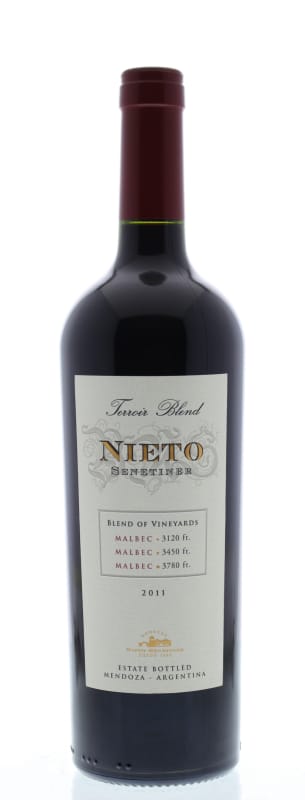


Winemaker Notes
We recommend drinking it with:Grilled red meat, pasta with tomato sauces, pork, game birds, locro, spit roasted goat and semi-cured cheese.
Professional Ratings
-
Robert Parker's Wine Advocate
The 2011 Nieto Terroir Blend Malbec is pure Malbec sourced from different regions within Mendoza aged for 18 months in new French oak barrels and, contrary to the Bonarda, seems to have the stuffing to stand up to the elevage. It has a fragrant bouquet of violets, dark plum, blackberry, nutmeg, clove and black pepper. The palate is medium to full-bodied, with good delineation, clean flavors, good acidity and some dusty tannins. Ideal with roasted meat. Drink 2014-2017.
-
Wine Enthusiast
Compact aromas of red berries get a boost from oak-based coconut, cedar and graphite notes. This is a blend of three Malbec vineyards of varying elevations; it's bursting with acidity, while high-toned plum and currant flavors are a touch salty. A lively, fiery finish is fueled by latent acidity.
-
Wine Spectator
Offers an aroma of violet, with flavors of raspberry, wild cherry, pepper and slate. Shows vivid juiciness midpalate, delivering notes of black olive and dark chocolate on the finish. Fresh and enticing. Drink now through 2018. 300 cases imported.


Celebrated for its bold flavors and supple texture, Malbec has enjoyed runaway success in Argentina since the late 20th century. The grape originated in Bordeaux, France, where it historically contributed color and tannin to blends. A French agronomist, who saw great potential for the variety in Mendoza’s hot, high-altitude landscape, brought Malbec to Argentina in 1868. Somm Secret—If you’re trying to please a crowd, Malbec is generally a safe bet with its combination of dense fruit and soft tannins.

By far the largest and best-known winemaking province in Argentina, Mendoza is responsible for over 70% of the country’s enological output. Set in the eastern foothills of the Andes Mountains, the climate is dry and continental, presenting relatively few challenges for viticulturists during the growing season. Mendoza, divided into several distinctive sub-regions, including Luján de Cuyo and the Uco Valley, is the source of some of the country’s finest wines.
For many wine lovers, Mendoza is practically synonymous with Malbec. Originally a Bordelaise variety brought to Argentina by the French in the mid-1800s, here it found success and renown that it never knew in its homeland where a finicky climate gives mixed results. Cabernet Sauvignon, Syrah, Merlot and Pinot Noir are all widely planted here as well (and sometimes even blended with each other or Malbec). Mendoza's main white varieties include Chardonnay, Torrontés, Sauvignon Blanc and Sémillon.