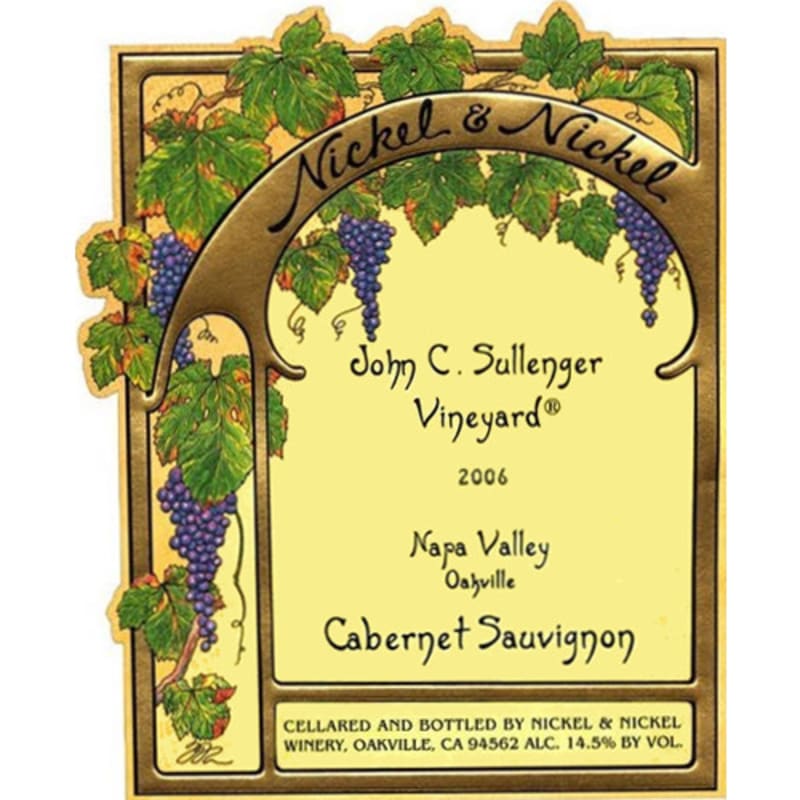

Winemaker Notes
Professional Ratings
-
Wine Enthusiast
Shows classic Oakville tannins that are big, ripe, and intricate, but hard, entirely opposite to the softness of the modern cult style. The fruit suggests blackberries and cassis, enriched with smoky-sweet, spicy oak. It’s a beautifully structured, dry and elegant 100% Cabernet, but it's too tannic for full enjoyment now. Better 2012–2016. Cellar Selection.
-
Robert Parker's Wine Advocate
The dense purple-colored 2006 Cabernet Sauvignon John C. Sullinger Vineyard (100% Cabernet Sauvignon) comes from an Oakville vineyard planted in clay and loamy soils. It reveals more of an Oakville/Pauillac-like character of cedar, spice box, licorice, black cherries, black currants, and camphor. While it is the most complex aromatically, the wine is still 4-5 years away from resolving some of its tannins. It is a big, full-bodied, powerful, impressive effort that should drink well for 20+ years.
-
Wine Spectator
Firmly tannic and tightly wound, serving a mix of cedar, dried currant, graphite and mineral, at points turning juicy and then firming on the finish. Bordeaux-like in its structure and concentration. Best from 2011 through 2018. 3,108 cases made.


One of the most prestigious wines of the world capable of great power and grace, Napa Valley Cabernet is a leading force in the world of fine, famous, collectible red wine. Today the Napa Valley and Cabernet Sauvignon are so intrinsically linked that it is difficult to discuss one without the other. But it wasn’t until the 1970s that this marriage came to light; sudden international recognition rained upon Napa with the victory of the Stag’s Leap Wine Cellars 1973 Cabernet Sauvignon in the 1976 Judgement of Paris.
Cabernet Sauvignon undoubtedly dominates Napa Valley today, covering half of the land under vine, commanding the highest prices per ton and earning the most critical acclaim. Cabernet Sauvignon’s structure, acidity, capacity to thrive in multiple environs and ability to express nuances of vintage make it perfect for Napa Valley where incredible soil and geographical diversity are found and the climate is perfect for grape growing. Within the Napa Valley lie many smaller sub-AVAs that express specific characteristics based on situation, slope and soil—as a perfect example, Rutherford’s famous dust or Stags Leap District's tart cherry flavors.