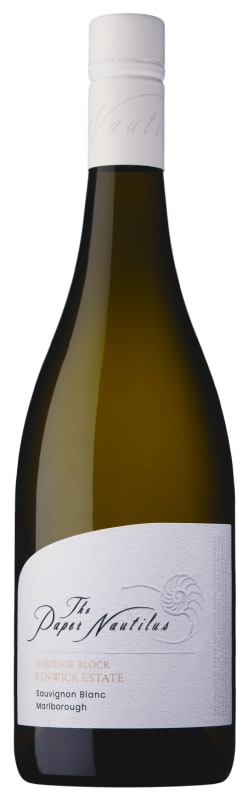


Winemaker Notes
Marlborough Sauvignon Blancs are characterized by fresh acidity and aromatic intensity derived from the cool climate, high sunlight intensity and free draining soils. Handpicking and fermenting in cuve give the Paper Nautilus Sauvignon understated aromas of citrus peel, wet stones and hazelnuts. The palate is concentrated yet subtle with a creamy texture, focused acidity and a dry lingering finish.
This Sauvignon is more savory and textural than many other Marlborough Sauvignon Blancs, so try pan fried fish with fresh green beans, olive and caper sauce, or roasted white beans and fennel rather than fruity or tropical flavors.
Vegan-friendly
Professional Ratings
-
Robert Parker's Wine Advocate
Full disclosure, I love this cuvée. Oak is so commonly used to express a more complex side of Sauvignon Blanc, but it is so often applied with a heavy hand. In my opinion, the oak is best applied with the desired endgame being an increase in structure, loosening of texture and complexing of character. Here, in this 2023 The Paper Nautilus Sauvignon Blanc, the large-format oak has done just this. While the fruit is able to express itself fully, the oak contributes a toasty edge to the wine. The acidity is on the lemon spectrum, the fruit speaks of kiwi fruit, feijoa, white strawberries and even a hint of cassis, and everything comes together with class in the end. Recommended.
-
James Suckling
Aromas of white peaches, crushed river stones and passion-fruit curd. The palate is light-bodied with a creamy texture cut through with fresh acidity, giving notes of candied lime zest, flint, Meyer lemons and blueberry bush. Sophisticated and pure. Drink or hold.
-
Vinous
The 2023 Sauvignon Blanc The Paper Nautilus is a savory, stylish Sauvignon Blanc that fermented in large barrels. Nautilus Estate’s careful handling is made clear in the glass. Its edges are round and this displays a succulent texture with lightly flinty and floral notes combined with a touch of lemon citrus. The lithe, drawn-out acidity provides precision on the finish. A little more length would be welcome, as it is rather tasty.


Capable of a vast array of styles, Sauvignon Blanc is a crisp, refreshing variety that equally reflects both terroir and varietal character. Though it can vary depending on where it is grown, a couple of commonalities always exist—namely, zesty acidity and intense aromatics. This variety is of French provenance. Somm Secret—Along with Cabernet Franc, Sauvignon Blanc is a proud parent of Cabernet Sauvignon. That green bell pepper aroma that all three varieties share is no coincidence—it comes from a high concentration of pyrazines (herbaceous aromatic compounds) inherent to each member of the family.

An icon and leading region of New Zealand's distinctive style of Sauvignon blanc, Marlborough has a unique terroir, making it ideal for high quality grape production (of many varieties). Despite some common generalizations, which could be fairly justified given that Marlborough is responsible for 90% of New Zealand's Sauvignon blanc production, the wines from this region are actually anything but homogenous. At the northern tip of New Zealand’s South Island, the vineyards of Marlborough benefit from well-draining, stony soils, a dry, sunny climate and wide temperature fluctuations between day and night, a phenomenon that supports a perfect balance between berry ripeness and acidity.
The region’s king variety, Sauvignon blanc, is beloved for its pungent, aromatic character with notes of exotic tropical fruit, freshly cut grass and green bell pepper along with a refreshing streak of stony minerality. These wines are made in a wide range of styles, and winemakers take advantage of various clones, vineyard sites, fermentation styles, lees-stirring and aging regimens to differentiate their bottlings, one from one another.
Also produced successfully here are fruit-forward Pinot noirs (especially where soils are clay-rich), elegant Riesling, Pinot gris and Gewürztraminer.