
Distiller Notes
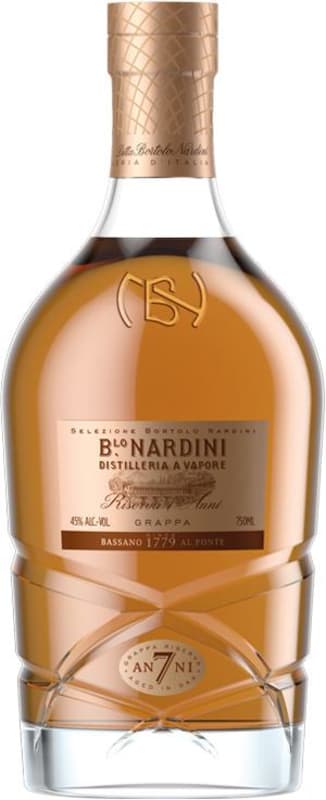
The result of over two centuries of expertise and tradition in the art of distillation. This grappa riserva is a special blend of the smoothest, most fragrant grappas from multiple vineyards. Aged for a minimum of 7 years in Slavonian oak barrels and carefully stored in the Nardini cellars.
Light amber, with warm tones. The grappa is nuanced and intense in its aromatic profile, with a wide variety of spicy and fruity notes, a hint of vanilla, marasca cherry and wild berries. Rich and sustained on the palate, following the sensations evoked by the fragrance.




Bortolo Nardini, an ingenious and enterprising man, was an expert in the art of distillation and possessed a unique knowledge of its process, when he descended to Bassano from his native Trentino region, in order to produce and commercialize his "Grappa." In 1779, he founded a distillery in Bassano. This location was a strategic one for its ample water supply and the ease of reaching principal markets by boat. Bortolo Nardini revolutionized Italian distillation, quickly establishing himself as the leading producer of Grappa in Italy. Subsequently, as the distillery was handed down from father to son, each generation made a progressive contribution toward refining the distillation process, allowing the firm to achieve the prestige of which Bortolo Nardini only dreamt.
Today, Nardini owns two distilleries in the Veneto Region of Italy: one in Bassano del Grappa, in the Vicenza Province and the other in Monastier, in the Treviso Province. Combined, these distill 40,000 metric tons of DOC grape pomace which is wisely blended and carefully selected from the best wineries in the Alpine foothills of the Veneto and Friuli-Venezia Giulia. Today Nardini, with its two distilleries and state-of-the-art manufacturing system, makes grappas and grappa-based liqueurs that that evoke the rich traditions of this region.

First produced in the northern Italian town of Bassano del Grappa, Grappa is a type of Brandy made by distilling the pressed skins, stems, seeds and pulp of grapes (collectively called pomace), left over from the winemaking process. They range in alcoholicity from 35% to 60% and are most often clear and unaged. However, the interpretations aged in casks, which can be made from a variety of different woods, take on different flavor expressions and appear darker in color.