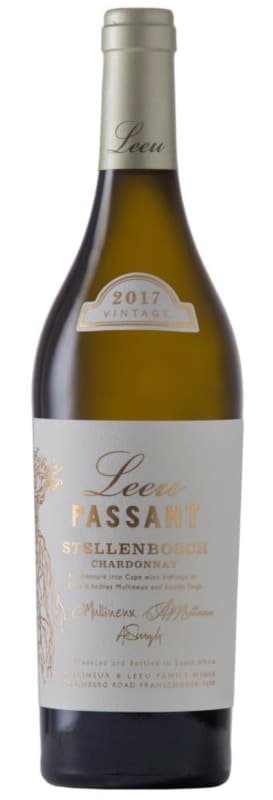


Winemaker Notes
Best served at 10-12° C, this wine will show optimally when decanted within the first 3 years after bottling and will reward if cellared properly over 10 years.
Professional Ratings
-
Robert Parker's Wine Advocate
Instantly impressive in the glass, the 2017 Leeu Passant Stellenbosch Chardonnay starts with aromas of ripe, round and fresh citrus and orchard fruit, compounded by elegant oak spices and seductive notions of a graham cracker crust, popcorn kernel, citrus blossom and lemon pastry cream. Medium-bodied, the palate is impeccably balanced, with succulent acidity, a round mouthfeel and silky mid-palate. As the wine sits on the palate, flavors of white peach, underripe pineapple, Marcona almonds and poached yellow apples over cardamom madeleines unfold in the mouth. The wine grows and reveals layers of complexity over the long, lingering finish. Bravo! They have captured beauty and finesse in this bottle.
-
Wine Spectator
A fruity, expressive style, with generous acidity behind the mirabelle plum, clementine and melon flavors mingling at the core, while notes of chamomile and geranium echo in the background. Beautifully knit, showing great harmony and seductive texture. Long finish. Drink now through 2027. 708 cases made, 50 cases imported.


One of the most popular and versatile white wine grapes, Chardonnay offers a wide range of flavors and styles depending on where it is grown and how it is made. While it tends to flourish in most environments, Chardonnay from its Burgundian homeland produces some of the most remarkable and longest lived examples. California produces both oaky, buttery styles and leaner, European-inspired wines. Somm Secret—The Burgundian subregion of Chablis, while typically using older oak barrels, produces a bright style similar to the unoaked style. Anyone who doesn't like oaky Chardonnay would likely enjoy Chablis.

South Africa’s most famous wine-producing district, Stellenbosch, surrounds the historic town with the same name; fine winemaking here dates back to the late 1600s. Its valleys of granite, sandstone and alluvial loam soils between the towering blue-grey mountains of Stellenbosch, Simonsberg and Helderberg have the capacity to produce beautiful wines from many varieties. The climate is warm Mediterranean, tempered by the cool Atlantic air of nearby False Bay.
Perhaps most well-known for its Pinotage and Bordeaux blends, Stellenbosch also produces noteworthy wines from Syrah, Chenin blanc, Chardonnay and Sauvignon blanc. The district’s wards—Banghoek, Bottelary, Devon Valley, Jonkershoek Valley, Papegaaiberg, Polkadraai Hills and Simonsberg-Stellenbosch—all produce distinctive wines from vines with relatively low yields.