
Winemaker Notes
Professional Ratings
-
Robert Parker's Wine Advocate
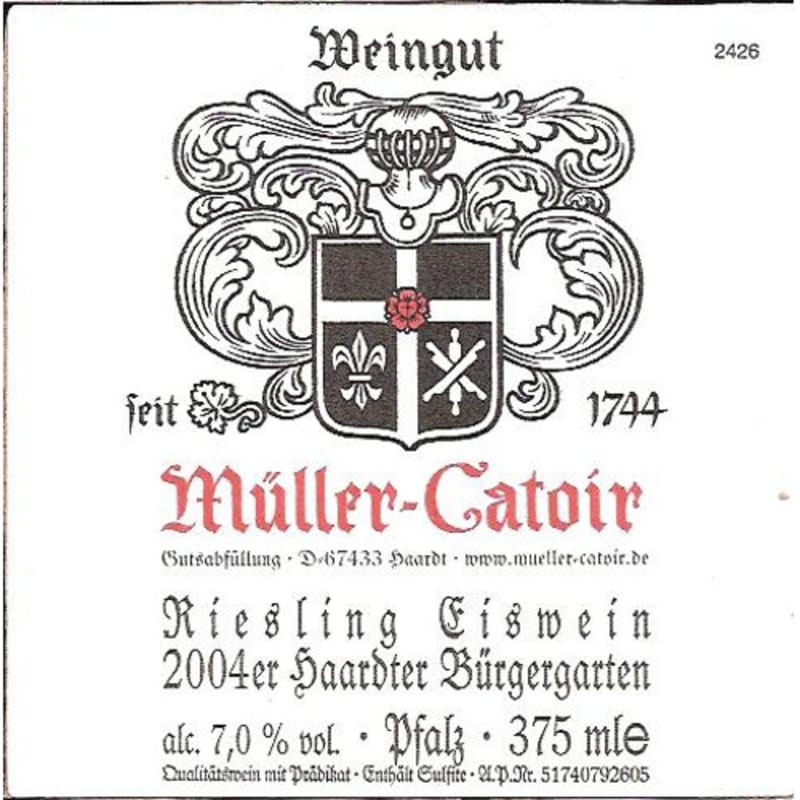
Almost unbelievably, the 2004 Haardter Burgergarten Riesling Auslese - harvested on the cusp of Trockenbeerenauslese must weight – ratchets up the complexity, richness and depth. Lemon cream, toasted almond, musk, caramelized apricot, malt, mineral salts, honey and a mysterious meatiness figure among the players in this long drama. The sense of layers exhibited by the Eselshaut are extended to jammy, caramelized, dried, and tartly fresh pit fruits, and the finish penetrates even more deeply. There wasn’t much noble botrytis this year, and there are around 600 liters each of the two Riesling Auslesen, wines I don’t doubt will still be revealing awesome new vistas in 20 or more years.
-
Wine Spectator
Lush and immediately appealing, this 2004 Riesling evokes apricot, peach, grapefruit and floral aromas and flavors. It seems easy, yet there's a vivid underlying structure and it lingers enticingly on the mouthwatering finish. Drink now through 2022.


Riesling possesses a remarkable ability to reflect the character of wherever it is grown while still maintaining its identity. A regal variety of incredible purity and precision, this versatile grape can be just as enjoyable dry or sweet, young or old, still or sparkling and can age longer than nearly any other white variety. Somm Secret—Given how difficult it is to discern the level of sweetness in a Riesling from the label, here are some clues to find the dry ones. First, look for the world “trocken.” (“Halbtrocken” or “feinherb” mean off-dry.) Also a higher abv usually indicates a drier Riesling.

This sunny and relatively dry region served for many years as a German tourist mecca and was associated with low cost, cheerful wines. But since the 1980s, it has gained a reputation as one of Germany’s more innovative regions, which has led to increased international demand.