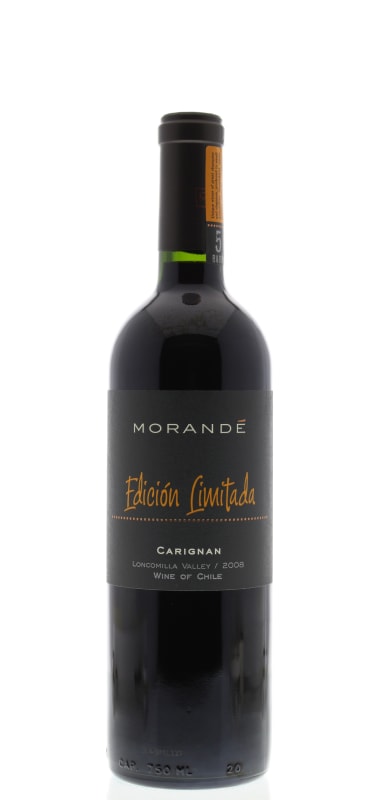


Winemaker Notes
Colour: intense, deep cherry-red.
Aroma: red fruits from the south such as sour cherries, myrtle and maqui, toasted hazelnuts, sweet chestnuts, spices, boldo tea and vanilla.
Flavour: fresh and fruity, complex, with a balance between acidity, sweetness and tannins; long and persistent in aromas, with great body and masculine potency.
Professional Ratings
-
Wine & Spirits
Maule Carignan tends to be high in acidity and to develop slowly in bottle; this 2008 tastes as if it had just been harvested. Its color is still intensely purple and its tannic structure is so tense that it would require a plate of blood sausages to tame it. But just look at that fruit, at the generous display of cherries and violets. This is a wine to cellar for five years or more.
-
Robert Parker's Wine Advocate
One of Chile's well kept secrets is the quality of its old-vine Carignan. The 2008 Carignan (100%) is a muscular, dense, powerful, full-bodied offering with layered fruit and a firm structure. Give it 4-5 years to become a bit more civilized and drink it through 2023 if not longer. At the asking price, it is an outstanding value.
-
Wine Spectator
This ambitious red features a toasty edge to the racy blackberry, kirsch and cassis fruit, which is laden with hints of baking spice, tar and olive paste. Well-built, with a long, zesty finish. Drink now through 2016.


Responsible for some of the most stunning old vine red wine on the planet, Carignan has an amazing capacity to survive dry, arid climates and still produce lovely, mouthwatering wine. In Spain it goes by the name of Mazuelo or Cariñena and while it may have originated there in the province of Aragón, its popularity lies elsewhere, particularly in Languedoc-Roussillon. Somm Secret—Historically Carignan did not enjoy the respect that it does today. In the mid 20th century, Carignan covered nearly 140,000 ha in Algeria, where it was made into low quality bulk and blending wine to supply mass-market demand.

Maule is the Central Valley’s most southern and coolest zone, reaching a southern latitude of 35°S, yet it is still warmer and drier than Bío-Bío to its south. The Maule Valley enjoys success with a unique set of grapes.
It lays claim to the local variety, Pais (synonymous with Tinta Pais, which is actually Tempranillo), which has dominated much of the region’s area under vine until the recent past. Now many growers, not confined by the tradition and regulations of the Old World, also successfully grow Cabernet Sauvignon.
While Maule’s total area under vine remains relatively static, its old Carignan vineyards are undergoing a great revival. The VIGNO (Vignadores del Carignan Vintners) group, an association in charge of promoting this long-forgotten variety, is getting fantastic results from the old vines in its dry-farmed coastal zones.
The Maule includes the subregions of Talca, San Clemente, San Javier, Parral, Linares and Cauquenes.