
Winemaker Notes
Color: Opulent, rich purple
Bouquet: Very spicy; notes of black and white pepper mingle with leather, clove and ripe black fruit supported by oak
Taste: Full-bodied, harmonious and expressive. Mellow tannins and a structured mid-palate. Intense fruit leading to a long finish
Serving suggestions: Red meats, poultry, rich stews, hearty pasta dishes and hard cheeses
Professional Ratings
-
Robert Parker's Wine Advocate
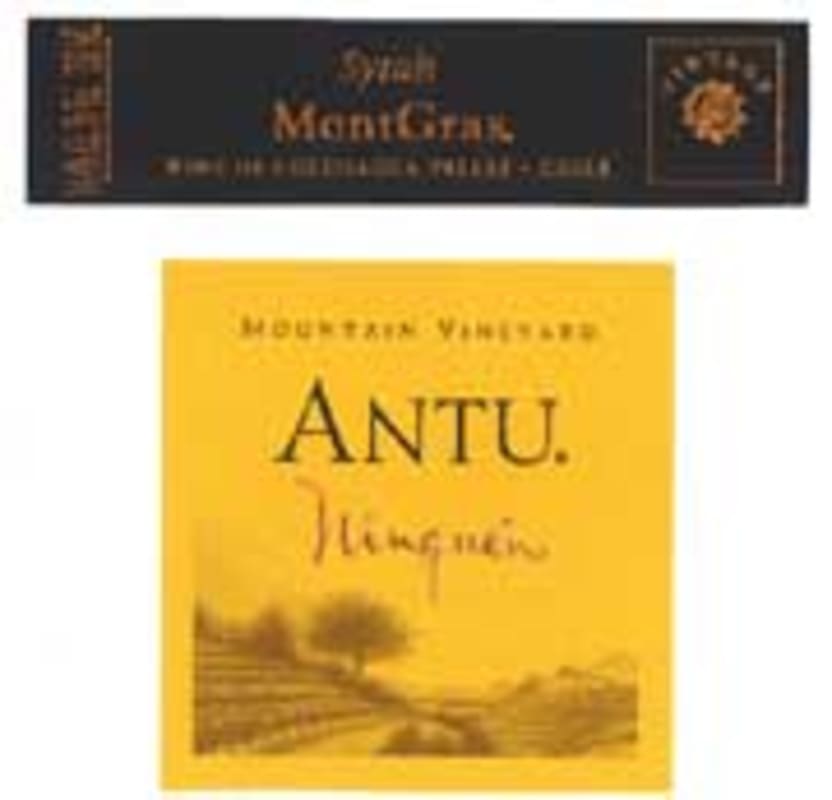
The Antu Ninquen wines come from a single vineyard atop the plateau of Ninquen Mountain in the Colchagua Valley. The well-known Paul Hobbs serves as a consultant to the project. The 2005 Antu Ninquen Syrah has 12% Cabernet Sauvignon added to the blend. The wine was aged for 18 months in French and American oak before being bottled unfined and unfiltered. Purple-colored, the wine offers a spicy perfume of pepper, leather, earth, and blackberry. Firmly structured, this full-bodied wine has good flavors and balance but will require several years in the bottle to fully express itself.
-
Wine Enthusiast
If you like yours big and burly, this 14.6% Syrah (with 12% Cabernet) is dark and luxe, with good natural acidity to balance out the alcohol and untamed plum, berry jam and chocolate flavors. A forceful wine with no dead weight.
-
Wine Spectator
Has a hefty layer of sweet toast covering the dark plum, currant and fig flavors. Rich, smoky finish. A touch shy on purity, but will have fans.


Marked by an unmistakable deep purple hue and savory aromatics, Syrah makes an intense, powerful and often age-worthy red. Native to the Northern Rhône, Syrah achieves its maximum potential in the steep village of Hermitage and plays an important component in the Red Rhône Blends of the south, adding color and structure to Grenache and Mourvèdre. Syrah is the most widely planted grape of Australia and is important in California and Washington. Sommelier Secret—Such a synergy these three create together, the Grenache, Syrah, Mourvedre trio often takes on the shorthand term, “GSM.”

Dramatic geographic and climatic changes from west to east make Chile an exciting frontier for wines of all styles. Chile’s entire western border is Pacific coastline, its center is composed of warm valleys and on its eastern border, are the soaring Andes Mountains.
Chile’s central valleys, sheltered by the costal ranges, and in some parts climbing the eastern slopes of the Andes, remain relatively warm and dry. The conditions are ideal for producing concentrated, full-bodied, aromatic reds rich in black and red fruits. The eponymous Aconcagua Valley—hot and dry—is home to intense red wines made from Cabernet Sauvignon, Syrah and Merlot.
The Maipo, Rapel, Curicó and Maule Valleys specialize in Cabernet and Bordeaux Blends as well as Carmenère, Chile’s unofficial signature grape.
Chilly breezes from the Antarctic Humboldt Current allow the coastal regions of Casablanca Valley and San Antonio Valley to focus on the cool climate loving varieties, Pinot Noir, Chardonnay and Sauvignon Blanc.
Chile’s Coquimbo region in the far north, containing the Elqui and Limari Valleys, historically focused solely on Pisco production. But here the minimal rainfall, intense sunlight and chilly ocean breezes allow success with Chardonnay and Pinot Noir. The up-and-coming southern regions of Bio Bio and Itata in the south make excellent Riesling, Chardonnay and Pinot Noir.
Spanish settlers, Juan Jufre and Diego Garcia de Cáceres, most likely brought Vitis vinifera (Europe’s wine producing vine species) to the Central Valley of Chile sometime in the 1550s. One fun fact about Chile is that its natural geographical borders have allowed it to avoid phylloxera and as a result, vines are often planted on their own rootstock rather than grafted.