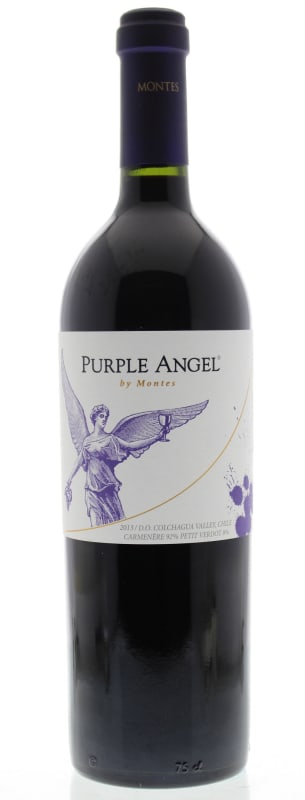


Winemaker Notes
Highly recommended with red meats, lamb chops with rosemary, pork ribs, and cannelloni.
Professional Ratings
-
James Suckling
The transparency is incredible to this year of Purple Angel. Aromatic and bright with blueberry, fresh herbs and spice. Full body, silky and perfectly polished tannins. Fabulous length and layers. Superb. Blend made from 46% carmenere from Marchigue, 46% from Apalta and 8% petit verdot.
-
Wine Enthusiast
Like the name suggests, this Carmenère is opaque purple in color, with earthy, complex aromas of graphite, char and herbal black currant. The palate is, not surprisingly, saturated and dense. Flavors of toasty, minty black fruits are charred, while the finish tastes roasted, heavily oaked and blackened. Drink through 2021. Editors' Choice
-
Wine & Spirits
Despite the cold vintage in Colchagua, this wine is round and fleshy. A blend of 92 percent carmenère from Apalta and Marchigüe with petit verdot, it’s generously ripe, brimming over with aromas and flavors of candied fruit. It might be over the top were it not for the petit verdot, which gives structure and strength. A good choice for roasted boar.
-
Wine Spectator
A powerfully spiced red, with an abundance of dark plum and blackberry flavors that feature a creamy texture. Ripe midpalate, delivering a long, lush finish that is loaded with dark chocolate and cardamom notes, accented by hints of dried mint. Carmenere with Petit Verdot. Drink now through 2022.


Dark, full-bodied and herbaceous with a spicy kick, Carménère found great success with its move to Chile in the mid-19th century. However, the variety went a bit undercover until 1994 when many plantings previously thought to be Merlot, were profiled as Carménère. Somm Secret— Carménère is both a progeny and a great-grandchild of the similarly flavored Cabernet Franc.

Well-regarded for intense and exceptionally high quality red wines, the Colchagua Valley is situated in the southern part of Chile’s Rapel Valley, with many of the best vineyards lying in the foothills of the Coastal Range.
Heavy French investment and cutting-edge technology in both the vineyard and the winery has been a boon to the local viticultural industry, which already laid claim to ancient vines and a textbook Mediterranean climate.
The warm, dry growing season in the Colchagua Valley favors robust reds made from Cabernet Sauvignon, Carmenère, Malbec and Syrah—in fact, some of Chile’s very best are made here. A small amount of good white wine is produced from Chardonnay and Sauvignon Blanc.