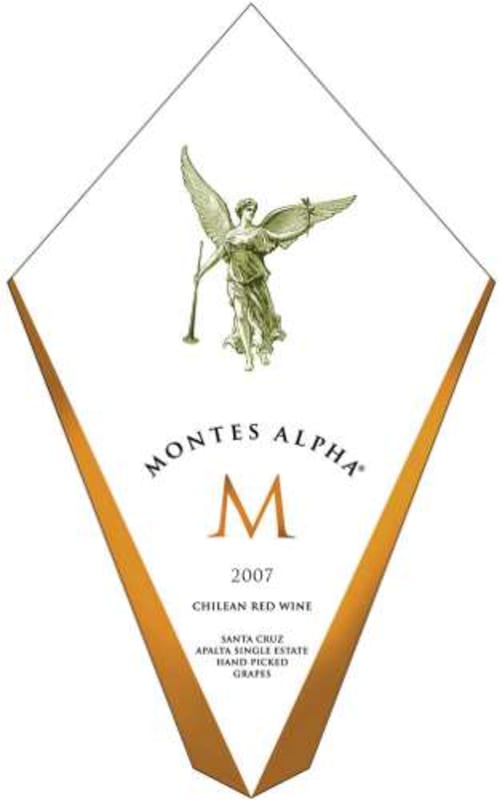

Winemaker Notes
Intense dark red color. Very elegant and at the same time powerful with very good level of soft and rounded tannins.. The wine has an harmonious structure, a generous fruit expression and a very distinguished character with aromas of red fruits, cassis and a touch of cedar and cinnamon. In the mouth the wine has delightful notes of vanilla and coffee. The 5% of Petit Verdot is adding an extra element of complexity. Mouth filling and very, very long lasting. The structure of this wine will keep it for over 20 years.
Professional Ratings
-
Robert Parker's Wine Advocate
The 2007 Alpha M is a blend of 80% Cabernet Sauvignon, 10% Cabernet Franc, with the balance Merlot and Petit Verdot aged for 18 months in new French oak. It exhibits a striking perfume of pain grille, pencil lead, herbs, spices, a hint of balsamic, and assorted black fruits. Dense, structured, and incipiently complex, this velvety textured wine conceals enough structure to evolve for another 5-6 years. It offers a drinking window extending from 2017 to 2027.
-
Wine Spectator
This sleek, suave red displays alluring espresso, cocoa, warm tobacco and mulled black currant notes woven with a perfumy vanilla hint. The tobacco edge lingers nicely through the finish. Cabernet Sauvignon, Cabernet Franc, Merlot and Petit Verdot. Drink now through 2015. 2,400 cases imported.
-
Wine Enthusiast
Impressive as always, with dense, meaty aromas of baked black fruits, compost and dried cheese. The palate is thick to the max, with chocolate, coconut and baked plum and berry flavors. Ultrarich on the finish, with warmth and density. Once again "M" shows how deep and rewarding high-end Chilean reds can be. Drink now through 2015.


One of the world’s most classic and popular styles of red wine, Bordeaux-inspired blends have spread from their homeland in France to nearly every corner of the New World. Typically based on either Cabernet Sauvignon or Merlot and supported by Cabernet Franc, Malbec and Petit Verdot, the best of these are densely hued, fragrant, full of fruit and boast a structure that begs for cellar time. Somm Secret—Blends from Bordeaux are generally earthier compared to those from the New World, which tend to be fruit-dominant.

Dramatic geographic and climatic changes from west to east make Chile an exciting frontier for wines of all styles. Chile’s entire western border is Pacific coastline, its center is composed of warm valleys and on its eastern border, are the soaring Andes Mountains.
Chile’s central valleys, sheltered by the costal ranges, and in some parts climbing the eastern slopes of the Andes, remain relatively warm and dry. The conditions are ideal for producing concentrated, full-bodied, aromatic reds rich in black and red fruits. The eponymous Aconcagua Valley—hot and dry—is home to intense red wines made from Cabernet Sauvignon, Syrah and Merlot.
The Maipo, Rapel, Curicó and Maule Valleys specialize in Cabernet and Bordeaux Blends as well as Carmenère, Chile’s unofficial signature grape.
Chilly breezes from the Antarctic Humboldt Current allow the coastal regions of Casablanca Valley and San Antonio Valley to focus on the cool climate loving varieties, Pinot Noir, Chardonnay and Sauvignon Blanc.
Chile’s Coquimbo region in the far north, containing the Elqui and Limari Valleys, historically focused solely on Pisco production. But here the minimal rainfall, intense sunlight and chilly ocean breezes allow success with Chardonnay and Pinot Noir. The up-and-coming southern regions of Bio Bio and Itata in the south make excellent Riesling, Chardonnay and Pinot Noir.
Spanish settlers, Juan Jufre and Diego Garcia de Cáceres, most likely brought Vitis vinifera (Europe’s wine producing vine species) to the Central Valley of Chile sometime in the 1550s. One fun fact about Chile is that its natural geographical borders have allowed it to avoid phylloxera and as a result, vines are often planted on their own rootstock rather than grafted.