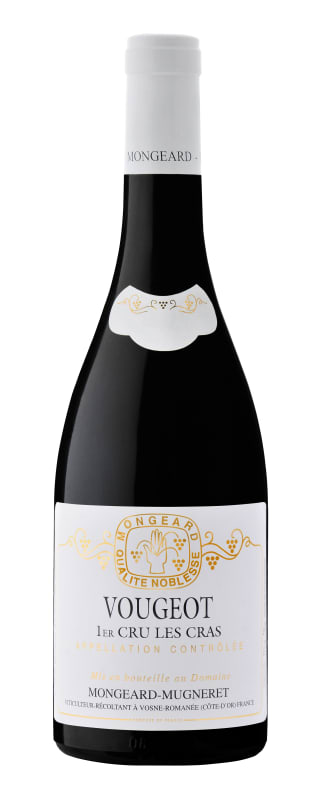


Winemaker Notes
To the eye, its color is deep and luminous, with a purplish-violet tint which reveals the intensity of this wine. On the nose, the aromas evoke violets and red and black fruits (raspberries, Morello cherries, mulberries, black currants) and sometimes cocoa. Like the deep red of its coloring, these aromas imbue the wine with finesse and render it highly seductive. As this wine ages it suggests woodland undergrowth, with scents of dead leaves and truffles mingled with animal notes. The flavor is generally pleasing, affording a true guarantee of its origins. It is solidly structured, but its tannins have a certain delicacy, and its attack is very pure. Its fleshiness and acidity form a simple and very pleasing harmony. From time to time a hint of licorice is perceptible. Vougeot premier cru is a racy wine with points in common with Chambolle-Musigny. The well-drained pebbly soil on which it grows makes this a perfumed and elegant wine


Thin-skinned, finicky and temperamental, Pinot Noir is also one of the most rewarding grapes to grow and remains a labor of love for some of the greatest vignerons in Burgundy. Fairly adaptable but highly reflective of the environment in which it is grown, Pinot Noir prefers a cool climate and requires low yields to achieve high quality. Outside of France, outstanding examples come from in Oregon, California and throughout specific locations in wine-producing world. Somm Secret—André Tchelistcheff, California’s most influential post-Prohibition winemaker decidedly stayed away from the grape, claiming “God made Cabernet. The Devil made Pinot Noir.”

Containing the largest Grand Cru in all of the Côte d’Or, Vougeot, the village, takes its name from the small stream flowing through it, called Vouge. Over three quarters of the village retains Grand Cru status, and a single vineyard at that: Clos de Vougeot (or simply, Clos Vougeot). Its mass—over 50 ha—retains the single name chiefly for historic reasons.
But today, Clos de Vougeot contains over 80 owners and shows significant soil and slope variations within its boundaries. The top, bordering Musigny and Grands Echezeaux, is calcareous and gravelly on oolitic limestone and exhibits wonderful drainage. The middle sections are limestone, gravel and clay with less of a slope. The lower part has little slant and is mostly made of clay. Historically the diverse parcels were blended but today the abundance of owners means that everyone has his own style. Exploring and understanding them is part of the allure of Clos de Vougeot.
In general a fine Clos de Vougeot when young will be dense and dark but juicy, with a pronounced austerity, and needs a good ten years to bring it to its full potential.