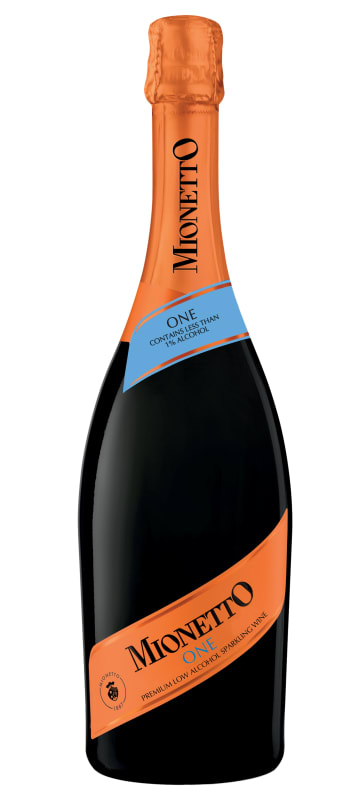


Winemaker Notes





Founded in 1887 by Francesco Mionetto in the small village of Valdobbiadene, Mionetto has an established reputation for quality, tradition and innovation. In the heart of the Prosecco region, Mionetto produces exceptional wines with consistent national and international acclaim.
Throughout Northeast Italy’s Prosecco region, from the Veneto to neighboring Friuli, it is readily acknowledged that Mionetto has been the driving force behind the fast-growing Prosecco wine category. The Mionetto story of global success draws on a blend of tradition and heritage, combined with carefully implemented innovation and sense of adventure. Thanks to Mionetto’s vision and hard work, Prosecco is enjoyed around the world today.
Mionetto is one of the area's oldest wine producers and has long-established relationships with star growers, ensuring a consistent supply of quality grapes year after year.
Prosecco hallmarks are freshness, lightness, delicacy and youth, with easy-to-love, fruity and floral flavors, rather than the "biscuity," yeasty notes often found in Champagne. Sergio Mionetto, grandson of Mionetto's founder, was the first to introduce the Charmat technique to the area in the years after WWII. Until then, Prosecco was made using the méthode champenoise (secondary fermentation in bottles). Unlike Champagne's Chardonnay, Pinot Meunier or Pinot Noir, the delicate Glera grape lacked improvement with bottle aging, and rapidly lost quality within a few months. The Charmat method, by contrast, is ideal for extending the wine's appealing freshness and fruit.
Absolute freshness is a mantra at Mionetto. It speaks volumes that Mionetto is the only Prosecco producer to bottle when an order comes in and not a moment sooner.

A term typically reserved for Champagne and Sparkling Wines, non-vintage or simply “NV” on a label indicates a blend of finished wines from different vintages (years of harvest). To make non-vintage Champagne, typically the current year’s harvest (in other words, the current vintage) forms the base of the blend. Finished wines from previous years, called “vins de reserve” are blended in at approximately 10-50% of the total volume in order to achieve the flavor, complexity, body and acidity for the desired house style. A tiny proportion of Champagnes are made from a single vintage.
There are also some very large production still wines that may not claim one particular vintage. This would be at the discretion of the winemaker’s goals for character of the final wine.

Thanks to the renewal of the collaboration between the Italian Trade Agency (ITA) and Wine.com, 50 new wineries and distilleries have been selected as new suppliers to the Wine.com platform. Click here to learn more about this program.
Italian Wine
Named “Oenotria” by the ancient Greeks for its abundance of grapevines, Italy has always had a culture virtually inextricable from red, white and sparkling wines. Wine grapes grow in every region throughout Italy—a long and narrow boot-shaped peninsula extending into the Mediterranean.
Italian Wine Regions
Naturally, most Italian wine regions enjoy a Mediterranean climate and a notable coastline, if not coastline on all borders, as is the case with the islands of Sicily and Sardinia. The Alps in the northern Italian wine regions of Valle d'Aosta, Lombardy and Alto Adige create favorable conditions for cool-climate grape varieties. The Apennine Mountains, extending from Liguria in the north to Calabria in the south, affect climate, grape variety and harvest periods throughout. Considering the variable terrain and conditions, it is still safe to say that most high quality viticulture in Italy takes place on picturesque hillsides.
Italian Grape Varieties
Italy boasts more indigenous grape varieties than any other country—between 500 and 800, depending on whom you ask—and most Italian wine production relies upon these native grapes. In some Italian wine regions, international varieties have worked their way in, but are declining in popularity, especially as younger growers take interest in reviving local varieties. Most important are Sangiovese, reaching its greatest potential in Tuscany, as well as Nebbiolo, the prized grape of Piedmont, producing single varietal, age-worthy Piedmontese wines. Other important varieties include Corvina, Montepulciano, Barbera, Nero d’Avola and of course the white wines, Trebbiano, Verdicchio and Garganega. The list goes on.