

Winemaker Notes
Professional Ratings
-
Robert Parker's Wine Advocate
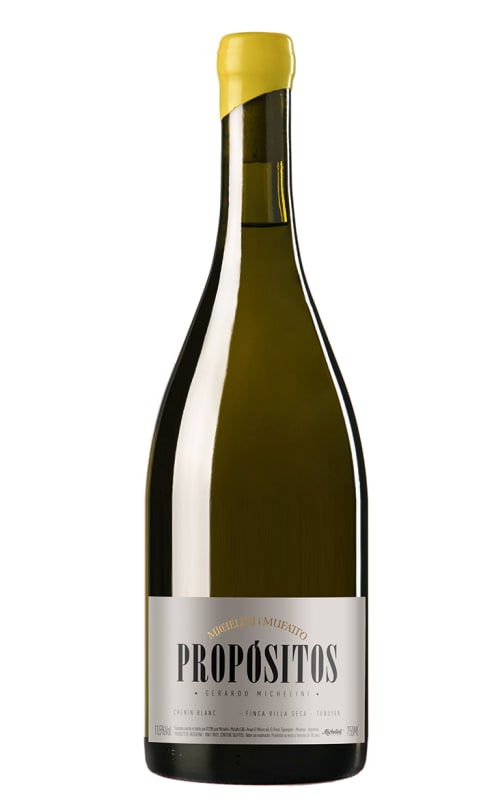
The second vintage of the Chenin Blanc from Villa Seca in Tunuyán is the 2017 Propósitos, which is fresh and with very good acidity. It fermented in concrete amphorae with skins for ten days and matured in 225-liter oak barrels, where it was kept for 18 months with some flor yeasts. It's a little riper and rounder with notes of yellow fruit and a balanced palate, with more weight in the finish. It was a tannic year because of low yields and concentrated juice, and the higher ripeness and more alcohol seems to have balanced the palate nicely. It should have a long life in bottle.
-
Wine Enthusiast
A burnished gold color and dry aromas of apricot and papaya open this 11.2% abv Chenin Blanc that's more linear than layered on the palate. Apple and just-ripe nectarine flavors hold on nicely across a finish that's medium in intensity.


Unquestionably one of the most diverse grape varieties, Chenin Blanc can do it all. It shines in every style from bone dry to unctuously sweet, oaked or unoaked, still or sparkling and even as the base for fortified wines and spirits. Perhaps Chenin Blanc’s greatest asset is its ever-present acidity, maintained even under warm growing conditions. Somm Secret—Landing in South Africa in the mid 1800s, today the country has double the acreage of Chenin Blanc planted compared to France. There is also a new wave of dedicated producers committed to restoring old Chenin vines.

By far the largest and best-known winemaking province in Argentina, Mendoza is responsible for over 70% of the country’s enological output. Set in the eastern foothills of the Andes Mountains, the climate is dry and continental, presenting relatively few challenges for viticulturists during the growing season. Mendoza, divided into several distinctive sub-regions, including Luján de Cuyo and the Uco Valley, is the source of some of the country’s finest wines.
For many wine lovers, Mendoza is practically synonymous with Malbec. Originally a Bordelaise variety brought to Argentina by the French in the mid-1800s, here it found success and renown that it never knew in its homeland where a finicky climate gives mixed results. Cabernet Sauvignon, Syrah, Merlot and Pinot Noir are all widely planted here as well (and sometimes even blended with each other or Malbec). Mendoza's main white varieties include Chardonnay, Torrontés, Sauvignon Blanc and Sémillon.