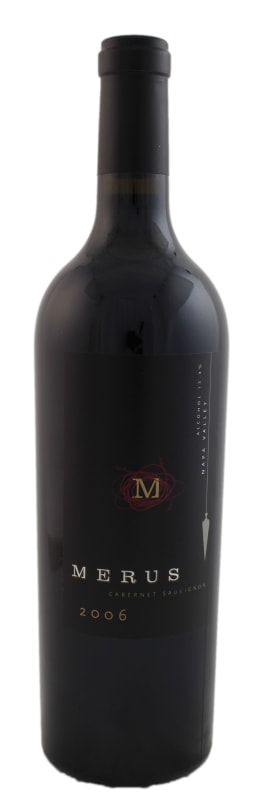


Winemaker Notes
Professional Ratings
-
Robert Parker's Wine Advocate
Although closed at present, Merus’ inky/purple-colored 2006 Cabernet Sauvignon displays enormous power and richness. It is a massive, blockbuster-styled effort possessing black fruits, plenty of spicy oak, hints of licorice and graphite, and mouth-staining tannins and extract in the finish. Forget it for 4-5 years, and drink it over the following 20-25.
92+ Points -
Connoisseurs' Guide
While there is no arguing with the fact that this is a very ripe, very big, very obvious wine, there is so much richness and deep fruit at its heart that only those burdened by bleakly unbending anti-ripeness agendas will find it less than outstanding. Its layered aromas of ripe currants, cigar box and cream give way to opulent, mouthfilling flavors whose combination of fruit and rich spices power past its considerable tannins. A wine meant for keeping, it should be set aside for five or six years with the promise of a decade or more of growth.
-
Wine Spectator
Intense and rustic, with chewy mineral, anise, dried currant and earth notes. Full-bodied, this is concentrated and long on the finish, but needs time to soften. Best from 2011 through 2017. 1,200 cases made.


One of the most prestigious wines of the world capable of great power and grace, Napa Valley Cabernet is a leading force in the world of fine, famous, collectible red wine. Today the Napa Valley and Cabernet Sauvignon are so intrinsically linked that it is difficult to discuss one without the other. But it wasn’t until the 1970s that this marriage came to light; sudden international recognition rained upon Napa with the victory of the Stag’s Leap Wine Cellars 1973 Cabernet Sauvignon in the 1976 Judgement of Paris.
Cabernet Sauvignon undoubtedly dominates Napa Valley today, covering half of the land under vine, commanding the highest prices per ton and earning the most critical acclaim. Cabernet Sauvignon’s structure, acidity, capacity to thrive in multiple environs and ability to express nuances of vintage make it perfect for Napa Valley where incredible soil and geographical diversity are found and the climate is perfect for grape growing. Within the Napa Valley lie many smaller sub-AVAs that express specific characteristics based on situation, slope and soil—as a perfect example, Rutherford’s famous dust or Stags Leap District's tart cherry flavors.