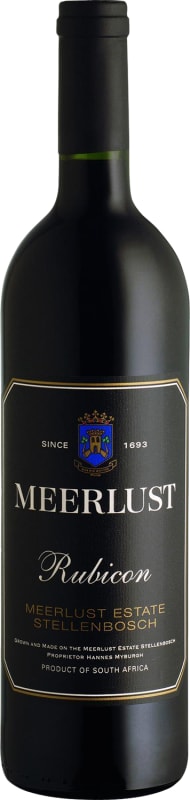


Winemaker Notes
Very deep, youthful colour, and intense almost purple hue. Quintessential Rubicon nose with violets, ripe plum, cedar wood, fennel, and intense spiciness. A typical liquorice note also evident on the nose. Still young and intense, the palate is full bodied, structured but packed with fresh dark fruit and rounded tannins. This is a vintage that is more approachable in youth because of the ripeness and richness levels attained in 2018 but will provide great complexity with further maturation.
Professional Ratings
-
Robert Parker's Wine Advocate
Composed of mostly Cabernet Sauvignon with 19% Merlot, 10% Cabernet Franc and 4% Petit Verdot, the 2018 Rubicon offers a broad-shouldered expression with an Old World essence. The nose explodes with a wide variety of aromas, expressing a subtle Old World funk with an equally pleasing amount of New World vibrancy and freshness. Medium to full-bodied, the palate offers dark fruit flavors with a fine beam of acidity while expressing a firm tannic edge that will loosen in time. The wine glides to a refined and complex finish that will continue to evolve gracefully for a decade.
-
Wine & Spirits
This blend, based on cabernet sauvignon with merlot, cabernet franc and petit verdot, has a broad frame of gentle tannins. Its delicate, pretty fruit runs the color gamut from black to blue to red, all scented with a pleasantly humid forest-floor wildness. The shape of the wine seems barely larger than its flavors, which I found to offer direct and easy access to it complex aromas and fruit—like a picture frame.
-
Wine Spectator
Broad and open-knit, this harmonious red integrates fine tannins with a fragrant overtone of cured tobacco, featuring baked currant and fig, fresh and loamy earth, black licorice twist and milled pepper. Fresh and focused on the finish, where the tobacco note lingers on. Cabernet Sauvignon, Merlot, Cabernet Franc and Petit Verdot. Drink now.


One of the world’s most classic and popular styles of red wine, Bordeaux-inspired blends have spread from their homeland in France to nearly every corner of the New World. Typically based on either Cabernet Sauvignon or Merlot and supported by Cabernet Franc, Malbec and Petit Verdot, the best of these are densely hued, fragrant, full of fruit and boast a structure that begs for cellar time. Somm Secret—Blends from Bordeaux are generally earthier compared to those from the New World, which tend to be fruit-dominant.

South Africa’s most famous wine-producing district, Stellenbosch, surrounds the historic town with the same name; fine winemaking here dates back to the late 1600s. Its valleys of granite, sandstone and alluvial loam soils between the towering blue-grey mountains of Stellenbosch, Simonsberg and Helderberg have the capacity to produce beautiful wines from many varieties. The climate is warm Mediterranean, tempered by the cool Atlantic air of nearby False Bay.
Perhaps most well-known for its Pinotage and Bordeaux blends, Stellenbosch also produces noteworthy wines from Syrah, Chenin blanc, Chardonnay and Sauvignon blanc. The district’s wards—Banghoek, Bottelary, Devon Valley, Jonkershoek Valley, Papegaaiberg, Polkadraai Hills and Simonsberg-Stellenbosch—all produce distinctive wines from vines with relatively low yields.