


Winemaker Notes
Ruby red color with violet nuances. On the nose, bright aromas of fresh cherries mingle with notes of thyme and a subtle smoky character. Bright acid structure providing a lively quality. Cranberry, raspberry, and red cherry dominate with hints of leather, cedar, and cocoa powder. Some earthiness in the finish and ripe soft tannins.
Professional Ratings
-
James Suckling
Black cherry, bark and earth on the nose with some dark-mushroom character. It’s full-bodied with very soft tannins and a juicy, savory finish. Wet-earth and forest-floor character comes through nicely at the finish. Drink or hold.
-
Wine Spectator
Featuring black cherry, blueberry, mint, iron and Tuscan scrub flavors, this solid red is built for aging, with ripe fruit returning on the long finish. All the components are there -- this just needs time. Sangiovese and Merlot. Best from 2024 through 2040. 19,100 cases made, 4,000 cases imported.
-
Vinous
The 2018 Chianti Classico Riserva Ser Lapo is a powerful, wild wine. Crushed flowers, game, herbs and licorice notes give the 2018 its distinctly savory, earthy personality. Brooding in feel, the 2018 will benefit from a few years in bottle. Most of this fruit comes from Mazzei's Caggio property, the site that informs the new Ipsus wine. In my view, Ser Lapo is the hidden gem in the Mazzei range, and the wine I would most like to drink, if forced to chose just one Chianti Classico in the lineup.
-
Robert Parker's Wine Advocate
The Mazzei 2018 Chianti Classico Riserva Ser Lapo is a plump and fruit-forward wine from a vintage that saw alternating moments of cool and hot that caressed the fruit into a slightly more ripened and softened overall state. This is a mid-weight wine with plenty of dark fruit and blackberry. On second nose, the wine offers savory tones of leather, spice and tar. This darker and heavier approach might do well if paired with game meat or a Tuscan stew of wild boar. Best After 2022
-
Wilfred Wong of Wine.com
COMMENTARY: The 2018 Mazzei Ser Lapo Chianti Classico Riserva is bright, lively, and lasting on the palate. TASTING NOTES: This wine offers excellent aromas and flavors of black fruit, licorice, and earth. Enjoy its authenticity with a well-seasoned, oven-roasted pork loin. (Tasted: June 1, 2021, San Francisco, CA)



Established in 1435, the Mazzei family is one of Tuscany’s oldest wine dynasties and they have been cultivating vineyards and crafting fine wine for over 600 years in Fonterutoli in the heart of Chianti Classico. Leading the portfolio today are the Marchesi Mazzei, brothers Francesco and Filippo, as well as Filippo’s son Giovanni, the 25th generation. Notable ancestors include Ser Lapo Mazzei, author of the first known document (1398) using Chianti to reference the wine and region and Philip, an Italian turned American patriot whose friendship and correspondence with Thomas Jefferson inspired the idea that “all men are by nature equally free and independent,” which influenced the Declaration of Independence.
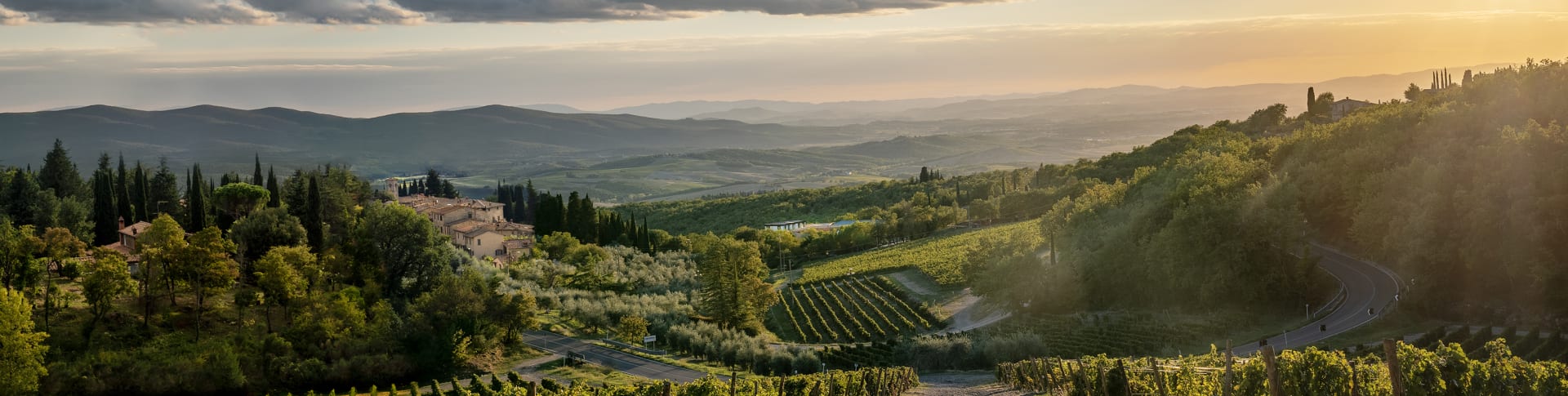
While the family has always honored their legacy, producing acclaimed wines of extraordinary aromatic richness, balance and complexity, they are also leaders in viticulture and vinification. The winery’s vineyards cover 110 hectares across 7 sub-zones of Chianti Classico featuring different soils, altitudes (720-1870 feet) and micro-climates. All their vineyards are farmed with customized organic practices that focus on soil health, preservation of biodiversity, reduction of copper use, and absorbing 5x more CO2 than is expressed out; a true commitment to reducing environmental impact and fostering sustainability. From their state-of-the-art low-impact, gravity fed cellar to their massal selections and clonal research, the current generation pursues innovation that elevates their wines and protects their ecosystem. This balance of preservation and evolution is also found in the family’s estates in Maremma (Belguardo) and Sicily (Zisola).

Disenchanted with Italian winemaking laws in the 1970s, a few rebellious Tuscan winemakers decided to get creative. Instead of following tradition, to bottle Sangiovese by itself, they started blending it with international varieties, namely Cabernet Sauvignon, Merlot and Syrah in differing proportions and with amazing success. However, some Tuscan Blends don’t even include Sangiovese. Somm Secret—The suffix –aia in Italian modifies a word in much the same way –y acts in English. For example, a place with many stones (sassi) becomes Sassicaia. While not all Super Tuscan producer names end in –aia, they all share a certain coy nomenclature.

One of the first wine regions anywhere to be officially recognized and delimited, Chianti Classico is today what was originally defined simply as Chianti. Already identified by the early 18th century as a superior zone, the official name of Chianti was proclaimed upon the area surrounding the townships of Castellina, Radda and Gaiole, just north of Siena, by Cosimo III, Grand Duke of Tuscany in an official decree in 1716.
However, by the 1930s the Italian government had appended this historic zone with additonal land in order to capitalize on the Chianti name. It wasn’t until 1996 that Chianti Classico became autonomous once again when the government granted a separate DOCG (Denominazione di Origine Controllata e Garantita) to its borders. Ever since, Chianti Classico considers itself no longer a subzone of Chianti.
Many Classicos are today made of 100% Sangiovese but can include up to 20% of other approved varieties grown within the Classico borders. The best Classicos will have a bright acidity, supple tannins and be full-bodied with plenty of ripe fruit (plums, black cherry, blackberry). Also common among the best Classicos are expressive notes of cedar, dried herbs, fennel, balsamic or tobacco.